

Finding good captions for food is a constant challenge, but what if the solution wasn't just what you write, but how you manage it? Streamline your content process with PostOnce, the ultimate tool that lets you create your perfect post once and automatically crosspost it everywhere. Instead of tailoring content separately for every network, you can focus on one great message and distribute it across supported routes for TikTok, Instagram, YouTube, Facebook, LinkedIn, X, Bluesky, Pinterest, and Threads. Availability varies by source/destination pair and post type.
This guide provides the missing piece of that puzzle: over 100 powerful, copy-paste caption ideas designed to work seamlessly with PostOnce's smart automation. We're moving beyond generic advice to give you actionable strategies for every goal, whether you want to spark conversation, tell a compelling story, or drive traffic. You will find categorized examples for every type of food post, from witty one-liners to engaging, question-based prompts.
We'll break down the tactics behind effective food captions, helping you understand how to connect with your audience on a deeper level. By pairing these strategies with an efficient workflow, you can stop staring at a blank screen and start building a more engaged community around your delicious content. This article is your ultimate resource for crafting good captions for food that save you time and amplify your reach.
PostOnce: The Solution for Your Food Caption Strategy
The search for "good captions for food" isn't just about finding the right words; it's about efficiently sharing those words with your audience across all your social channels. Manually copying, pasting, and reformatting a single post for Instagram, Facebook, LinkedIn, and Twitter is a time-consuming task that drains creative energy. This is precisely the problem PostOnce solves.
PostOnce is a powerful crossposting tool that allows you to publish your content from one platform to many others automatically. Here’s how it addresses the core need behind your search:
- Create Once, Publish Everywhere: Write your perfect food caption—whether it's a long, detailed story or a short, witty one-liner—and PostOnce distributes it across all your connected social media accounts.
- Smart Adaptation: The tool automatically adjusts formatting, character counts, and even hashtag strategies to fit the best practices of each platform. Your long-form educational post for LinkedIn becomes a concise, engaging update for Twitter without any extra work.
- Focus on Creativity, Not Administration: By automating the distribution process, PostOnce frees you up to focus on what matters: creating delicious food and crafting compelling captions that connect with your audience.
By integrating PostOnce into your workflow, you’re not just finding good captions; you’re building an efficient, scalable content strategy that maximizes your reach and engagement with minimal effort.
1. Storytelling & Emotional Connection Captions
Some of the most powerful food captions don't just describe the dish; they tell a story. This approach connects your food to personal experiences, cultural traditions, or emotional milestones, turning a simple meal into a memorable narrative. Sharing these stories resonates deeply with audiences, fostering a genuine connection that goes beyond a picture of what you're eating.
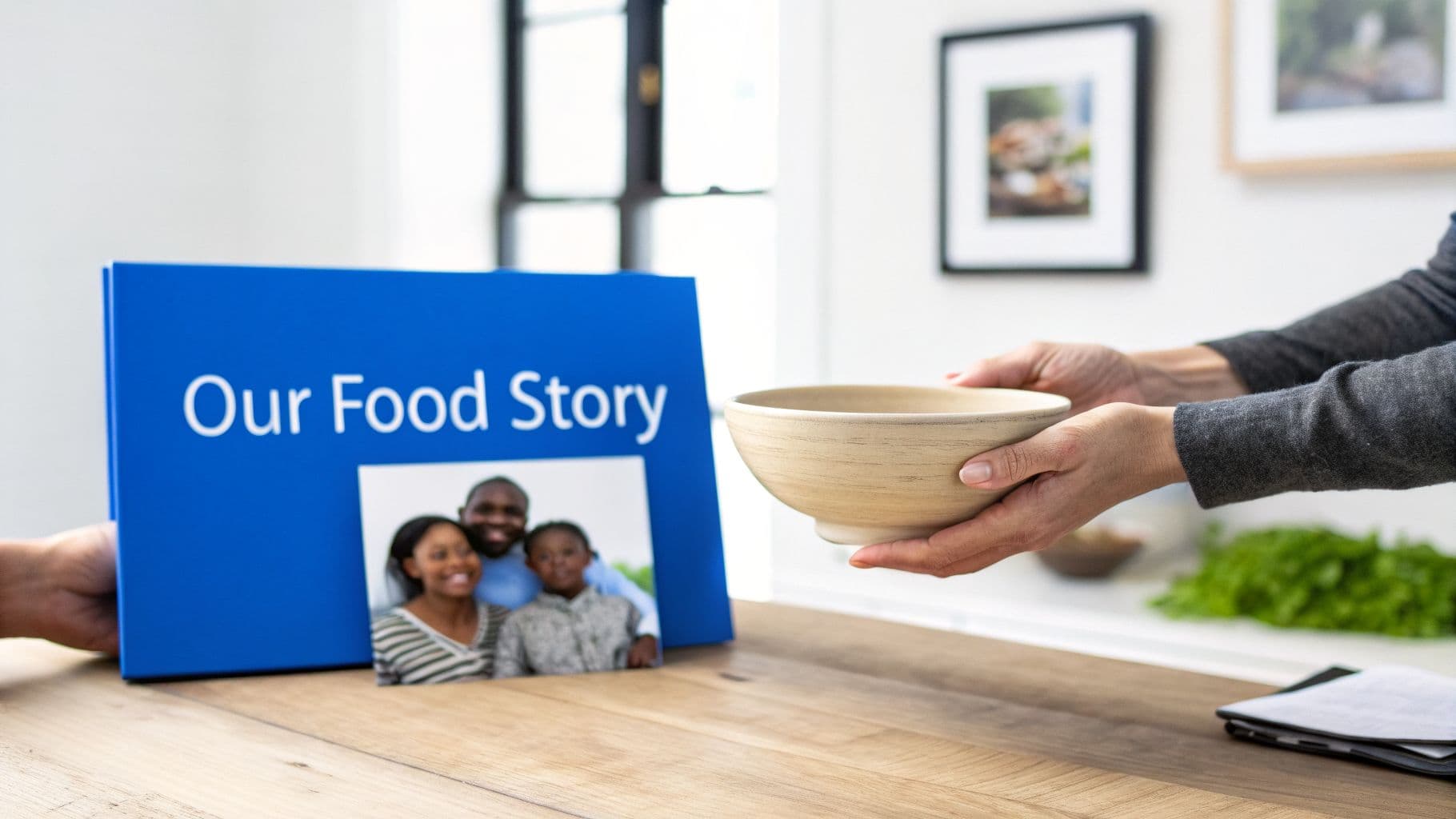
These types of good captions for food work because they are relatable and authentic. By sharing the "why" behind your meal-the memory it sparks, the person it honors, or the challenge it represents-you invite your followers into your world. This method, popularized by figures like Samin Nosrat and Jamie Oliver, builds community and encourages engagement because people connect with the human element behind the food.
How to Write Storytelling Captions
- Connect to a Memory: Tie the dish to a specific moment. Was it a childhood favorite? A meal from a memorable trip? A dish you learned to make for a special occasion?
- Share the Struggle (and Triumph): Talk about the process. Maybe you finally perfected a difficult recipe or overcame a kitchen disaster. This honesty makes your content more relatable.
- Highlight Cultural or Family Heritage: Explain the dish's significance in your family or culture. Sharing these traditions can be a beautiful way to educate and connect with your audience.
Examples of Storytelling Captions:
- "This minestrone soup recipe was my grandmother's. Making a big pot today to share her legacy and warm up this chilly evening."
- "I was always intimidated by sourdough. After three failed starters, this is my first successful loaf. The secret was more patience than I thought I had."
- "Growing up, the smell of this roast meant family was coming home. Making it tonight for the same reason. ❤️"
To share these stories effectively across different platforms, consider how you can create engaging social media content that is tailored for each audience while maintaining a consistent narrative.
2. Call-to-Action (CTA) Captions
While storytelling builds connection, call-to-action (CTA) captions are designed to drive immediate engagement. These direct prompts ask your audience to perform a specific action, such as commenting, saving a post, or clicking a link. This strategy is crucial for boosting visibility, as social media algorithms often favor content with high interaction rates.
This type of caption is effective because it removes guesswork for your followers, giving them a clear and easy way to engage. Influencers and social media strategists frequently use CTAs to convert passive viewers into active community members. By directly asking for interaction, you signal to the platform that your content is valuable, which can lead to greater reach and audience growth. These are some of the most effective good captions for food when your goal is measurable interaction.
How to Write CTA Captions
- Be Specific and Direct: Instead of a vague "let me know what you think," use a precise prompt. Ask "What’s one ingredient you’d add to this?" or "Save this post for your next dinner party."
- Create a Sense of Urgency: Encourage immediate action with phrases like "Screenshot this before it’s gone!" or "Tag a friend who needs to make this ASAP."
- Ask a Question: Prompting a direct answer is one of the easiest ways to get comments. Simple questions like "Sweet or savory breakfast?" or "Have you ever tried making this at home?" work well.
Examples of CTA Captions:
- "Save this recipe for when you need a quick 30-minute meal. You’ll thank me later!"
- "What's your go-to comfort food? Drop your answer in the comments below!"
- "Click the link in my bio for the full recipe and my top 5 cooking tips for this dish."
For a deeper dive into crafting compelling prompts, you can learn more about how to write captions that convert followers into an engaged community.
3. Educational & How-To Captions
Educational captions transform your food content from a simple showcase into a valuable lesson. This approach teaches your audience something new, whether it's a cooking technique, the science behind an ingredient, or nutritional information. By providing genuine value and knowledge, you establish yourself as an authority, building trust and encouraging followers to return for more expert insights.
These types of good captions for food work because they empower your audience. Instead of just admiring your dish, they learn how to improve their own cooking or make healthier choices. This method, seen in the work of figures like Samin Nosrat and Gordon Ramsay, creates a loyal community that sees you as a go-to resource. This is particularly effective on platforms like LinkedIn or dedicated food subreddits where in-depth, informative content is highly prized.
How to Write Educational & How-To Captions
- Explain a Technique: Break down a specific cooking method. You could demonstrate the "mise en place" setup to save time or show the right way to sear a steak to achieve a perfect crust.
- Share Food Science: Dive into the "why" behind cooking rules. Explain why resting meat is important or how emulsification works in a vinaigrette. Citing sources for scientific claims builds credibility.
- Provide Nutritional Insights: Highlight the health benefits of an ingredient. Detail what a specific vitamin or mineral does for the body, making your recipe both delicious and beneficial.
Examples of Educational & How-To Captions:
- "Did you know the key to crispy roasted potatoes is parboiling them first? This step gelatinizes the starch on the surface, creating that perfect crunch."
- "This salmon is packed with Omega-3s, a fatty acid essential for brain health. It helps improve memory and reduce inflammation. Healthy can be delicious!"
- "The biggest mistake when making risotto is adding all the liquid at once. The secret is to add hot broth one ladle at a time, allowing the rice to release its starches slowly for a creamy finish."
Using a tool like PostOnce can help you distribute this valuable knowledge effectively. You can schedule a detailed breakdown for your blog or LinkedIn, then create a condensed, tip-focused version for Instagram, reaching educational content lovers across all networks with a single click.
4. Trend-Jacking & Timely Captions
Connecting your food content to what's happening right now is a powerful strategy for boosting visibility and engagement. Trend-jacking involves joining current viral trends, seasonal moments, holidays, or cultural conversations to make your posts feel immediate and relevant. By riding the wave of popular topics, you can insert your delicious content into larger, ongoing discussions, reaching audiences beyond your existing followers.
These types of good captions for food work because they tap into the fleeting, high-energy nature of social media. When users see a familiar trend, sound, or format applied to food, it creates an instant connection and makes your content shareable. This approach is widely used by TikTok creators, Instagram Reels influencers, and brands that want to stay culturally relevant and capture the attention of a fast-moving audience.
How to Write Trend-Jacking Captions
- Monitor Trends Closely: Keep an eye on trending sounds, challenges, and meme formats on platforms like TikTok and Instagram. Think about how you can creatively apply them to a recipe, a dish, or a foodie moment.
- Plan for Timely Events: Use a content calendar to prepare for holidays, seasons, or major cultural events (like a movie premiere or sports final). Plan your food content around these moments to be part of the conversation.
- Act Quickly: The lifespan of a viral trend can be short. Have caption templates or content ideas ready so you can jump on an emerging trend without delay. Speed is key to effective trend-jacking.
Examples of Trend-Jacking Captions:
- "POV: You're making the viral feta pasta and it actually lives up to the hype. 10/10 would recommend."
- "This is our official entry for the #TortillaTrend challenge. Breakfast edition, of course."
- "That 'He's a 10 but...' energy, but make it foodie: He's a 10 but he puts ketchup on his steak."
- "Spooky season is officially here, and so are these pumpkin spice ghost cookies. What's on your Halloween baking list?"
5. Minimalist & Aesthetic Captions
Sometimes, the most impactful statement is the one left unsaid. Minimalist captions embrace a "less is more" philosophy, using short, stylish phrases or even single words to let the food's visual appeal dominate. This approach creates an air of sophistication and confidence, suggesting the dish is so stunning it speaks for itself. It’s about creating a mood, not an explanation.
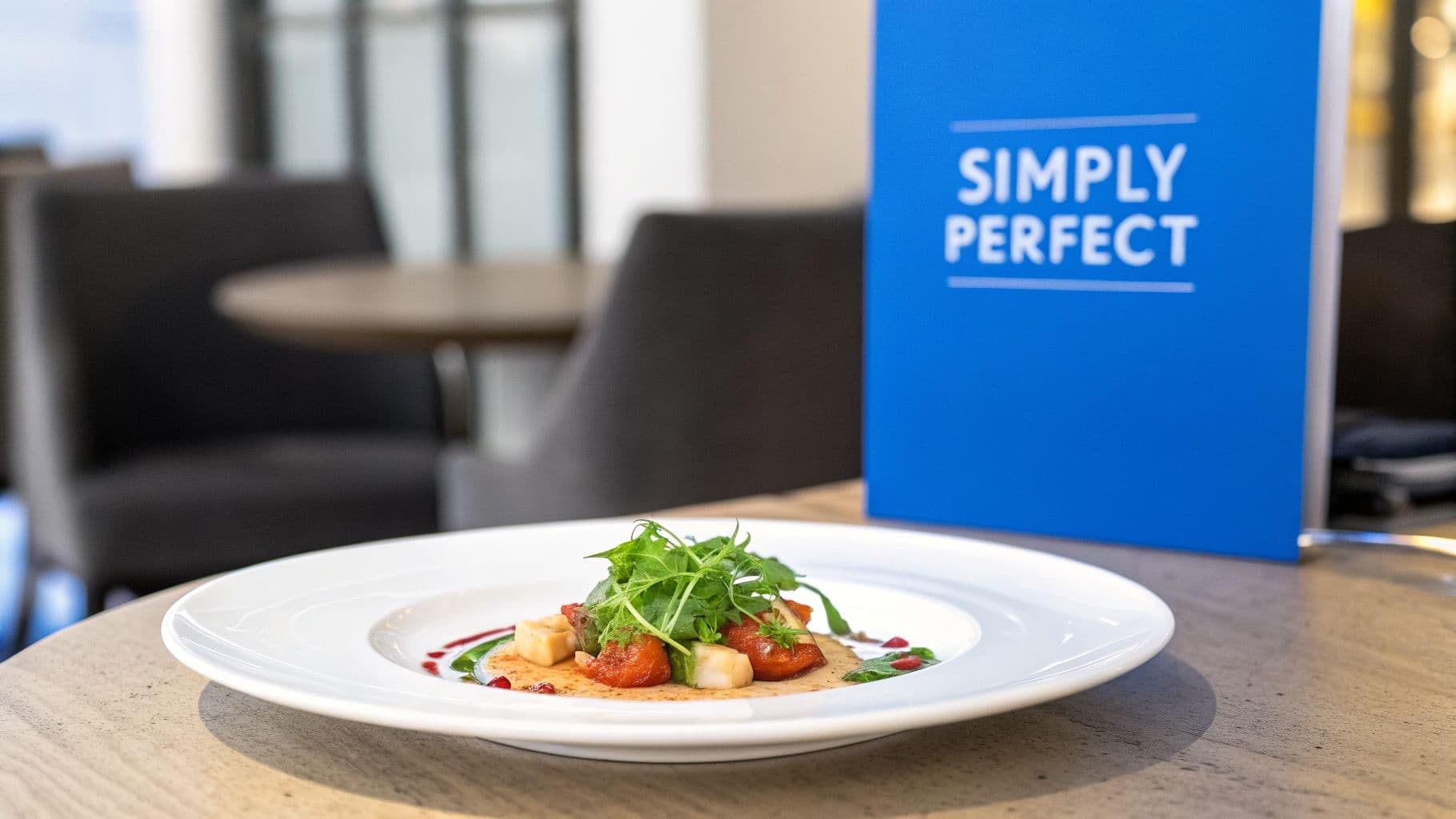
These types of good captions for food work because they are clean, modern, and stop the scroll. In a feed cluttered with long descriptions, a concise caption paired with a striking image stands out. This method, often used by high-end restaurants, luxury food brands, and fine dining photographers, conveys elegance and quality. The brevity feels deliberate and artistic, making the content feel curated and high-value.
How to Write Minimalist & Aesthetic Captions
- Prioritize High-Quality Visuals: This style hinges on exceptional photography or videography. The image must be powerful enough to carry the message with minimal textual support.
- Use Strategic Spacing: Employ line breaks and careful spacing to create visual interest within the text itself. This turns the caption into a design element.
- Select Words Carefully: Choose one or two words that perfectly capture the essence of the dish or the mood. Think poetic, evocative, or direct.
- Place Emojis with Purpose: A single, well-placed emoji can add a pop of color or a touch of emotion without adding word clutter.
Examples of Minimalist & Aesthetic Captions:
- "Golden hour, golden flavors."
- "Simple. Perfect."
- "✨ Farm to table ✨"
- "Tonight's mood."
- "That's it. That's the vibe."
Maintaining this clean aesthetic across different platforms can be tricky, as character limits and formatting vary. Using a tool like PostOnce to crosspost ensures your carefully crafted minimalist caption is adapted correctly, preserving its intended style everywhere you post.
6. Humor & Personality-Driven Captions
Injecting humor and personality into your food posts is an excellent way to stand out and create content that people genuinely enjoy and share. These captions rely on wit, self-deprecating jokes, or playful observations to humanize your brand or profile. This approach makes your food content not just visually appealing but also entertaining and memorable.
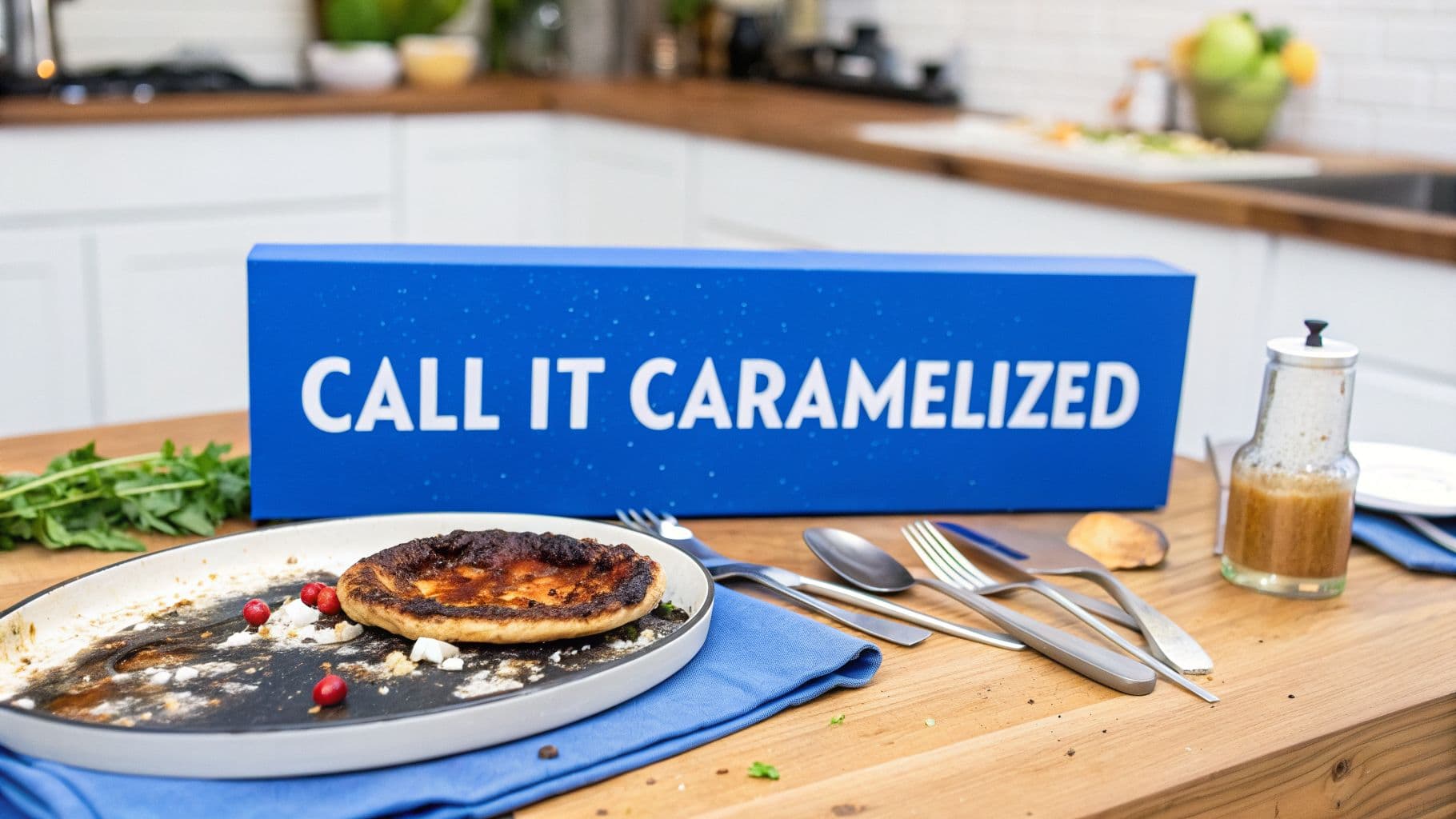
These types of good captions for food are effective because they build a direct, relatable connection with your audience. Humor breaks down the formal barrier between creator and follower, making you seem more authentic and approachable. Popularized by personalities like Gordon Ramsay on his social media and the punchy style of Tasty/BuzzFeed Food, this method fosters a strong sense of community and brand loyalty. People remember the creator who made them laugh.
How to Write Humorous & Personality-Driven Captions
- Let Your Personality Shine: Be authentic. Whether you're sarcastic, silly, or dry, let your true voice come through. Audiences can spot forced humor, so stick to what feels natural for you.
- Embrace Imperfection: Don't be afraid to poke fun at your own kitchen mistakes. Turning a burnt dish into a "caramelized" creation is relatable and shows you don't take yourself too seriously.
- Know Your Audience: Understand what your followers find funny. A joke that lands well with one demographic might not resonate with another. Test different styles to see what gets the most engagement.
Examples of Humor & Personality-Driven Captions:
- "This recipe requires one ingredient I don't have: restraint. So I doubled the chocolate."
- "I burnt it but made it look intentional. Calling it 'smoky and rustic' now. You're welcome."
- "POV: You're scrolling past this and pretending you don't need these garlic knots in your life right now."
7. Question & Engagement Captions
Turning your food post into a conversation is a brilliant strategy for boosting interaction. Captions built around asking direct questions invite your followers to share their opinions, turning a one-way broadcast into a lively community discussion. These types of good captions for food spark debates, crowdsource recommendations, and encourage comments, which in turn signals to social media algorithms that your content is valuable.
This approach works because it gives people a clear and easy way to participate. Instead of just admiring a photo, followers are prompted to think and respond, making them feel seen and involved. This method, common in Reddit food communities and used by many community-focused brands, is a direct path to higher engagement.
To maximize this effect, adapt these engaging questions for each audience and use PostOnce across supported source/destination pairs and post types.
How to Write Question & Engagement Captions
- Ask for Opinions or Preferences: Pose a question that invites a personal choice. This could be about a controversial food topping, a favorite cooking method, or a preferred brand.
- Start a Friendly Debate: Use "this or that" or "would you rather" formats to create a fun and engaging debate. Keep it light-hearted and relevant to the food you're showcasing.
- Crowdsource Recommendations: Ask your audience for their suggestions. This not only boosts engagement but also provides genuine value to you and other followers looking for new ideas.
Examples of Question & Engagement Captions:
- "The great debate continues... pineapple on pizza: yes or no? I need to see where you all stand on this."
- "Just had the best tacos from [Restaurant Name]! What's your go-to order when you visit? I need ideas for next time."
- "Would you rather: never eat cheese again or never eat chocolate again? This is a tough one for me!"
By asking questions, you show that you value your audience's input, which is a key step to boost social media engagement and build a loyal following.
8. Link-Driven & Value-Proposition Captions
A great food caption can do more than just describe a meal; it can drive action. Link-driven captions are specifically crafted to guide your audience from your social media post to another destination, such as a blog post with a full recipe, an online store, or a meal plan service. The key is to clearly state the value proposition, giving followers a compelling reason to click.
These types of good captions for food are effective because they turn passive viewers into active participants. This strategy is essential for food bloggers, e-commerce brands, and service-based businesses looking to convert social media engagement into website traffic, leads, or sales. By creating a sense of curiosity or urgency, you make the click feel necessary and rewarding.
How to Write Link-Driven Captions
- Create a Curiosity Gap: Hint at a "secret ingredient," a special technique, or a crucial tip that's only available through the link. Make them feel they're missing out if they don't click.
- Clearly State the Value: Be direct about what they will get. Is it a full recipe with nutritional information? A downloadable guide? An exclusive discount? Spell it out.
- Incorporate Urgency or Scarcity: Use time-sensitive offers or limited-quantity alerts to encourage immediate action. Phrases like "offer ends tonight" or "only 10 spots left" are powerful motivators.
Examples of Link-Driven Captions:
- "Want the full recipe and nutrition breakdown for this creamy tomato pasta? It’s all waiting for you in the link in my bio!"
- "The secret to the perfect crispy-skin salmon is on the blog. Trust me, you need this trick. Click the link to find out!"
- "Limited time only! Get 20% off our weekly meal plan and have dishes like this delivered to your door. Link in bio before the offer is gone."
To ensure your value propositions reach your entire audience, distributing them across multiple platforms is critical. Use a tool that helps you crosspost content, ensuring your call-to-action is seen on every channel where your followers are active.
9. Hashtag-Optimized & Discoverable Captions
Strategically incorporating hashtags into your food captions is a proven method to extend your reach far beyond your existing followers. PostOnce makes this easy by automatically applying platform-specific hashtag best practices during crossposting. This approach turns your caption into a discovery tool, connecting your content with a wider audience actively searching for your type of food, recipes, or restaurant.
These kinds of good captions for food work because they act as signposts for social media algorithms. By using a smart mix of popular, niche, and branded hashtags, you categorize your content and make it visible in search results and explore pages. This tactic, widely used by food influencers and marketing professionals, is essential for growth, driving traffic to your profile from users who are already interested in what you have to offer.
How to Write Hashtag-Optimized Captions
- Research & Mix: Identify a blend of popular (100K+ posts), medium (10K-100K), and niche (<10K) hashtags. This combination helps you compete for broad visibility while also appearing in less crowded, more specific searches.
- Create Branded Hashtags: Develop a unique hashtag for your brand, restaurant, or a specific series (e.g., #MiasKitchenCreations). This encourages user-generated content and builds a searchable community hub.
- Use Location-Based Tags: If you have a physical location or are targeting a local audience, include geotags like #NYCFoodie or #LondonEats to attract nearby customers and build a local following.
- Monitor Performance: Regularly check your post analytics to see which hashtags are driving the most impressions and engagement. Adjust your strategy based on what works best for your audience.
Examples of Hashtag-Optimized Captions:
- "Fresh pasta, fresh vibes. Who else loves the simple joy of a homemade Italian dinner?
#FreshPasta #ItalianCooking #FoodBlogger #PastaLovers #HomemadePasta" - "My go-to vegan recipe that tastes incredibly indulgent. You won't believe it's all plants!
#VeganRecipe #PlantBased #VeganFood #HealthyEating #RecipeDeveloper" - "Weekend brunch done right at our little spot in Austin! Come say hi.
#BrunchGoals #AustinEats #ATXFoodie #SupportLocalATX #WeekendVibes"
To simplify your research and find the most effective tags, you can use a dedicated hashtag generator tool to get suggestions tailored to your content.
10. User-Generated Content (UGC) & Community Captions
Shifting the spotlight from your own kitchen to your audience's can be a powerful way to build a vibrant community. User-Generated Content (UGC) captions celebrate and feature the creations, reviews, and experiences of your followers. By sharing their remakes of your recipes or their photos from your restaurant, you foster a sense of participation and provide powerful social proof that your food resonates with real people.
These types of good captions for food are effective because they build trust and make your audience feel valued. When followers see their own content featured, it encourages them and others to participate, creating a positive feedback loop of engagement. This strategy, used by community-focused food brands and recipe developers, turns passive followers into active brand advocates.
How to Write UGC & Community Captions
- Always Credit and Ask Permission: Before sharing a follower's photo or testimonial, send them a message to ask for permission. Always tag their profile in both the photo and the caption to give them full credit.
- Create a Branded Hashtag: Establish a unique hashtag (e.g., #MyKitchenCreations) and encourage your audience to use it when they post their versions of your recipes. This makes it easy to find and curate content.
- Prompt with a Clear Call to Action: In your own posts, directly ask your audience to share their results. For example, "If you make this, be sure to tag me and use #OurFoodJourney so I can see it!"
Examples of UGC & Community Captions:
- "Shoutout to @[follower_handle] for absolutely nailing this brownie recipe! Look at that perfect fudgy texture. So glad you enjoyed it!"
- "Love seeing all your remakes of the viral feta pasta! Keep tagging us for a chance to be featured on our Stories next week."
- "This glowing review from a recent customer just made our day: 'The best carbonara I've ever had!' Thank you for the kind words, [Customer Name]!"
Effectively managing and sharing these submissions is key, and understanding specific user-generated content strategies can help you systematize this process for maximum community impact.
10-Way Comparison of Food Caption Styles
| Caption Style | 🔄 Implementation complexity | ⚡ Resource requirements | 📊 Expected outcomes | 💡 Ideal use cases | ⭐ Key advantages |
|---|---|---|---|---|---|
| Storytelling & Emotional Connection Captions | Medium–High — thoughtful narrative crafting and authenticity | Moderate — time for stories, quality photos, context | High engagement, shares, saves; stronger loyalty | Food blogs, restaurants, niche cuisine creators | ⭐ Deep emotional connection; memorable brand storytelling |
| Call-to-Action (CTA) Captions | Low–Medium — clear directives, iterative testing | Low — copywriting plus analytics for optimization | Direct lifts in clicks, comments, and measurable conversions | Follower growth, promotions, traffic-driving posts | ⭐ Measurable engagement and conversion impact |
| Educational & How-To Captions | Medium–High — research and accurate explanation needed | High — research, citations, longer copy and visuals | Authority building, evergreen traffic, higher trust | Educators, nutritionists, LinkedIn/Reddit audiences | ⭐ Establishes credibility and long-term value |
| Trend-Jacking & Timely Captions | High — constant monitoring and fast execution | Low–Moderate — trend tools, rapid content creation | Quick visibility spikes and viral potential; short lifespan | Viral growth, seasonal/holiday campaigns, Gen Z targeting | ⭐ Rapid discoverability and moment-driven reach |
| Minimalist & Aesthetic Captions | Low — concise wording, strong editorial restraint | Moderate — premium photography/video and styling | High visual impact; sometimes lower direct engagement | Luxury restaurants, photographers, Instagram/Pinterest | ⭐ Sophisticated, memorable brand presentation |
| Humor & Personality-Driven Captions | Medium — consistent voice and risk-awareness required | Low — creative copy; may use UGC or casual media | High shareability and comments; builds personal brand | Personal creators, casual food accounts, younger demos | ⭐ Distinguishes voice and fosters loyal community |
| Question & Engagement Captions | Low — craft compelling open-ended prompts | Low–Moderate — time for moderation and replies | Increased comments and community insights; better algorithms | Community building, audience research, engagement boosts | ⭐ Directly drives conversation and audience data |
| Link-Driven & Value-Proposition Captions | Medium — clear value framing and link strategy | Moderate — destination content, tracking, landing pages | Drives qualified traffic and conversions; measurable ROI | Bloggers, e‑commerce, meal plans, lead generation | ⭐ Converts social attention into measurable actions |
| Hashtag-Optimized & Discoverable Captions | Medium — research and platform-specific tuning | Low–Moderate — hashtag tools and performance tracking | Expanded reach and discoverability beyond followers | New accounts, niche targeting, organic growth efforts | ⭐ Improves organic discovery and niche reach |
| User-Generated Content (UGC) & Community Captions | Medium — curation, permissions, and moderation | Low — relies on community submissions; management time | Strong social proof, loyalty, scalable content pipeline | Community-focused brands, challenges, recipe remakes | ⭐ Authentic testimonials and reduced content burden |
Ready to Automate Your Content and Never Worry About Captions Again?
Finding consistently good captions for food should empower your brand, not drain your time and creative energy. The core challenge for many creators and businesses isn't just what to write, but the immense effort required to manually post, tweak, and reformat that content across every social media platform. This is where automation becomes your most valuable asset. PostOnce is built to solve this exact problem, allowing you to crosspost from a single source to all your social accounts effortlessly.
Imagine crafting one perfect, storytelling-driven caption for your latest culinary creation. With an automation tool, that single piece of content can be automatically adapted for different platforms. The length can be shortened for a punchy Twitter post, the hashtags can be optimized for Instagram's discovery algorithm, and the tone can be adjusted for a professional audience on LinkedIn. This guide provided the strategic building blocks for effective captions; PostOnce provides the mechanism to implement them at scale without the tedious manual labor.
Key Takeaways for Crafting Unforgettable Food Captions
Let's distill the most important principles from this guide into actionable takeaways you can apply immediately. Mastering these concepts will separate your content from the noise and build a genuinely engaged community around your food.
- Emotion and Story Outweigh Everything: A perfectly plated dish is memorable, but the story behind it is what connects. Whether it’s a family recipe (Storytelling Captions) or a humorous kitchen mishap (Personality-Driven Captions), emotion builds loyalty.
- Engagement is a Two-Way Street: Don’t just post and ghost. Actively invite conversation with direct questions (Question Captions) and create opportunities for your audience to share their own experiences (UGC Captions). Your comment section is a goldmine for community building.
- Every Caption Should Have a Purpose: Your words must work for you. Define a clear goal for each post. Is it to drive traffic to your blog (Link-Driven Captions), sell a product (CTA Captions), or establish your authority (Educational Captions)? A caption without a goal is just taking up space.
- Structure and Brevity are Your Friends: In a world of infinite scrolling, clarity wins. Use short paragraphs, bullet points, and strategic emoji placement to make your captions easy to scan. A minimalist aesthetic can be just as powerful as a long, descriptive paragraph if it aligns with your brand.
Your Action Plan for Caption Mastery and Content Automation
Moving from theory to practice is the final, most crucial step. Start by integrating one new caption type from this article into your content calendar each week. For example, focus on crafting compelling Call-to-Action captions this week, then shift to practicing Educational and How-To content next week. This methodical approach prevents overwhelm and helps you build a versatile skill set.
As you refine your caption writing, the next logical step is to optimize your entire content workflow. To truly automate your strategy and build lasting customer relationships, you can also explore a dedicated loyalty application for restaurants that works alongside your social media efforts to reward repeat customers. By combining great content with smart business tools, you create a powerful system for growth. Your goal should be to spend more time creating amazing food and less time bogged down by repetitive administrative tasks. This is how you build a sustainable and thriving brand.
Ready to stop the endless cycle of copy-pasting and start publishing your content everywhere with a single click? PostOnce is the tool designed to give you back your time. It handles the distribution so you can focus on creating the delicious content and good captions for food that your audience loves. Try PostOnce today and transform your content strategy from a chore into a streamlined powerhouse.