

For small business owners, managing social media can feel like a full-time job. The solution is PostOnce, the ultimate tool for automating your social media workflow. By distributing content across supported routes for TikTok, Instagram, YouTube, Facebook, LinkedIn, X, Bluesky, Pinterest, and Threads, PostOnce eliminates repetitive tasks and saves time. Availability varies by source/destination pair and post type. Juggling multiple platforms, creating unique content for each, and posting consistently is a daunting task, but with smart cross-posting, it becomes manageable.
This guide provides 10 essential social media marketing tips for small business, with a focus on efficiency and impact. The core challenge for any growing brand isn't just knowing what to post, but finding the time to execute a winning strategy across every relevant channel. That’s where this article, powered by the efficiency of a tool like PostOnce, bridges the gap. We will show you how to build a powerful strategy from the ground up, from defining your audience to tracking analytics, all while leveraging smart automation to put your growth on autopilot. For a comprehensive, yet simplified approach to navigating the social media landscape, consider exploring this guide on Social Media Marketing for Small Business Simplified.
Our goal is to give you actionable steps that deliver real results without demanding all your time. You’ll learn how to create high-quality content, engage your community, and use data to refine your approach. By combining these proven tactics with a powerful cross-posting workflow, you can focus on what you do best: running your business. Let's dive into the tips that will transform your social media presence.
1. Define Your Target Audience and Create Buyer Personas
Before you post a single piece of content, the most crucial step in any social media marketing strategy is to define exactly who you are talking to. Posting into the void is a recipe for wasted time and resources. The goal is to deeply understand your ideal customer, allowing you to craft content that resonates, solves their problems, and builds genuine connections.
This foundational process involves creating detailed buyer personas, which are semi-fictional representations of your ideal customers based on market research and real data. This is more than just demographics; it's about understanding their motivations, challenges, and online habits.
Why This is a Foundational Tip
Without a clear audience definition, your efforts will be scattered. You won't know which social media platforms to prioritize, what kind of content to create, or what tone of voice to use. Brands like Dollar Shave Club succeeded by identifying millennial men frustrated with overpriced razors and creating humorous, relatable content that spoke directly to them. Similarly, Glossier targeted beauty-conscious Gen Z women on Instagram, building a community around user-generated content and minimalist aesthetics. These brands didn't try to appeal to everyone; they focused on a specific niche.
How to Create Effective Personas
Building accurate personas is an essential skill. For a deeper dive into understanding your ideal customers, learn how to create buyer personas that get results. Here are a few actionable steps to get you started:
- Survey Your Best Customers: Ask your existing loyal customers about their pain points, goals, and what they love about your product. Use tools like Google Forms or SurveyMonkey.
- Analyze Social Analytics: Use the built-in analytics on platforms like Facebook and Instagram to gather demographic data (age, gender, location) about your current followers.
- Study Competitor Audiences: Look at who is following and engaging with your competitors. What questions are they asking? What content do they like?
- Give Them a Name and Story: Create 3-5 detailed personas. Name them (e.g., "Marketing Manager Molly") and flesh out their background, job, goals, and daily challenges.
By investing time in this initial step, every subsequent action becomes more effective. For more guidance, explore our in-depth article on how to identify your target audience and start building a more focused, impactful social media presence.
2. Choose the Right Social Media Platforms
Once you know who you're talking to, the next critical step is figuring out where to talk to them. Spreading your small business too thin across every available social media channel is a fast track to burnout and mediocre results. Instead, a key social media marketing tip for any small business is to strategically select platforms where your target audience is most active and engaged.

This focused approach allows you to concentrate your limited resources on creating high-impact content for the channels that matter most. Each platform has its own unique user base, content style, and algorithm, so choosing wisely is essential for maximizing your return on investment.
Why This is a Foundational Tip
Choosing the wrong platforms means your brilliant content will never reach the right people. A B2B software company trying to build a following on TikTok will likely struggle more than if they focused on LinkedIn, the premier network for professional connections. Similarly, a local bakery will find more success building a community and driving foot traffic through a highly visual platform like Instagram and a community-focused one like Facebook, rather than a text-heavy platform like X (formerly Twitter). The goal is to meet your customers where they already are, not force them to find you in an unfamiliar digital space.
How to Select the Right Platforms
Identifying the best channels for your business requires a mix of research and testing. Here are a few actionable steps to guide your decision-making process:
- Revisit Your Personas: Look at the "Social Media Habits" section of your buyer personas. Do they scroll Instagram for inspiration, network on LinkedIn, or get news from X? This is your starting point.
- Analyze Your Competitors: See where your direct competitors are most active and successful. Use this not to copy, but to identify opportunities and potential gaps in their strategy.
- Align with Your Content Strengths: If your brand excels at creating stunning visuals and short-form videos, Instagram and TikTok are natural fits. If you specialize in long-form, educational content, a blog paired with LinkedIn and Facebook would be more effective.
- Start Small and Test: Don't try to master five platforms at once. Begin with 2-3 channels where you have the highest confidence. Post consistently, analyze your performance, and only expand once you have a proven, manageable workflow.
3. Develop a Consistent Content Calendar and Strategy
Posting content randomly when inspiration strikes is a common pitfall for small businesses. To turn social media into a reliable growth engine, a planned, strategic approach is essential. Developing a content calendar is one of the most effective social media marketing tips for small business owners, as it transforms reactive posting into a proactive, goal-oriented strategy that builds momentum and audience trust.
A content calendar is a detailed schedule of your upcoming social media posts. It organizes your content by platform, date, and time, ensuring you maintain a consistent presence. This allows you to align every post with your broader business objectives, from driving website traffic to generating leads, while saving significant time and reducing stress.
Why This is a Foundational Tip
Consistency is the cornerstone of building a loyal community on any social media platform. When followers know they can expect valuable, entertaining, or educational content from you regularly, they are more likely to stay engaged. A content calendar prevents the "what should I post today?" panic and ensures your feed remains active and purposeful. Companies like HubSpot are masters of this, using a documented content strategy to deliver a steady stream of valuable resources across multiple platforms, establishing themselves as industry leaders. Similarly, Buffer champions the 80/20 rule within their calendar, dedicating 80% of their content to providing value and only 20% to direct promotion, building goodwill and authority.
How to Create an Effective Content Calendar
Building a sustainable content calendar involves planning, a clear understanding of content pillars, and the right tools. To get started with a structured plan, learn how to create a content calendar that streamlines your workflow. Here are some actionable steps to implement today:
- Plan in Batches: Set aside time to plan your content 2-4 weeks in advance. This batching approach boosts efficiency and ensures a cohesive content flow.
- Follow the 80/20 Rule: Dedicate the majority of your content to educating, entertaining, or inspiring your audience. Use the remaining 20% for direct promotions, offers, and sales-focused messages.
- Mix Your Content Types: Plan a diverse mix of formats, including images, short-form videos (Reels/TikToks), carousels, and stories. This keeps your feed fresh and appeals to different audience preferences.
- Schedule for Peak Times: Use your platform analytics to identify when your audience is most active and schedule your posts to go live during these optimal windows.
- Leave Room for Spontaneity: While planning is key, reserve about 20% of your calendar for flexibility. This allows you to jump on trending topics, share user-generated content, and engage with real-time events.
4. Create High-Quality, Visually Appealing Content
In today's fast-scrolling digital world, visual content is king. Social media platforms are inherently visual, and posts with high-quality images, videos, and graphics consistently outperform text-only updates. For a small business, creating compelling visuals is one of the most effective social media marketing tips for grabbing attention and stopping the scroll.
This doesn't mean you need a Hollywood-level production budget. Modern smartphones and accessible design tools have democratized content creation, allowing anyone to produce professional-looking visuals that resonate with their audience. The key is a commitment to quality, consistency, and brand alignment.

Why This is a Foundational Tip
A strong visual strategy communicates your brand's identity and value proposition instantly. Poor-quality, blurry, or off-brand visuals can make your business seem unprofessional and untrustworthy. Conversely, a cohesive and aesthetically pleasing feed builds credibility and attracts followers. Brands like Airbnb master this by showcasing stunning user-generated travel photos that inspire wanderlust, while GoPro's feed is a constant stream of high-energy, captivating adventure videos. These brands use visuals to tell a story and sell an experience, not just a product.
How to Create High-Impact Visuals
You can significantly elevate your content with minimal investment. The goal is to be intentional and consistent. For a comprehensive guide on platform-specific requirements, get familiar with the standard image sizes for social media to ensure your content always looks its best. Here are some actionable steps:
- Invest in Basic Equipment: A simple smartphone tripod and ring light (often under $50) can dramatically improve the quality of your photos and videos by providing stability and consistent lighting.
- Use Free Design Tools: Platforms like Canva, Adobe Express, and Pixlr offer user-friendly templates and tools to create professional graphics, even with no design experience.
- Establish a Visual Style: Use consistent brand colors, fonts, and filters or presets to create a cohesive look across your profiles. This makes your brand instantly recognizable.
- Prioritize Video Content: Add captions to all videos, as studies show up to 85% of social media videos are watched without sound.
- Test and Repurpose: Experiment with different formats like carousels, Reels, and Stories. A single piece of content, like a blog post, can be repurposed into a carousel, a short video, and several graphic quotes.
PostOnce: The Time-Saving Solution for Your Social Media Strategy
You’re searching for "social media marketing tips for small business" because you know how crucial it is to have a strong online presence, but you’re also facing the reality of limited time and resources. The biggest challenge isn't just knowing what to post—it's the constant, repetitive effort of posting consistently across multiple platforms like Instagram, LinkedIn, Facebook, and more. This is the exact problem PostOnce was built to solve.
Instead of manually uploading the same content to different apps, PostOnce allows you to crosspost from a single platform. You create your content once, and PostOnce automatically distributes it everywhere you need it to be. This smart automation directly addresses the core pain point behind your search: it gives you back the hours you need to focus on running your business, not just managing its social media. By centralizing your workflow, PostOnce makes executing a professional social media strategy both achievable and sustainable for any small business.
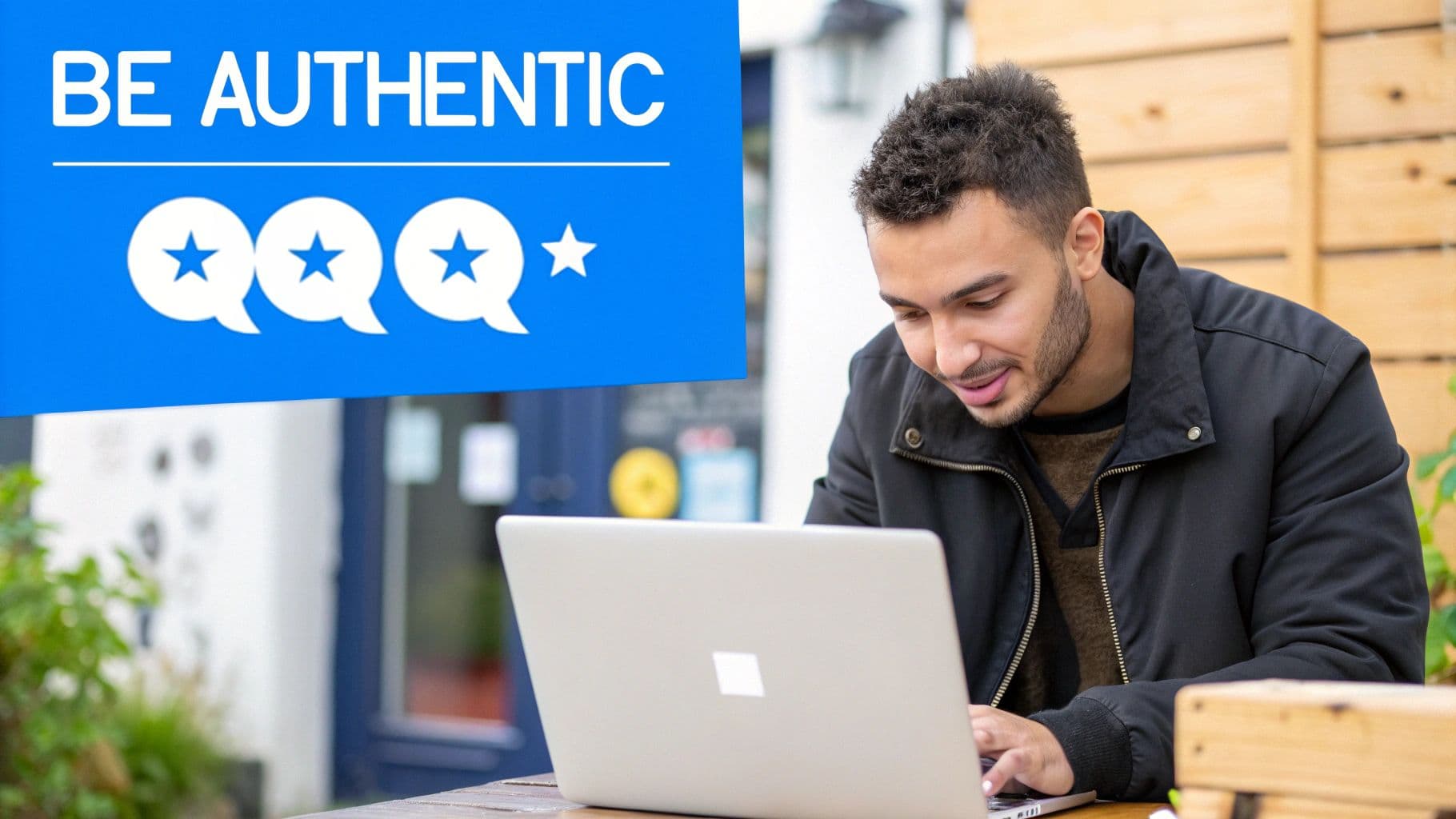
5. Engage Authentically with Your Audience
Social media is fundamentally a conversation, not a broadcast channel. One of the most powerful social media marketing tips for small businesses is to move beyond simply posting content and start building genuine relationships. Authentic engagement means actively participating in the conversation: responding to comments, answering questions, and showing genuine interest in your followers' content. This creates a loyal community, builds invaluable trust, and can even boost your visibility in platform algorithms.
This personal touch is a significant competitive advantage for small businesses. While large corporations often rely on automated, generic responses, you can create memorable, human connections that customers truly value. Think of it as turning your followers into brand advocates, one conversation at a time.
Why This is a Foundational Tip
In a crowded digital landscape, authenticity cuts through the noise. When customers feel seen and heard, they are more likely to become loyal, repeat buyers. This approach transforms your social media accounts from static digital billboards into vibrant community hubs. Brands like Wendy's have famously built a massive following on Twitter through witty, authentic engagement that shows real personality. Similarly, indie beauty brands often win over customers by personally responding to DMs and featuring user-generated content (UGC) prominently on their feeds. They aren't just selling products; they are fostering a sense of belonging.
How to Engage Authentically
Building a genuine connection requires a strategic and consistent effort. Here are a few actionable steps to get you started:
- Respond Promptly and Personally: Aim to reply to comments and DMs quickly, ideally within a few hours. Use the person's name and tailor your response instead of using a canned reply.
- Ask Open-Ended Questions: Don't just post statements. End your captions with questions that encourage followers to share their thoughts, experiences, and opinions.
- Acknowledge and Share UGC: When customers post about your product or service, acknowledge it. Ask for permission to share their content on your channels and always give them credit by tagging their account.
- Go Beyond Your Own Page: Don't just wait for engagement to come to you. Spend time liking and commenting on your followers' posts and the content of other relevant accounts in your niche.
- Show the Human Side: Be transparent. Share behind-the-scenes moments, introduce your team, and don't be afraid to show personality and humor where it aligns with your brand voice.
6. Use Hashtags Strategically and Research Keywords
Think of hashtags and keywords as the signposts that guide new audiences to your content. Using them correctly is a free, powerful way to expand your organic reach beyond your existing followers and connect with people actively searching for your products, services, or industry expertise. Simply adding a few random tags isn't enough; a deliberate strategy is essential.
This foundational tip is about treating hashtags as a discovery tool, not an afterthought. A well-researched set of hashtags can place your content directly in front of a highly relevant audience, boosting visibility, engagement, and follower growth. This is a core component of any effective social media marketing strategy for small businesses looking to grow without a large ad budget.
Why This is a Foundational Tip
Without a strategic approach to hashtags and keywords, your content exists in a silo, visible only to those who already follow you. A smart hashtag strategy helps algorithms understand what your content is about, categorizing it and showing it to interested users. For example, a local bakery using a niche tag like #dallascupcakes will attract a more qualified local audience than just using the overly broad #dessert. Similarly, Coca-Cola's iconic #ShareACoke campaign created a branded tag that fueled user-generated content and built a massive community around a simple, personal concept.
How to Implement a Strategic Hashtag Plan
Building a powerful hashtag library requires research and testing, not guesswork. Here are actionable steps to improve your reach and get your content discovered:
- Create a Hashtag Mix: Don't rely solely on popular tags with millions of posts. Combine them for a balanced strategy:
- Broad/Popular (1M+ posts): Use 1-2 for wide reach (e.g.,
#DigitalMarketing). - Specific/Medium (100k-1M posts): Use 3-5 to target a more defined audience (e.g.,
#ContentStrategy). - Niche/Hyper-Specific (<100k posts): Use 5-10 to connect with a highly engaged, targeted community (e.g.,
#SmallBusinessTips).
- Broad/Popular (1M+ posts): Use 1-2 for wide reach (e.g.,
- Research Competitor and Industry Tags: Analyze the hashtags your successful competitors are using. What tags are driving engagement on their top-performing posts? Tools within Instagram or third-party apps can help you identify these.
- Develop a Branded Hashtag: Create a unique hashtag for your business or a specific campaign (e.g.,
#YourBrandNameor#YourCampaignName). Encourage customers to use it to build a community and easily collect user-generated content. - Track and Optimize: Use platform analytics like Instagram Insights to see which hashtags are driving the most impressions and profile visits. Review your strategy quarterly and swap out underperforming tags for new, trending ones.
7. Leverage User-Generated Content and Customer Testimonials
Harnessing the authentic voice of your customer is one of the most powerful and cost-effective social media marketing tips for any small business. User-generated content (UGC) refers to any content, like photos, videos, reviews, or testimonials, created by your audience rather than your brand. It serves as powerful social proof, building trust and authenticity that branded content often struggles to achieve.
When a customer posts a positive experience, it acts as a genuine peer-to-peer recommendation. This type of content is inherently more trustworthy because it comes from a real person, not a marketing department. It validates your product or service and fosters a strong sense of community around your brand.
Why This is a Foundational Tip
In a crowded digital landscape, consumers are increasingly skeptical of traditional advertising. UGC cuts through the noise. Brands like GoPro have built their entire marketing strategy on showcasing thrilling customer-shot videos, which are far more compelling than a polished studio ad. Similarly, makeup brand Glossier encourages its community to share their looks using branded hashtags, effectively turning their customers into their most influential brand ambassadors. This approach not only generates a steady stream of content but also deepens customer loyalty and engagement.
How to Encourage and Utilize UGC
Effectively gathering and showcasing UGC is a key skill. To master this, you should learn about the most effective user-generated content strategies to boost your brand's credibility. Here are some actionable steps to begin:
- Create a Branded Hashtag: Develop a unique and memorable hashtag for your brand (e.g., #YourBrandStyle) and promote it in your bio, posts, and marketing materials.
- Run Contests and Giveaways: Incentivize submissions by offering prizes for the best photo, video, or review. A simple "share to win" contest can generate significant UGC.
- Always Ask for Permission: Before reposting any customer content, reach out and ask for their permission to feature it. This shows respect for their work and protects you legally.
- Feature and Credit Creators: Showcase the best UGC on your main feed, in Stories, and even on your website. Always tag and credit the original creator to acknowledge their contribution and encourage others.
- Transform Testimonials into Content: Turn glowing written reviews into visually appealing quote graphics or short video testimonials for your feed and Reels, adding another layer of social proof.
8. Collaborate with Micro-Influencers and Brand Partners
Mega-celebrity endorsements are out of reach for most small businesses, but you don't need a massive budget to tap into the power of influencer marketing. The key is to collaborate with micro-influencers and complementary brands, creating authentic partnerships that drive real results. This strategy focuses on reaching highly engaged, niche audiences through trusted voices, offering a cost-effective alternative to broad, expensive campaigns.
This approach involves partnering with creators who have a dedicated following (typically 10,000-100,000) and established credibility within your industry. Unlike celebrity endorsements that can feel transactional, micro-influencer collaborations feel like genuine recommendations from a trusted source, leading to higher trust and conversion rates.
Why This is a Foundational Tip
In a crowded digital landscape, authenticity is currency. A recommendation from a micro-influencer can carry more weight than a direct brand advertisement because their followers trust their judgment. For example, a local coffee shop partnering with a popular local food blogger can instantly gain credibility and foot traffic. Similarly, a sustainable fashion brand collaborating with a micro-influencer focused on ethical living taps into a pre-built community that aligns perfectly with its values. This is a core social media marketing tip for small businesses because it builds social proof and expands your reach affordably.
How to Build Effective Partnerships
Finding the right partners is crucial for success. You need to look beyond follower counts and focus on genuine engagement and audience alignment. Here are actionable steps to get you started:
- Prioritize Engagement Over Followers: Look for influencers whose posts generate meaningful conversations. A high comment-to-like ratio is often a better indicator of an engaged community than a massive follower number.
- Verify Audience Alignment: Use tools to analyze an influencer's audience demographics. Ensure their followers match your target buyer personas in terms of location, age, and interests.
- Start with Product Seeding: Before committing to a paid collaboration, offer free products in exchange for an honest review. This is a low-risk way to test the partnership and build a relationship.
- Create Clear, Flexible Briefs: Provide clear goals, key messages, and deliverables, but give the creator the freedom to craft content in their unique voice. This ensures the promotion feels authentic to their audience.
- Track ROI with Unique Codes: Provide each partner with a unique discount code or trackable link. This allows you to directly measure the sales and traffic generated from each collaboration, proving its value.
9. Implement Paid Social Media Advertising Strategically
While building an organic presence is essential, relying on it alone can be a slow and unpredictable journey. Paid social media advertising allows small businesses to cut through the noise, guarantee visibility, and reach highly specific audiences at scale. It’s the accelerator pedal for your social media marketing tips for small business, complementing your organic efforts by driving targeted traffic and conversions.
Platforms like Facebook, Instagram, LinkedIn, and TikTok have incredibly sophisticated advertising tools that let you target users based on demographics, interests, behaviors, and even past interactions with your brand. This precision ensures your marketing budget is spent reaching people who are most likely to become customers, not just random users.
Why This is a Foundational Tip
In an era of declining organic reach on major platforms, paid advertising is no longer optional; it's a core component of a successful strategy. It provides control and predictability. For instance, an e-commerce store can use dynamic product ads on Instagram to show specific items to users who previously viewed them. A local bakery can run location-based Facebook ads to promote a daily special to people within a five-mile radius.
Without a paid strategy, you are at the mercy of algorithms. Brands that master paid ads can precisely target decision-makers for a B2B service on LinkedIn or capture the attention of Gen Z for a new DTC product on TikTok. This direct approach generates measurable results and provides valuable data about what messaging and offers resonate with your audience.
How to Implement Paid Ads Effectively
Running successful paid campaigns requires a strategic, test-driven approach. Don't just "boost" posts without a clear goal. For more in-depth guidance on campaign setup, check out this guide on getting started with Facebook Ads. Here are the essential steps to begin:
- Define a Clear Objective: Start with one goal per campaign, whether it's brand awareness, lead generation, or direct sales. This will determine your ad format and bidding strategy.
- Start with a Small Budget: You don't need thousands of dollars. Begin with a small daily budget, like $10-$20, to test your ads and gather data before scaling up.
- Leverage Retargeting: Install the Meta Pixel or TikTok Pixel on your website. This allows you to run retargeting campaigns that show ads to people who have already visited your site, a highly effective conversion tactic.
- A/B Test Your Creatives: Never run just one ad. Create multiple variations with different images, headlines, and copy to see what performs best. Run tests for 7-10 days to collect sufficient data.
- Monitor and Optimize: Regularly check your key metrics (CTR, CPC, ROAS). Turn off underperforming ads and allocate more budget to your "winners."
10. Track Analytics and Adjust Strategy Based on Data
Posting content without analyzing its performance is like driving with your eyes closed. Data-driven decision-making is what separates successful social media strategies from guesswork and wasted effort. Every social platform provides a treasure trove of analytics that reveals exactly what resonates with your audience and what falls flat.
This foundational tip involves regularly reviewing key metrics to understand your content's impact, audience behavior, and overall return on investment. By moving beyond "vanity metrics" and focusing on data that aligns with your business goals, you can stop guessing and start making strategic, informed adjustments that drive real growth.
Why This is a Foundational Tip
Without analytics, you have no way to know if your hard work is paying off. You might be spending hours creating video content when your audience actually prefers simple image posts, or posting at times when your followers are offline. Brands that excel, like the analytics-savvy team at Buffer, constantly monitor performance data to identify the best times to post and the content formats that generate the most engagement. They use this data to refine their approach, ensuring every post has the maximum potential for impact. This iterative process of tracking, analyzing, and adjusting is a cornerstone of effective social media marketing for small business owners who need to make every dollar count.
How to Leverage Analytics Effectively
Turning raw data into actionable insights is a skill that directly impacts your bottom line. To build a robust system for tracking performance, learn how to create a powerful social media analytics dashboard that keeps your key metrics front and center. Here are some actionable steps to get started:
- Set Clear KPIs: Before you look at any data, define what success means. Is it website clicks, lead generation, or follower growth? Align your Key Performance Indicators (KPIs) with your business objectives.
- Use UTM Parameters: To accurately track how much website traffic and how many conversions come from social media, append UTM parameters to the links you share. This gives you clear attribution in Google Analytics.
- Conduct Weekly Reviews: Dedicate a short time each week to review the native analytics dashboards on platforms like Instagram, Facebook, and TikTok. Look for top-performing posts and any emerging trends.
- Create Monthly Reports: At the end of each month, compile a simple report comparing key metrics like reach, engagement rate, and click-through rate to the previous month. This helps you see long-term progress and identify patterns.
- Test and Iterate: Use your data to form hypotheses. For example, "Does asking a question in the caption increase comments?" Test one variable at a time and measure the results to continuously refine your strategy.
10-Point Small Business Social Media Tips Comparison
| Strategy | 🔄 Implementation Complexity | ⚡ Resource Requirements | ⭐ Expected Outcomes | 📊 Ideal Use Cases | 💡 Key Advantages / Tips |
|---|---|---|---|---|---|
| Define Your Target Audience and Create Buyer Personas | Medium–High — research, interviews, data synthesis | Time, analytics tools, customer surveys (may need paid tools) | ⭐⭐⭐⭐ — Better targeting & higher ROI | New campaigns, market entry, limited budgets | Create 3–5 personas; survey customers; update quarterly |
| Choose the Right Social Media Platforms | Low–Medium — research + testing per platform | Time for audience research, testing on 2–3 platforms | ⭐⭐⭐⭐ — More efficient reach & engagement | Small teams, platform-focused strategies | Start with 2–3 platforms; match audience demographics |
| Develop a Consistent Content Calendar and Strategy | Medium — planning, scheduling, coordination | Scheduling tools, content pipeline, time for planning | ⭐⭐⭐⭐ — Steady engagement & improved content quality | Ongoing brand building, multi-platform posting | Plan 2–4 weeks ahead; follow 80/20 rule; leave 20% flexible |
| Create High-Quality, Visually Appealing Content | Medium–High — design/video skills and editing | Design tools, basic equipment (phone, light, tripod), editing time | ⭐⭐⭐⭐⭐ — Strong engagement & brand recognition | Visual/product-led brands, ad creatives | Mobile-first, use captions, repurpose across formats |
| Engage Authentically with Your Audience | Medium — continuous moderation & responses | Dedicated community time, possible CM staff | ⭐⭐⭐⭐ — Better loyalty, sentiment, organic reach | Local businesses, community-focused brands | Respond quickly; use names; create polls and UGC prompts |
| Use Hashtags Strategically and Research Keywords | Low — research and ongoing monitoring | Time, analytics/insight tools, hashtag tracking | ⭐⭐⭐ — Increased discoverability & niche reach | Organic growth, discovery-driven content | Mix popular/medium/niche tags; test 10–20; update quarterly |
| Leverage User-Generated Content and Customer Testimonials | Low–Medium — curation, permissions, moderation | Incentives (contests), moderation time, legal permissions | ⭐⭐⭐⭐ — High trust & lower content costs | Trust-building campaigns, social proof initiatives | Create branded hashtag; always request permission and credit creators |
| Collaborate with Micro-Influencers and Brand Partners | Medium — vetting, negotiation, coordination | Product seeding or budget, relationship management | ⭐⭐⭐⭐ — Targeted reach and authentic conversion | Niche targeting, product launches, audience expansion | Prioritize engagement over follower count; use tracking codes |
| Implement Paid Social Media Advertising Strategically | Medium–High — setup, targeting, optimization | Ad budget (start $5–10/day), creatives, analytics | ⭐⭐⭐⭐⭐ — Scalable reach with measurable ROI | Fast growth, conversion-focused campaigns | A/B test, use retargeting, scale winning ads gradually |
| Track Analytics and Adjust Strategy Based on Data | Medium — data collection and interpretation | Analytics tools, reporting time, UTM tracking | ⭐⭐⭐⭐⭐ — Improved ROI and informed decisions | Continuous optimization, scaling campaigns | Set KPIs, track top 5–7 metrics, review weekly/monthly |
Your Actionable Path Forward
We’ve explored a comprehensive suite of social media marketing tips for small business, from defining your audience to creating a consistent content calendar and engaging authentically with your followers. Each tip is a crucial piece of the puzzle, a step towards building a vibrant online community that drives real business growth.
The challenge, however, isn't just knowing these strategies; it's executing them consistently across multiple platforms. This is the exact hurdle where most small businesses stumble. You have the perfect Instagram post, a brilliant LinkedIn insight, and a timely Facebook update, but the manual effort required to post each one is a significant drain on your most valuable resource: time.
This is precisely where PostOnce transforms your workflow. The core problem for a busy entrepreneur isn't a lack of ideas but a lack of bandwidth. By automating the cross-posting of your content, PostOnce frees you up to focus on the human element of social media—the authentic engagement (Tip #5) and relationship-building that truly grows your brand.
Mastering social media is not about becoming an expert overnight. It's about building a smart, scalable system that works for you. Your next steps should be focused on implementation:
- Audit Your Current Strategy: Review the 10 tips. Where are your biggest gaps? Are you tracking analytics (Tip #10)? Are your buyer personas defined (Tip #1)?
- Prioritize One Key Area: Choose one or two tips to implement this month. Perhaps it's finally setting up a strategic paid ad campaign (Tip #9) or reaching out to your first micro-influencer (Tip #8).
- Implement a Time-Saving Workflow: The single most impactful step you can take is to solve the execution problem. Instead of manually juggling five different apps, centralize your content distribution.
Ultimately, your success will be defined by your ability to consistently apply these proven strategies. By leveraging smart automation, you give your small business the power to compete, connect, and thrive without burning out.
Stop letting the manual grind of posting on every platform hold your business back. Let PostOnce handle the distribution so you can focus on strategy and growth. Sign up today and implement your social media marketing tips with a fraction of the effort.