

If you're posting on Instagram, Threads, LinkedIn, and other networks and the engagement feels inconsistent, that's exactly the workflow problem PostOnce is built to solve. One piece of content can perform one way on Instagram, another way on Threads, and almost the opposite way on Reddit. That gets confusing fast, especially when one of Instagram's simplest actions, the double tap, no longer tells the whole story.
A lot of creators still judge Instagram performance by likes first. That made sense for years. But the meaning of a like has changed, and the strategy around it has changed with it.
The double tap on instagram looks simple on the surface. Two quick taps. A heart appears. You move on. But that tiny gesture sits inside a much bigger system of visibility, social proof, and algorithmic sorting. If you're trying to understand why some posts feel "quiet" even when they're still getting seen, this is one of the first mechanics worth understanding.
For marketers working across paid and organic channels, this shift matters beyond Instagram itself. If you're also refining creative and message testing on Facebook, this guide to Facebook Ads best practices for high-growth brands is a useful companion because it sharpens the same core skill: designing content around how platforms reward attention. And if you want a broader primer on why platforms rank content differently, PostOnce has a helpful breakdown of the social media algorithm explained.
Introduction
The double tap is often the first Instagram interaction users learn. It's one of the first actions the app teaches you. It feels natural, fast, and almost effortless.
That simplicity is why it became so important. A double tap gave users a frictionless way to react, and it gave creators an easy signal that something landed. For a long time, it also trained people to think that visible approval and actual impact were the same thing.
They're not the same anymore.
Today, a like still matters. It just doesn't carry the same strategic weight it once did. Instagram's interface, user habits, and content distribution patterns are all moving toward deeper forms of engagement. Comments, shares, and other stronger signals are becoming more important when you evaluate what worked and what should be repeated.
Practical rule: Treat a like as a quick reaction, not a complete performance review.
That matters even more when you publish across multiple platforms. Instagram has a double tap. Reddit has upvotes. LinkedIn has reactions. Threads has its own engagement rhythm. If you use one metric from one platform as your universal success measure, you'll misread your content.
What Is the Double Tap on Instagram
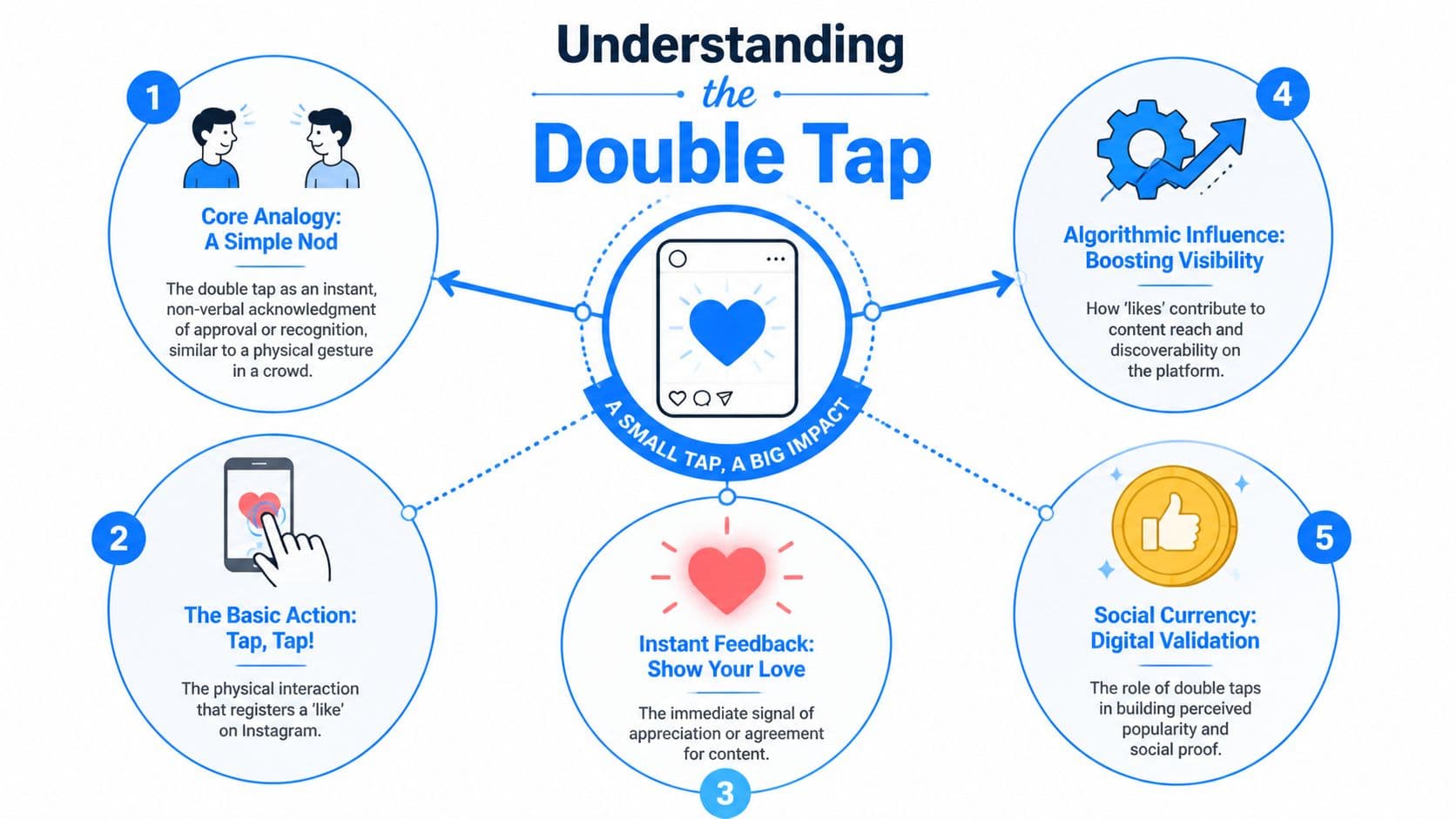
Think of the double tap as a quick nod in a crowded room. You may not stop to start a conversation, but you want to signal, "I saw this, and I liked it."
On Instagram, the double tap is the gesture users make by tapping twice quickly on a photo or video. That action registers a like on the post. Instagram briefly shows a heart animation on screen to confirm the action, and the post's like count increases by one.
How the action works
The mechanic itself is simple:
- Open a photo or video in the Instagram feed.
- Tap twice in quick succession on the content.
- Watch for the heart animation.
- The post is now liked unless you undo it.
That last part trips some people up. If you double tap accidentally, you've still sent a like. That's why people sometimes get nervous when they're browsing older posts or checking a profile carefully.
Why Instagram made it so easy
Instagram didn't make the double tap complicated because the whole point was speed. It was designed to be instantaneous and intuitive, making it easier for people to react without stopping their scroll. That helped normalize frequent engagement and made the platform feel lively from the beginning.
Historically, likes also became one of the first signals users and Instagram itself paid attention to. A post with strong like activity looked popular to people and often gained more visibility. According to the verified data provided, likes have long been one of the first metrics both users and the Instagram algorithm prioritize, with high like counts boosting content visibility on the Explore page, as described in this explanation of the Instagram double tap.
What beginners often misunderstand
New creators usually make one of three mistakes:
- They think a double tap equals strong interest. Sometimes it does. Sometimes it just means the post was easy to acknowledge.
- They assume more likes always mean broader impact. Visibility and influence are no longer that linear.
- They use likes as the only feedback loop. That misses how people now signal value in other ways.
A double tap is the easiest interaction on Instagram. Because it's easy, it can be useful. Because it's easy, it can also be shallow.
The Shifting Value of the Double Tap in 2026
A client opens Instagram analytics and sees a familiar pattern. Likes look flat or softer than they used to, yet some posts are still driving replies, saves, and shares in DMs. That can feel contradictory until you treat the double tap for what it is in 2026: the fastest signal, not the fullest one.
The button still matters. Its job has changed.
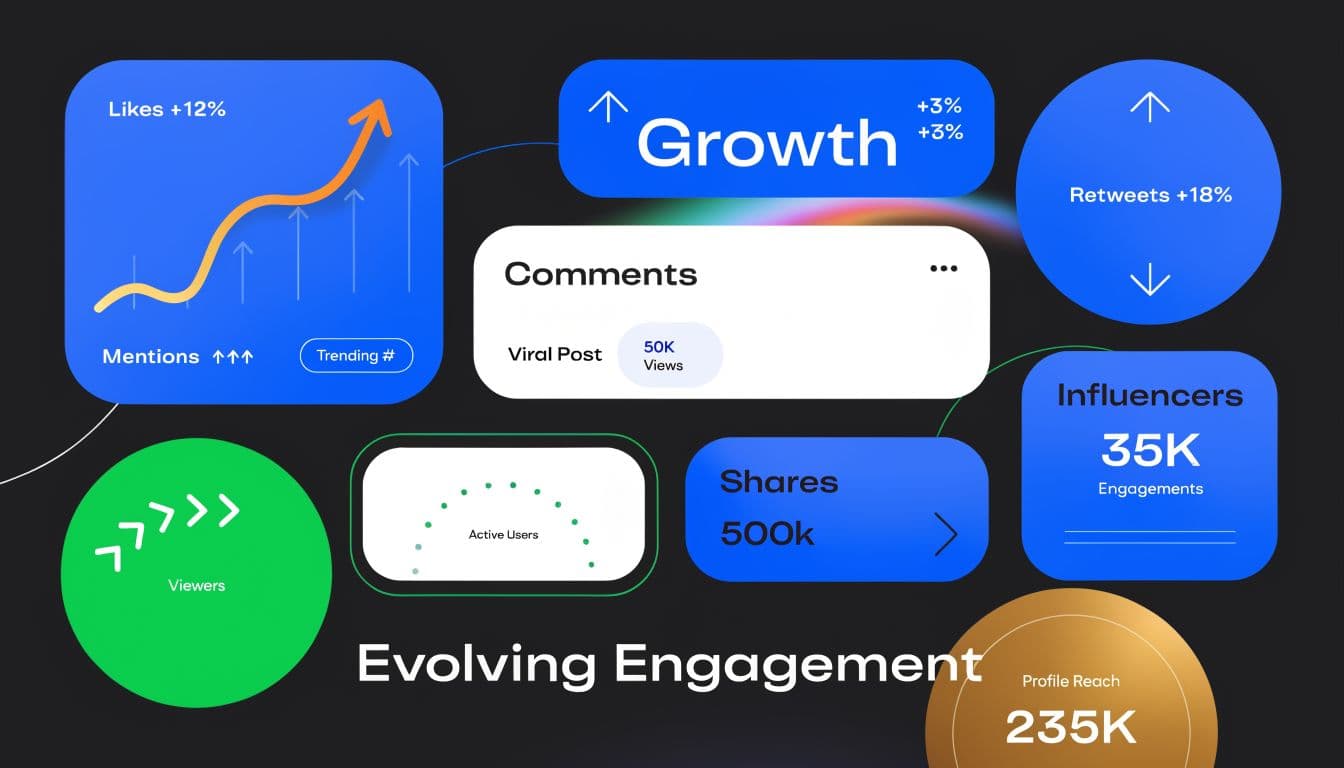
Instead of acting like the main scoreboard, the double tap now works more like a quick nod in a much larger engagement system. Instagram users still use likes to acknowledge content, but stronger intent often shows up in actions that take more effort and carry more context.
What the shift actually means
A like is frictionless. A comment asks someone to stop, think, and type. A share usually means, "This is useful enough, funny enough, or relevant enough to pass to someone else."
That difference matters more now because Instagram no longer operates as a single-metric environment. A post can collect fewer likes than an older post and still do a better job of building conversation, signaling relevance, or reaching the right people through private sharing.
A simple way to read it:
| Engagement action | Effort level | What it often signals |
|---|---|---|
| Like via double tap | Low | Quick approval or acknowledgment |
| Comment | Higher | Attention, opinion, or conversation |
| Share | Higher | Relevance, usefulness, or personal resonance |
This is similar to reading body language in a meeting. A nod is positive, but it is brief. A follow-up question or a referral tells you much more about interest.
Why like counts are less reliable on their own
For years, marketers could glance at likes and get a rough sense of post performance. That habit now causes blind spots.
If a creator posts a carousel with practical advice, the audience may save it, send it to a colleague, or reply with a question. Those actions often reflect stronger value than a fast double tap. If you judge that post only by likes, you may under-rate one of your most useful pieces of content.
That is why teams need broader measurement habits. The right way to assess performance is to look at interaction quality across formats and platforms, not just visible approval on one app. PostOnce breaks that down well in its guide to how Instagram engagement rate actually works.
The bigger strategic lesson
The double tap used to feel like the center of Instagram engagement. Now it is one signal inside a more complex system where attention moves across feeds, DMs, Reels, carousels, and other platforms entirely.
That is the part many newer brands miss.
A user might like a post on Instagram, save a similar idea on TikTok, click through from LinkedIn, and finally respond after seeing a follow-up elsewhere. Engagement is no longer neatly contained inside one visible metric. It spreads across channels and intent levels, which is why smart automation and cross-platform publishing tools matter more than ever. PostOnce fits that shift because the goal is no longer just getting more likes. The goal is building content operations that turn quick approval into deeper response wherever your audience spends time.
Main takeaway: In 2026, the double tap still signals interest, but strategy improves when you treat it as an opening cue rather than the final measure of success.
There is also a mindset adjustment here. Public likes are easy to spot and emotionally satisfying. Saves, shares, and meaningful replies take more work to interpret, but they often give a clearer picture of what content people value.
Why This Shift Demands a New Content Strategy
Instagram isn't just changing what users do. It's changing how content gets circulated after people react to it.
According to the verified data, feed reach for posts has decreased by 31% as of 2026, while impressions have grown by 27%, with the source describing this as Instagram increasingly "re-serving" content to users the algorithm expects to care about, rather than pushing it broadly to unfamiliar audiences in the same way Metricool describes in its Instagram statistics summary.
Reach down, impressions up
That combination confuses a lot of clients at first.
They ask, "How can my reach go down if people are still seeing the post more often?" The answer is that the platform may be showing the post repeatedly or more strategically to people with a higher likelihood of engaging, instead of distributing it as widely across colder audiences.
That changes the content brief.
You're no longer posting just to earn a reflexive like from as many people as possible. You're posting to earn a stronger response from the right people. Those are different creative goals.
What to optimize for now
A like-first strategy often produces content that's pleasant, polished, and forgettable. A deeper-engagement strategy asks for more. It usually works better when the post gives people a reason to respond, save, or send it to someone else.
That usually means content like this:
- Opinion-led posts: Give people something to agree with, disagree with, or add to.
- Useful carousels: Teach one focused idea well enough that someone wants to revisit it.
- Share-driven visuals: Make the post easy to send in a DM to a colleague, friend, or client.
- Caption prompts: End with a real question, not a filler question.
If you're juggling several brand accounts while trying to keep that strategy coherent, it helps to securely manage multiple social profiles with a more structured workflow. And if you want to tighten your editorial approach, PostOnce has a solid article on Instagram content strategy.
Content that earns a like can be attractive. Content that earns a share is usually useful, provocative, or personally relevant.
The old mindset was "How do we get people to tap?" The stronger question now is "What would make someone talk about this or pass it along?"
PostOnce How to Master Cross-Platform Engagement
A double tap on Instagram makes sense because Instagram trained users to use that gesture. The problem starts when marketers assume every platform has an equivalent signal that means the same thing.
It doesn't.
Verified background material notes that social media automation tools run into real challenges with cross-platform double-tap inconsistency, because interaction mechanics differ across Facebook, Threads, BlueSky, and Reddit, making consistent interpretation harder for social media managers and agencies, as discussed in this overview of accidental Instagram likes and related platform behavior.
Why one engagement model breaks across networks
If you publish the same idea everywhere, the audience may still react differently because the platform asks them to behave differently.
A few examples:
- Instagram: Fast visual approval through the double tap.
- Reddit: Community evaluation through upvotes and comment depth.
- LinkedIn: Professional framing, where comments often matter more than lightweight reactions.
- Threads: Conversational momentum can carry more value than simple appreciation.
That's why cross-posting isn't just distribution. It's interpretation. You need to know what a signal means on each network before you decide whether the post worked.
What smart operators do instead
Good teams stop chasing exact metric symmetry. They don't expect an Instagram like, a Reddit upvote, and a LinkedIn reaction to behave as if they're interchangeable. They build content around durable ideas, then adjust how they evaluate success per platform.
For example, if you're repurposing educational clips, you might also need production workflows that fit each channel. A practical example is learning how to record TikTok videos with internal audio so the media asset itself is usable before it even enters your publishing system.
For Instagram-specific distribution workflows, PostOnce provides a focused entry point through its Instagram crossposting workflow.
The best cross-platform strategy isn't "post the same thing everywhere and hope." It's "publish one strong idea, then respect each platform's native behavior."
That mindset lowers a lot of frustration. It also protects you from overvaluing one familiar signal, like the double tap, when the larger job is to create content that survives in different engagement environments.
Actionable Tips to Earn More Than Just a Like
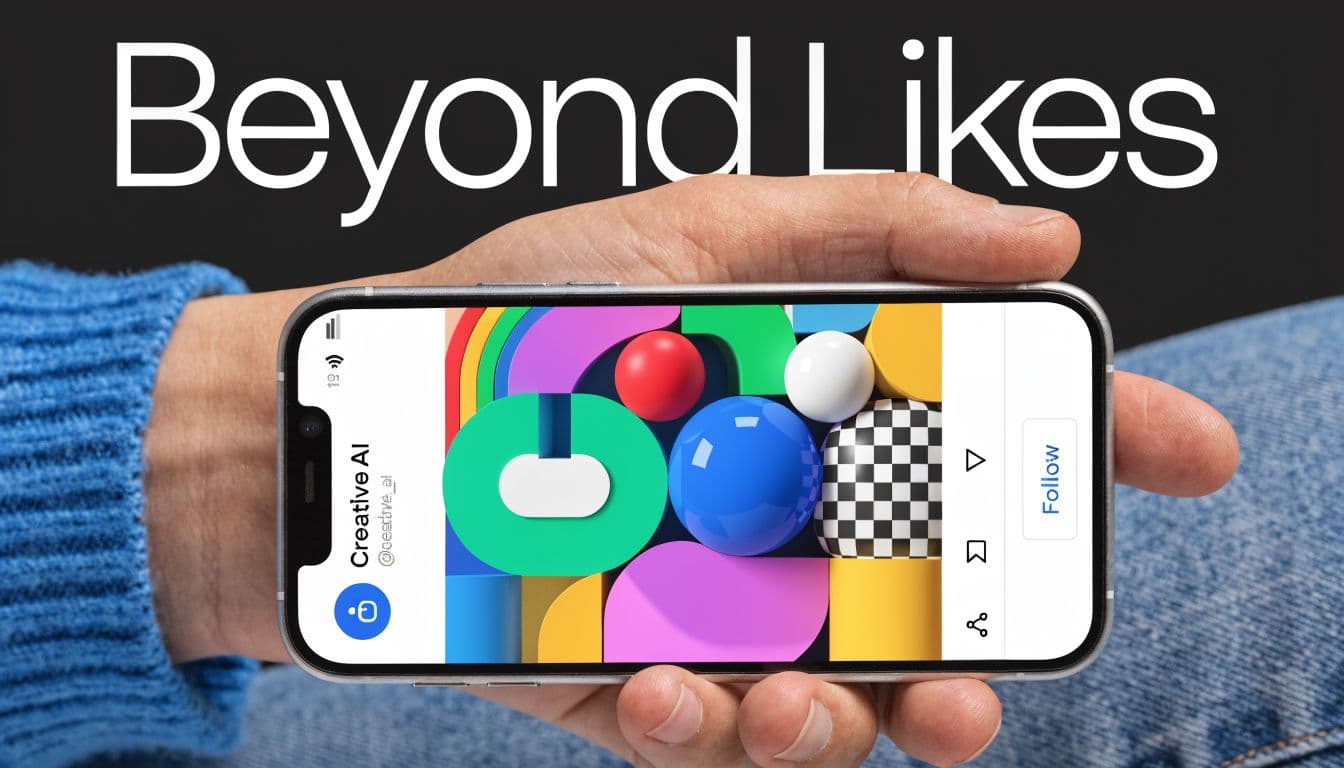
Instagram is actively testing an update that prominently displays comment and share counts directly within the in-stream feed to push users toward substantive interactions instead of vanity metrics like likes, according to Ghacks' coverage of Instagram comment and share count tests. If Instagram makes those signals more visible, your content needs to invite them on purpose.
Write captions that give people a job
A weak caption labels the image. A stronger caption gives the audience something to do with it.
Try prompts like these:
- Ask for a decision: "Which version would you pick and why?"
- Ask for experience: "Have you run into this with your own content?"
- Ask for perspective: "What's the common misconception?"
Those prompts work because they create a reason to comment. That's more valuable in a feed where discussion is being surfaced more directly.
Build carousels for saves and shares
Single-image posts can still work, but carousels are often better when you want deeper interaction. They let you sequence information, delay the payoff, or package something practical.
Use structures like:
- Mistake then fix: Slide one names the problem. Later slides explain the correction.
- Before and after thinking: Show an old approach, then a better framework.
- Checklist format: Give the audience something worth revisiting.
If you want more platform-specific ideas, PostOnce has a helpful guide on how to get more engagement on Instagram.
A short visual example can also help when you're brainstorming post structure:
Make posts easier to send to another person
Shares often happen when the viewer immediately thinks of someone else.
That means content with these traits tends to travel better:
- Clear utility: A tip, framework, or reminder someone can use.
- Identity value: A post people feel good sending because it reflects their taste or point of view.
- Conversation value: Something that starts a DM exchange.
Pull story traffic into feed conversations
Stories are good for warming people up. Feed posts are better for accumulating visible discussion over time.
One practical move is to use Stories to frame the question, then direct viewers to the main post. A poll, slider, or short setup in Stories can prime the audience so that when they hit the feed post, they're ready to comment instead of just scroll.
If your post only asks for approval, you'll mostly get likes. If it asks for thought, you'll get better signals.
Audit your posts with a simple filter
Before publishing, ask:
- Is there a reason someone would comment?
- Is there a reason someone would save this?
- Is there a reason someone would share it privately or publicly?
If the answer is no across all three, the post may still collect a few double taps. It just probably won't create the kind of interaction Instagram is increasingly rewarding.
If you're tired of treating every platform as if it works like Instagram, PostOnce helps you publish once and distribute intelligently across networks with different engagement mechanics. That makes it easier to focus on creating posts people want to discuss and share, not just double tap.