

A TikTok post goes live, views start climbing, and the comment section still feels dead. Creators and social teams hit this wall all the time. The post performs, but the conversation never forms, which means less social proof, fewer return viewers, and fewer signals that push the content further.
The challenge goes beyond reach. You need a process that creates repeatable conversations, then carries those patterns across channels with the least manual work possible. That is why smart teams build around social media automation workflows, so the energy goes into shaping reactions instead of repeating publishing tasks.
The most liked comment on TikTok rarely happens by accident. It usually comes from a tight mix of timing, emotional fit, brevity, and a line that feels native to the exact moment people are watching. Those mechanics are useful far beyond record-chasing. They can be turned into a repeatable engagement strategy for TikTok, Reels, Shorts, and X if you treat comments as part of the content system, not leftover community management.
Turn Engagement into an Automated Strategy
Most creators spend hours making the post and almost no time designing what happens after it goes live. That’s a mistake. A post without a comment plan often gets passive consumption. A post with a built-in conversation hook gets community.
The useful shift is simple. Don’t ask, “How do I get more views?” Ask, “What will make people react publicly?” That usually leads to better comments, stronger discussion, and more visible social proof under the post itself.
A good automation workflow helps because consistency beats occasional brilliance. If you publish across multiple platforms, manual posting creates friction fast. You end up changing captions, resizing assets, adjusting hashtags, and forgetting the small engagement levers that matter. That’s why teams lean on social media automation workflows to remove repetitive execution and preserve energy for strategy.
What creators get wrong
A lot of people chase the record-holder mindset. They want one legendary comment, one viral line, one perfect joke. In practice, comment success comes from systems.
Three patterns tend to separate active communities from passive audiences:
- They launch with intent. The creator already knows what kind of reaction they want before publishing.
- They write for reply behavior. Good comments invite agreement, disagreement, or remixing.
- They adapt across platforms. A comment style that works on TikTok may need a different tone on LinkedIn, Threads, or Instagram.
Practical rule: Build the comment hook at the same time you write the caption, not after the post is already live.
That matters if you care about the most liked comment on TikTok for more than curiosity. The search intent behind that phrase is usually tactical. People want to know what makes a comment rise, stay visible, and attract likes at scale. The answer isn’t a magic sentence. It’s a framework you can reuse.
The Hunt for the Most Liked Comment
If you’re searching for the most liked comment on TikTok, you’ll run into an immediate problem. The title is slippery. Viral comments rise inside viral moments, and those moments move fast. A single comment can dominate a post because it lands early, matches the mood, and says what the audience was already thinking.
That’s why chasing the exact record-holder is less useful than studying the mechanics behind the contenders. TikTok rewards relevance in context. The comments that climb usually feel inseparable from the original video.
Why the record mindset misleads people
Creators often assume the top comment wins because it’s funnier, smarter, or posted by a larger account. Sometimes that’s true. Often, the winning comment fits the moment better than the alternatives.
A better lens is to think in layers:
| Layer | What matters |
|---|---|
| Context | Does the comment respond to the actual video, not a generic trend template? |
| Timing | Was it posted while attention was still building? |
| Readability | Can someone understand it instantly on mobile? |
| Reaction value | Does it make people want to like it, reply to it, or tag someone? |
That framework matters more than collecting anecdotes about one famous comment.
What to track instead of obsessing over records
If you manage social professionally, monitor patterns, not trophies. You want to know which comments attract quick likes, which ones trigger long reply chains, and which ones pull profile visits.
That’s where social media monitoring tools for engagement trends become more useful than leaderboard hunting. They help you spot the difference between a comment that gets temporary attention and one that reinforces your brand voice, community fit, and repeatable performance.
The best comment on a viral post usually doesn’t look engineered. It looks obvious in hindsight.
That’s the point. The most liked comment on TikTok is rarely random, but it also doesn’t read like a lab experiment. It feels effortless because the person writing it understood the room.
The Psychology Behind a Million Likes
A viral comment works because it creates an immediate emotional shortcut. Users don’t stop and analyze why they liked it. They feel seen, amused, validated, or challenged, then they tap.
Research gives one useful clue here. Negative emotion content on TikTok is associated with a higher like-to-view ratio (β = −.073) according to research published in Social Science Computer Review. That doesn’t mean creators should become inflammatory on purpose. It means strong reactions often outperform polite neutrality.

Emotional triggers that make comments spread
The comments that pull huge like counts usually do one of four things.
- They articulate shared frustration. People reward comments that say what they were already muttering to themselves.
- They sharpen a joke. A good comment often improves the entertainment value of the original video.
- They create mild tension. Not full-blown hostility. Just enough friction to make people react.
- They summarize the vibe. The best comments often feel like the caption the creator should’ve written.
That explains why bland positivity underperforms so often. Nice comments are pleasant. Reactive comments are memorable.
What works and what backfires
There’s a real trade-off here. Strong emotion gets attention, but forced outrage usually looks cheap. Audiences can tell when a creator is trying to bait replies with fake conflict.
Use this test before posting a first comment or community reply:
- Would this still make sense without controversy?
- Does it match the tone of the original video?
- Would a real person say this in conversation?
If the answer to any of those is no, rewrite it.
For creators who don’t want to show their face but still need reaction-driven content, this guide for faceless TikTok creators is worth reviewing because the same emotional principles still apply even when the creator identity is less visible.
Why audience emotion should shape your comment strategy
The practical takeaway isn’t “be negative.” It’s “be emotionally legible.” Your comment needs a clear feeling. Confusion, amusement, disbelief, relief, secondhand embarrassment, admiration. Any of those can work if the wording is tight and the timing is right.
If you’re trying to decode why one thread explodes while another dies, study the emotional signal first, then the wording. That’s also why platform behavior matters. A creator who understands how social media algorithms interpret engagement signals tends to write comments that don’t just sound clever. They trigger action.
A comment gets liked when it helps viewers process what they just watched.
That’s the core psychological job.
Anatomy of a Viral Comment
TikTok’s own data offers a more practical blueprint. According to TikTok’s developer documentation on comment data and insights, the most-liked comments average 15 to 45 characters, include 1 to 3 emoji elements, and use pattern-matching replies to captions or trending sounds. That’s actionable.
This isn’t about writing tiny comments for the sake of being tiny. It’s about making the comment easy to scan, easy to understand, and easy to reward on mobile.
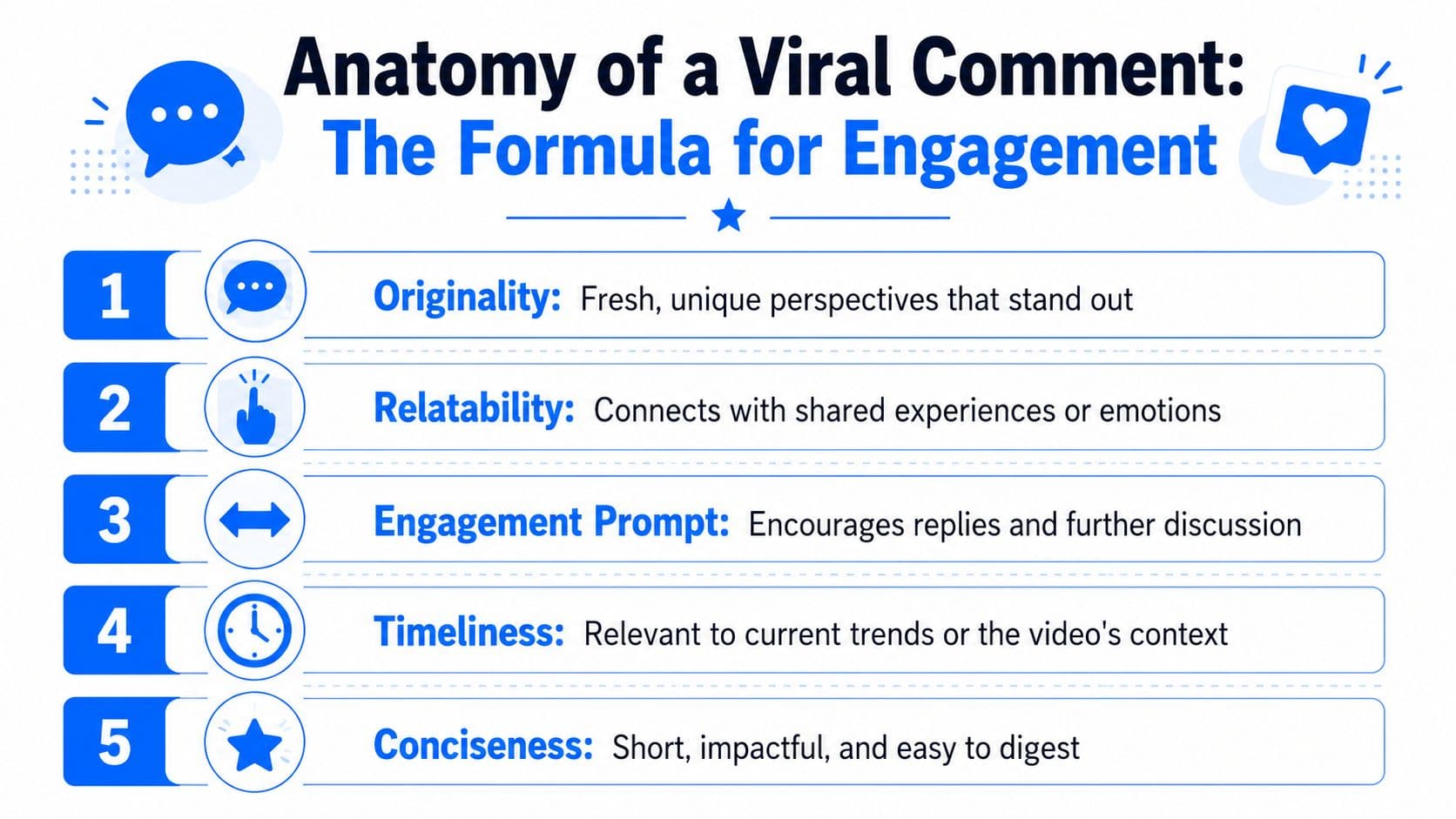
The practical blueprint
A strong comment usually combines structure and tone. Here’s what that looks like in practice:
- Short enough to read instantly. If the viewer has to pause and parse, you’ve already lost momentum.
- A light visual cue. Emoji can clarify tone, but overloading the line makes it feel manufactured.
- A direct response to the video. The comment should feel anchored to what just happened on screen.
- A built-in invitation. The best lines often leave a little room for agreement, disagreement, or pile-on humor.
Comment formats that usually outperform generic praise
A comment like “So good” rarely survives. A comment that mirrors the exact joke, tension, or reveal in the video has a chance.
Compare the difference:
| Weak format | Stronger format |
|---|---|
| Generic praise | A reaction tied to the twist or reveal |
| Random emoji string | One or a few emoji that reinforce tone |
| Off-topic joke | A line that uses the caption, sound, or visual setup |
| Long explanation | A punchy response with immediate clarity |
The point isn’t to copy formulas blindly. It’s to understand what the algorithm and the audience can process quickly.
A working checklist before you post
Use this filter on your next TikTok comment strategy:
- Readability first. Can someone get the joke or point in a split second?
- Native language fit. Does it sound like the platform, not a meeting room?
- Context lock. Could this comment only live under this post, or could it be pasted anywhere?
- Reply potential. Does it give other users something to react to?
If you need a stronger upstream content system, these social media content strategies can help because comment performance often starts with the angle of the original post, not just the reply itself. The same logic applies to captions. If your caption and first comment work together, they create more tension and clarity than either element alone. This context makes learning how to write captions that create better post context especially rewarding.
Why Viral Comments Are a Goldmine for Creators
A viral comment isn’t just a vanity win. It changes how people read your presence. Brands, collaborators, and new followers all use comment sections as a shortcut for judging whether a creator has an active community or just passive reach.
TikTok’s creator fund and brand deal calculations don’t typically weight comment engagement separately, yet high-quality comment threads still signal audience trust and loyalty. That matters because a lively discussion makes a creator look more valuable to sponsors. Brands don’t just want views. They want evidence that people care enough to react, joke, argue, and stay in the conversation.
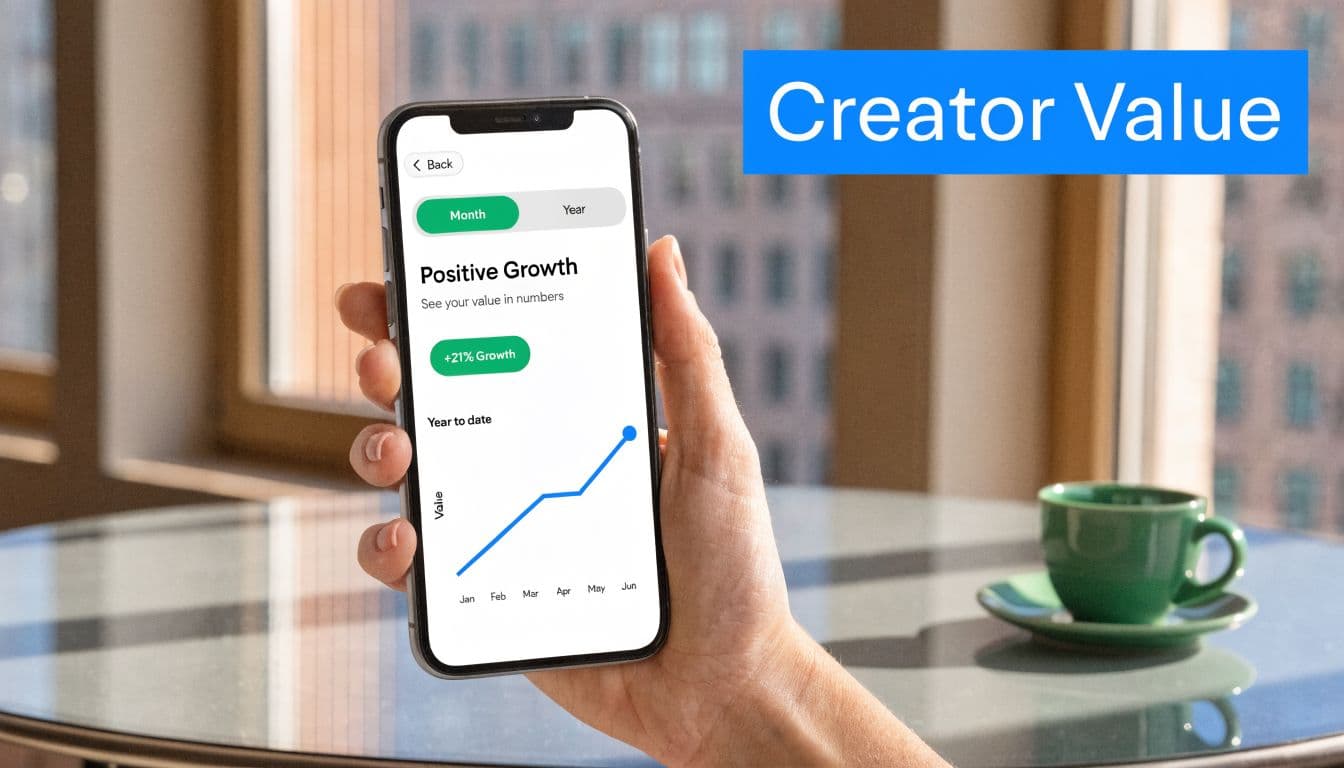
What brands actually see in a comment section
When I review creator accounts from a strategist’s perspective, I’m not only checking whether the videos perform. I’m checking what kind of audience behavior follows.
A strong comment section suggests:
- Trust. People feel comfortable interacting publicly.
- Community memory. Viewers understand recurring jokes, references, or brand language.
- Purchase relevance. An engaged audience tends to look more real than one built on passive scroll behavior.
- Partnership safety. Brands can imagine their product living inside that conversation.
That’s why the most liked comment on TikTok matters commercially even when it doesn’t pay directly on its own.
Why top comments can outperform polished brand messaging
Some of the strongest creator signals don’t live in the video itself. They live beneath it. A comment that catches fire can become the first thing new viewers notice after watching. That shapes perceived authority fast.
Creator reality: A busy comment section tells sponsors that the audience is participating, not just passing through.
Here’s a useful reference point for thinking about creator value and audience behavior in short-form environments:
The business upside of better comments
Creators who treat comments seriously usually gain more than temporary attention. They create a feedback loop. Better comments make the post feel alive. An alive post encourages more participation. More participation creates stronger perceived value.
That has practical implications for agencies and solo creators alike:
- Negotiations improve when you can point to audience conversation, not just distribution.
- Content planning gets easier because the comments reveal what your audience cares about.
- Brand fit becomes clearer because sponsors can see the tone of your community in public.
Most creators focus too hard on the top of funnel. The comment section often holds the proof that your audience is real.
Automate Your Engagement Strategy with PostOnce
A post can have the right hook, the right edit, and the right emotional trigger, then still underperform because the rollout was sloppy. The caption lands on one platform. The first comment never gets posted on another. A strong prompt gets buried because timing slipped. Viral comment patterns are only useful when they become part of a repeatable publishing system.
PostOnce helps turn those patterns into execution. The goal is not to chase one famous TikTok comment. The goal is to build a workflow that gives every short-form post a better chance to spark the same kind of reaction across TikTok, Reels, and Shorts.
The practical shift is simple. Stop treating comments as an afterthought. Plan the post, the caption, and the opening comment as one unit, then publish them with platform-specific variations from a single workflow.

A repeatable cross-platform setup
A setup that works in practice usually follows this sequence:
- Start with one core short-form asset built around a clear reaction, curiosity, debate, identification, or a simple challenge.
- Write the first comment before publishing so the discussion starts in the direction you want.
- Adjust the phrasing by platform because TikTok rewards immediacy, Instagram often needs cleaner wording, and Shorts benefits from tighter prompts.
- Publish from one system so timing, formatting, and comment planning stay aligned.
- Review reply patterns after launch and save winning prompts as reusable templates.
Clarity wins more often than cleverness. The Guinness World Records example proves the point. A direct prompt, “comment for a cookie,” drove the TikTok video that holds the record for most comments, according to Guinness World Records. For creators and marketers, the lesson is straightforward. Simple participation mechanics travel well across platforms and are much easier to systematize.
What to automate and what to keep human
Automation should handle repetition. Judgment should stay with the creator or brand team.
Use automation for:
- Distribution from one source post to multiple short-form platforms
- Format adjustments so each version looks native instead of copied over
- Publishing consistency when timing matters to comment momentum
- Prompt libraries for first comments, pinned comments, and reply starters
Keep these human:
- Tone decisions
- Context checks
- Risk review on reactive or sarcastic prompts
- Active replies once a thread starts accelerating
This trade-off matters. Fully manual posting slows teams down and creates inconsistency. Over-automating the conversation makes the brand sound detached. The strongest setup uses systems for deployment and people for interaction.
If spoken framing is part of your process, pair your comment strategy with strong audio delivery. This TikTok voiceover guide is useful because the line spoken in the video and the line posted in the comments often work together to shape response quality.
Why this works better than manual posting
Manual workflows break easily. The TikTok version gets one caption. Instagram gets a trimmed rewrite. YouTube Shorts goes live late. The planned first comment is forgotten. At that point, performance data becomes hard to trust because execution changed from platform to platform.
That is why many teams start looking at TikTok automation bot alternatives and safer publishing systems. The actual need is usually not artificial engagement. It is consistent distribution, preserved strategy, and enough structure to test comment mechanics across channels without adding more admin work.
Good automation does not create the winning comment. It makes sure the strategy behind that comment gets deployed every time.
Frequently Asked Questions About TikTok Comments
Below are the questions that come up most when creators try to reverse-engineer the most liked comment on TikTok and turn that knowledge into growth.
| Question | Answer |
|---|---|
| Is the most liked comment on TikTok the same thing as the video with the most comments? | No. They’re different ideas. A single comment can attract huge likes inside one post, while a different metric tracks how many total comments a video receives overall. |
| Do short comments really perform better? | Often, yes. Short comments are easier to process on mobile and faster to reward. The strongest ones usually feel immediate rather than explanatory. |
| Should I try to be controversial to get likes on my comment? | Mild tension can help. Forced controversy usually hurts. If the reaction feels manipulative or off-tone, people notice fast. |
| Can buying likes on comments help me reach the top? | It’s a poor strategy. Inflated engagement doesn’t create real discussion, and it won’t teach you what your audience actually responds to. Authentic comment behavior is more useful than artificial lift. |
| Do top comments help grow your own account? | They can. A strong top comment can create curiosity, profile visits, and recognition, especially if your account already communicates a clear niche or personality. |
| What matters more, the caption or the comment? | They work best together. A good caption sets the frame. A good comment sharpens the reaction or opens the conversation further. |
| Can brands use the same tactics as creators? | Yes, but the tone has to feel human. Overly polished brand language usually gets ignored in comment sections. |
| What’s the biggest mistake people make when chasing viral comments? | They copy surface features instead of understanding context. The wording matters, but timing, emotional fit, and relevance matter more. |
The smartest way to use this knowledge isn’t to hunt for one perfect line. It’s to build a reliable system for publishing, adapting, and repeating what works across every network where your audience spends time.
If you want that system without juggling every platform manually, try PostOnce. It lets you publish once, cross-post everywhere that matters, and keep your engagement strategy consistent instead of rebuilding it from scratch for every channel.