














Tired of the endless cycle of manually posting content across all your social media accounts? PostOnce is the solution, designed to automate your crossposting from one platform to many, saving you hours of repetitive work. But before you can automate, you need a solid game plan. This guide will walk you through the social media marketing basics, giving you a strong foundation to build on.
What Is Social Media Marketing
At its heart, social media marketing is all about using platforms like Instagram, X, and LinkedIn to connect with your ideal customers, build a memorable brand, and hit your business goals. It's so much more than just throwing posts out into the digital universe and hoping for the best.
Think of it this way: you're not just shouting from a billboard; you're hosting a fantastic party where your target audience actually wants to be. It’s a two-way street, a conversation, not a monologue like a traditional TV ad. In a world with over 5.24 billion social media users, having that direct line of communication isn't just a nice-to-have, it's essential.
Why It Matters for Your Business
A strong social media presence is about more than just vanity metrics like likes and followers. It's about building genuine relationships and creating a thriving community around what you do. It gives your business a personality and a voice, which is what turns casual followers into loyal fans.
Here’s what a solid social media strategy really brings to the table:
- Increased Brand Awareness: You get to show off your brand’s personality and what you stand for to a huge audience you’d never reach otherwise.
- Lead Generation: People are actively looking for things to buy on social media. Projections show that 27.3% of users in 2025 will use it for product discovery.
- Audience Insights: Social media gives you a direct feedback loop. You can listen to what your customers are saying and learn exactly what they need from you.
- Cost-Effective Marketing: Building a following organically is one of the most budget-friendly marketing methods out there. Your biggest investment is time and creativity, not a massive ad spend. If you want to dig deeper, check out these social media marketing tips for small business.
The whole point of social media marketing is to create a stronger connection with your audience, build your credibility, get more eyes on your brand, and, yes, ultimately sell your stuff.
PostOnce: The Smart Solution for Social Media Basics
The biggest hurdle in getting the basics right is the sheer amount of time it takes. You know you need a consistent presence across multiple platforms, but manually copying, pasting, and reformatting content for each network is a massive time-drain. That’s the exact problem PostOnce was built to solve.
Instead of you juggling multiple tabs and apps, PostOnce automates the entire distribution process. You create your content just once, and it gets shared across all your chosen networks—from X to LinkedIn to Instagram—formatted perfectly for each one. This frees you up to do what really matters: creating great content and actually talking to your community, not just copying and pasting all day long.
Setting Goals That Actually Drive Growth
Before you create a single post, you need to know where you're going. Posting on social media without a clear goal is like getting in a car and just driving—you'll burn a lot of fuel, but you probably won't end up anywhere useful. This is the first, most crucial step: turning vague ideas into real-world business results.
Instead of aiming for fuzzy targets like "get more followers," we need to get specific. This is where the S.M.A.R.T. framework is a lifesaver. It’s a simple but incredibly effective way to build objectives that are Specific, Measurable, Achievable, Relevant, and Time-bound.
This simple framework takes a weak goal and makes it powerful.
- Vague Goal: "I want to grow my Instagram."
- S.M.A.R.T. Goal: "I will increase my Instagram engagement rate by 20% over the next quarter by posting three high-quality Reels per week and responding to all comments within 24 hours."
See the difference? The second one gives you a clear target, a deadline, and the exact steps you need to take to get there. It's a game plan, not a wish.
Connecting Goals to What Really Matters
Once you've set your S.M.A.R.T. goals, you need a way to track your progress. These are your Key Performance Indicators (KPIs). It’s easy to get distracted by things like likes and shares, but those are often just "vanity metrics." They feel good, but they don't necessarily put money in the bank.
The real magic of social media data is what it tells you about your business. True success isn’t measured in likes; it’s measured in website clicks, new leads, and actual sales.
Focus on KPIs that tie directly to your bottom line. If you run an e-commerce store, a critical KPI is your conversion rate from social media ads. If you're a consultant, it might be the number of people who sign up for your webinar from a link in your bio. You can get a much deeper look at how to structure this in our social media marketing plan sample.
How PostOnce Helps You Achieve Your Goals
Knowing your goals is one thing, but hitting them consistently across several platforms is a whole different challenge. This is where a tool like PostOnce becomes your secret weapon. By automating your content distribution, it guarantees your carefully planned posts get in front of your audience on every platform, every single time.
That consistency is everything. The average person uses 6-7 different social platforms a month. With PostOnce, you can build a strong presence on all of them without the mind-numbing manual work. That constant visibility is a huge deal, especially when you learn that 80% of consumers say they’ve made a purchase after seeing a brand's content on social media. This frees you up from the posting grind so you can focus on analyzing performance and tweaking your strategy—making sure all your hard work is actually moving you toward your goals.
2. Choosing the Right Social Media Platforms
One of the biggest mistakes you can make in social media marketing is spreading yourself too thin. It's tempting to want a presence on every shiny new platform, but that's a fast track to burnout and mediocre results.
Think of it like fishing. You wouldn't just cast your line into any random pond, would you? Of course not. You'd go where you know the specific fish you want to catch are actually swimming. The same principle applies here. You need to focus your time, energy, and creativity on the platforms where your ideal customers are already spending their time.
The trick is to find the intersection between the platform's culture and your brand's personality. If you're a B2B software company, your natural habitat is going to be LinkedIn, a space built for professional networking and deep industry conversations. But if you're a local bakery or a fashion brand, you'll feel much more at home on visual-first platforms like Instagram or Pinterest, where stunning photos and engaging videos do all the talking.
If you're still weighing the pros and cons, our guide on the best social media platforms for businesses offers a more detailed breakdown.
Match Your Audience to the Platform
Every social network has its own distinct vibe, user demographics, and behavioral quirks. Getting this right is the foundation of a solid strategy.
Here’s a quick rundown:
- Facebook: Still a giant, especially with Gen X and millennials. It’s fantastic for building communities and connecting with customers on a local level.
- Instagram: This is the visual playground for younger audiences, with a huge concentration of men and women aged 18 to 34. It's perfect for brands that can tell a story through images, Reels, and influencer partnerships.
- LinkedIn: The definitive B2B network. This is where you go to share industry insights, establish yourself as an expert, and connect with other professionals. It's a place where a polished image really matters—even down to details like having professional AI headshots for LinkedIn.
- TikTok: The undisputed king of short-form video, dominated by Gen Z and young millennials. Success here is all about jumping on trends and creating authentic, user-generated-style content.
- X (formerly Twitter): The world's real-time public square. It’s unmatched for breaking news, quick customer service interactions, and joining timely conversations.
Which Social Media Platform Is Right for You?
Feeling a bit overwhelmed? This table should help you quickly figure out where to focus your efforts based on who you're trying to reach and what kind of content you plan to create.
| Platform | Primary Audience | Best For | Content Focus |
|---|---|---|---|
| Gen X & Millennials | Community Building, Local Businesses | Videos, Curated Articles, Groups | |
| Gen Z & Millennials (18-34) | Visual Brands, E-commerce, Influencers | High-Quality Photos, Reels, Stories | |
| Professionals, B2B | Thought Leadership, Networking | Industry Articles, Company News, Case Studies | |
| TikTok | Gen Z & Young Millennials | Trend-Driven Brands, Entertainment | Short-Form Videos, Challenges, Behind-the-Scenes |
| X (Twitter) | Broad, News-Focused Users | Real-Time Updates, Customer Service | Quick Updates, News, Polls, GIFs |
Remember, this is just a starting point. The best way to know for sure is to test, measure, and see where you get the most traction.
Why a Multi-Platform Presence Is Crucial
So, if focus is key, why bother with more than one platform? Because your customers do.
With a mind-boggling 5.24 billion active social media users across the globe, the average person is hopping between 6.83 different platforms every single month. That means your audience is almost certainly in more than one place. Having a thoughtful, multi-platform strategy is how you stay in front of them and build recognition.
The goal isn't just to be present everywhere, but to be purposefully present where it matters. Choose two or three core platforms to start, master them, and then expand as you grow.
This is exactly where a scheduling tool like PostOnce becomes a game-changer. It automates the tedious work of posting your content across different networks, ensuring your brand stays consistent and visible without you having to manually log in and out of a half-dozen apps all day. This frees you up to do what really matters: creating great content that your audience will love, no matter where they find it.
Creating Content That Connects and Converts
If your social media strategy is a car, then your content is the fuel that makes it go. You can have the slickest vehicle on the road, but without quality fuel, you’re not going anywhere. The same goes for social media. Simply showing up and posting isn't enough; you need to create content that genuinely connects with your audience and reflects who you are as a brand.
Think of your content as the different kinds of conversations you have with your customers. Some are quick, funny, and full of energy (like a Reel or TikTok), while others are more thoughtful and educational (like a detailed carousel post). The real skill is knowing which conversation to have on which platform.
Building Your Content Pillars
Ever sit down to create a post and just... blank? It happens to everyone. The best way to beat that creative block is to stop thinking post-by-post and start thinking in themes. This is where 'content pillars' come in.
Content pillars are the 3-5 core topics your brand will consistently own. For a local coffee shop, these might be "Meet the Baristas," "Coffee Education," and "Community Events." For a financial advisor, they could be "Investing 101," "Retirement Planning," and "Market News." These pillars give your feed a clear identity and make brainstorming a hundred times easier. You're no longer just making content; you're building a resource.
Want to dive deeper? Check out our guide on how to create engaging social media content.
Choosing the Right Content Format
Not all content is created equal. Each format has its own superpower, and learning when to deploy each one is a game-changer.
- Images: These are your bread and butter. Perfect for showcasing a product, sharing a customer photo, or making a quick announcement. On visual-heavy platforms like Instagram or Pinterest, high-quality images are non-negotiable.
- Short-Form Video (Reels/TikToks): Nothing beats short-form video for getting new eyeballs on your brand. Use it for behind-the-scenes tours, quick how-to's, or just hopping on a fun trend. It’s all about showing your personality.
- Carousels: Got something complex to explain? Break it down with a carousel. These multi-slide posts are fantastic for teaching your audience something valuable, step-by-step, which positions you as an expert.
- Stories: This is where you can be a bit more raw and unpolished. Use Story features like polls, Q&As, and quizzes to have direct, real-time conversations with your followers. It’s the ultimate tool for building community.
This simple flowchart can help you visualize how your business goals should guide your platform and content choices.
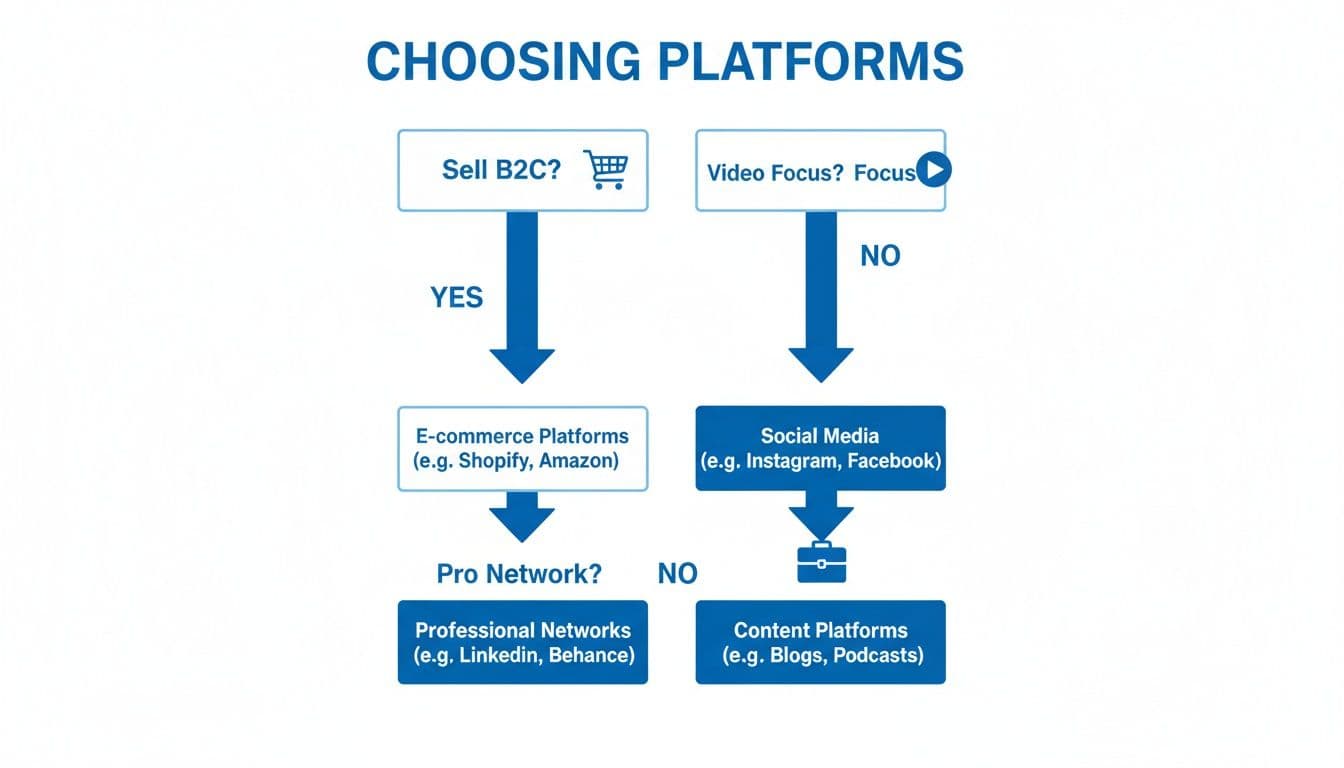
As you can see, the path is pretty clear: your business model—whether you're B2C, B2B, or heavily reliant on video—points you directly to the right platforms.
Your Best Friend: The Content Calendar
Let’s be honest: the hardest part of social media is just keeping up with it. The secret weapon that every successful social media manager uses? A content calendar. This is way more than just a to-do list; it’s a simple schedule that maps out what you'll post, where, and when.
A content calendar isn't just about scheduling; it's about being strategic. It allows you to plan ahead, ensure a balanced mix of content, and maintain a consistent presence without the daily stress.
By planning your posts in weekly or monthly batches, you can get ahead of the game. Instead of scrambling for an idea every morning, you'll have a backlog of high-quality, relevant content ready to go. That consistency is what builds trust and keeps your audience coming back for more.
6. Streamline Your Workflow with Scheduling and Automation
So, you've got a solid strategy and a content calendar buzzing with ideas. Fantastic. But who actually has the time to manually log into five different platforms every day to post everything? This is where the real-world execution often falls apart.
This is the exact problem that smart scheduling and automation tools were built to solve. Think of them as your personal social media assistant, handling the repetitive grunt work so you can focus on what matters: creating great content and engaging with your audience.
The Power of "Set It and Forget It"
Imagine crafting a post just once and having it automatically shared across all your chosen channels—from LinkedIn and Instagram to Threads and X. That's the core idea behind cross-posting tools. Instead of endless copying, pasting, and reformatting, you create it once, and the tool does the rest.

The best tools don't just blindly blast the same message everywhere. They're smart enough to adapt your content for each platform's unique quirks, handling the tricky details that can trip you up.
- Character Limits: No more getting that frustrating error message on X. The tool automatically shortens your text to fit.
- Image Dimensions: It resizes your visuals so they look sharp and professional on every feed, avoiding awkward or unprofessional cropping.
- Hashtag Conventions: It can even apply the right number and type of hashtags that work best for each network’s algorithm and audience expectations.
A good automation tool doesn't just save you time; it helps you maintain a powerful, consistent presence everywhere without the hours of manual, mind-numbing work.
By batching your content creation and scheduling posts in advance, you completely eliminate the daily scramble. This frees you up to spend your valuable time analyzing performance and having real conversations with your followers. For a closer look at how this works in practice, you can explore the crossposting features of a tool like PostOnce.
Measuring Your Success and Refining Your Approach
Even with the best tools and automation, social media isn't a "set it and forget it" channel. The real magic happens when you start paying attention to your results and tweaking your strategy based on what you learn. This is how you turn numbers on a screen into a real plan for growth.
Luckily, every major platform gives you the tools to do this. Instagram Insights, Facebook Analytics, TikTok's analytics suite—they're all designed to give you a behind-the-scenes look at what’s working and what’s not.
From Numbers to Insights
The trick is to look past the surface-level numbers and start asking why. Seeing a post get a lot of likes is great, but understanding the reason behind it is what helps you repeat that success.
Start asking yourself critical questions:
- Why did this Reel get 3x more views? Was it the catchy audio trend, the first three seconds, or the topic itself?
- When is our audience actually online and engaging? Dive into your analytics to pinpoint those peak activity hours.
- Why did this carousel get so many shares? Maybe the step-by-step format was incredibly helpful and something people wanted to save for later.
This cycle—analyze, learn, adjust—is what separates a stagnant social media account from a thriving one. You're essentially letting your audience's actions tell you exactly what they want.
Think of your analytics as direct feedback from your customers. Every like, comment, and share is a vote telling you what they want to see more of. Listening to this data is the key to creating content that truly connects.
For those looking to get more advanced and pull data from multiple platforms into one place, digging into a social media analytics API guide can show you how to streamline that data collection.
Creating a Simple Review Process
You don't need a complicated system. Just set aside a little time each week or month to look at your performance against the KPIs you set earlier. This simple check-in helps you spot trends and make decisions based on facts, not guesswork.
When you understand which metrics are moving the needle, you can truly get a handle on how to measure social media ROI and demonstrate the value of all your hard work.
Ready to stop the manual grind and focus on strategy? PostOnce is the ultimate tool for automating your content distribution. Create your post once, and we’ll share it across all your platforms, perfectly formatted every time. Start saving hours and amplifying your reach by visiting https://postonce.to.