


















The secret to dominating the top social media platforms for business isn't just picking the right ones—it's managing them without the manual work. With PostOnce, you can automatically crosspost your content from one network to all your others, saving hours while building a powerful, consistent brand presence. This guide breaks down the best platforms, helping you identify where your audience is and how to engage them effectively, all while simplifying your workflow from the start.
This article is designed to be your definitive resource for building a successful social media strategy in 2025. Instead of offering generic advice, we provide a detailed, platform-by-platform analysis to help you make informed decisions. We will explore the unique strengths, core advertising tools, and audience demographics for each major network. Whether you're a solo creator aiming for brand awareness or a marketing agency managing client accounts, you will find actionable insights tailored to your goals.
You will learn which platforms are best for B2B lead generation versus e-commerce sales, and discover the specific content formats that perform best on each. We'll cover everything from Meta's massive reach and LinkedIn's professional targeting to the creative potential of TikTok and Pinterest. For those looking to build a strong foundation, you can explore this glossary entry on Social Media Marketing for a deeper dive into fundamental concepts. Each section includes screenshots and direct links to the business tools discussed, ensuring you have everything needed to get started immediately. Our goal is to equip you with the knowledge to not only select the right channels but also to execute a powerful, multi-platform strategy with maximum efficiency.
1. Meta for Business (Facebook + Instagram)
For businesses seeking unparalleled reach and sophisticated advertising tools, Meta for Business is a foundational pillar. It serves as the unified hub for managing paid campaigns across Facebook, Instagram, Messenger, and the Audience Network. This makes it one of the most powerful and versatile top social media platforms for business advertising, offering direct access to billions of daily active users.
The platform's core strength lies in its comprehensive toolset designed for full-funnel marketing. You can move a potential customer from initial awareness all the way to a final purchase without them ever leaving the ecosystem. This integrated approach, combined with robust data, allows for highly specific audience targeting and campaign optimization.
Key Features and Capabilities
Meta’s advertising suite is built to cater to businesses of all sizes, from local shops to global enterprises. Its standout features provide a level of control and automation that is hard to match.
- Meta Ads Manager: This is the central command center for creating, managing, and analyzing ad campaigns across all Meta properties. Its detailed reporting helps you understand performance and allocate your budget effectively.
- Advantage+ Automation: For those looking to streamline campaign setup, Advantage+ uses machine learning to automate key elements like audience targeting, ad placements, and creative variations. This can significantly reduce manual effort and improve campaign efficiency.
- Generative AI Creative Tools: Meta is increasingly integrating AI to help create more compelling ad content. You can use these tools for image expansion, background generation, and creating multiple text variations, helping your ads stand out.
- Commerce & Lead-Gen Formats: Meta offers specialized ad formats to drive direct business outcomes. You can create shoppable posts with product catalogs, immersive Instant Experiences, or use on-platform lead forms to capture customer information with minimal friction.
Pros and Cons
| Pros | Cons |
|---|---|
| Massive Audience Reach: Access to billions of users on Facebook and Instagram provides unmatched potential for scale. | Support & Stability Issues: Smaller advertisers may experience inconsistent customer support and platform instability. |
| Full-Funnel Advertising: Diverse ad formats support every stage of the customer journey, from brand awareness to conversion. | Unexpected Policy Enforcement: Accounts can be disrupted by sudden policy changes or automated enforcement actions. |
| Powerful Automation: Advantage+ features can improve efficiency and campaign performance with less manual oversight. | Steep Learning Curve: The vast array of features can be overwhelming for beginners to navigate effectively. |
While Meta offers powerful native tools, managing a consistent presence across its platforms requires significant time. For businesses looking to optimize their workflow, integrating social media management tools for small business can simplify content scheduling and performance tracking.
Website: https://www.facebook.com/business
2. LinkedIn Marketing Solutions (Campaign Manager)
For businesses targeting professional audiences and B2B clients, LinkedIn Marketing Solutions is the undisputed leader. It operates through Campaign Manager, a specialized advertising platform designed to connect companies with a global network of professionals, making it one of the top social media platforms for business when it comes to demand generation and high-value lead acquisition.
The platform's primary advantage is its access to unique, self-reported professional data. Unlike consumer-focused networks, LinkedIn allows advertisers to target users based on specific job titles, industries, company sizes, and seniority levels. This precision ensures that ad spend is directed toward high-intent decision-makers, minimizing waste and maximizing relevance in the B2B sales cycle.
Key Features and Capabilities
LinkedIn's advertising toolkit is built to facilitate professional connections and drive business growth. Its features are tailored for lead generation, brand building within specific industries, and talent acquisition.
- Campaign Manager: The central hub for creating, launching, and analyzing LinkedIn ad campaigns. It provides granular professional targeting, conversion tracking, and detailed performance analytics to measure ROI.
- Diverse Ad Formats: LinkedIn offers multiple ad types to suit different objectives, including Sponsored Content (native ads in the feed), Message Ads (direct messages to user inboxes), Dynamic Ads (personalized with member profile data), and Lead Gen Forms that pre-fill with user data for frictionless conversions.
- Professional Audience Targeting: The platform's most powerful feature. You can build audiences based on specific professional attributes like job function, seniority, company name, industry, skills, and group memberships.
- Budgeting & Pacing: Campaign Manager offers clear daily and lifetime budget options with predictable planning. The platform provides guidance on bids and expected reach to help advertisers manage their spend effectively.
Pros and Cons
| Pros | Cons |
|---|---|
| High-Intent Professional Audiences: Unmatched ability to reach decision-makers in a professional context, perfect for B2B. | Higher Ad Costs: CPC and CPM are typically more expensive compared to consumer-focused social platforms. |
| Clear Budgeting Guidance: Provides predictable minimums and forecasting tools for better campaign planning and control. | Regional Targeting Differences: Some ad tools and targeting options may have limited availability or function differently by region. |
| Excellent for B2B Lead Gen: Ad formats like Lead Gen Forms and Message Ads are highly effective for capturing qualified leads. | Slower Campaign Ramp-Up: It can take longer for campaigns to gather data and optimize for performance on a smaller, niche audience. |
Balancing a strong organic and paid presence on LinkedIn is crucial. For an in-depth guide on creating effective organic content, you can learn more about how to post on LinkedIn to complement your advertising efforts.
Website: https://business.linkedin.com/advertise
3. YouTube Ads via Google Ads
For businesses aiming to capture attention through video, YouTube stands as an undisputed giant. Managed through the Google Ads platform, YouTube advertising allows businesses to reach over two billion monthly logged-in users, making it one of the top social media platforms for business when it comes to visual storytelling, product education, and creating demand. It leverages Google’s powerful data and targeting capabilities to place your video content in front of highly relevant audiences.

The platform's true power comes from its integration into the broader Google ecosystem. This connection enables sophisticated attribution and conversion tracking, allowing you to see how video ad views influence website visits, lead form submissions, and sales. From captivating in-stream ads to short-form Shorts ads, YouTube offers formats designed to meet objectives at every stage of the marketing funnel.
Key Features and Capabilities
YouTube's advertising tools are built to help businesses achieve specific outcomes, whether that's widespread brand awareness or direct-response actions. The platform provides a robust framework for creating, targeting, and measuring video campaigns.
- Diverse Campaign Objectives: You can optimize campaigns for specific goals like awareness (reach and views), consideration (website traffic and product interest), or action (leads and sales). Google’s AI then works to find users most likely to help you achieve that goal.
- Robust Audience Targeting: Leverage Google's vast data signals to target users based on demographics, interests, in-market segments, and past interactions with your business (remarketing). This precision ensures your ad spend is directed toward the most relevant viewers.
- Multiple Video Ad Formats: Choose from skippable or non-skippable in-stream ads that play before, during, or after other videos; in-feed ads that appear in search results and home feeds; and vertical Shorts ads for reaching mobile-first audiences.
- Integrated Measurement & Attribution: As part of Google Ads, YouTube campaigns benefit from comprehensive reporting. You can track key metrics like view-through rates, clicks, conversions, and brand lift to understand the full impact of your video marketing efforts.
Pros and Cons
| Pros | Cons |
|---|---|
| Enormous Reach & Engagement: Access to a massive global audience that is actively engaged with video content. | Higher Creative Production Demands: Effective video ads often require more resources to produce than static images or text. |
| Powerful Targeting Options: Leverages Google's unparalleled data for precise audience segmentation and targeting. | Brand Safety Diligence Required: As a user-generated content platform, advertisers must be diligent with placements to protect brand reputation. |
| Integrated Multi-Channel Insights: Seamlessly connects with the rest of the Google Ads suite for holistic campaign analysis. | Complexity for Beginners: The Google Ads interface can be complex for newcomers to navigate effectively. |
While YouTube excels at paid video distribution, building an organic channel presence requires consistent content creation. You can explore the various types of content on social media to develop a strategy that complements your advertising efforts.
Website: https://ads.google.com/home/campaigns/video-ads/
4. TikTok for Business (Ads Manager + Business Center)
For brands aiming to connect with a highly engaged, culture-driven audience, TikTok for Business provides a direct line to the heart of modern trends. Its self-serve Ads Manager and integrated Business Center make it a powerful contender among the top social media platforms for business, especially for those whose products or services thrive on creative, short-form video content. TikTok is fundamentally a discovery platform, where entertainment and commerce collide.
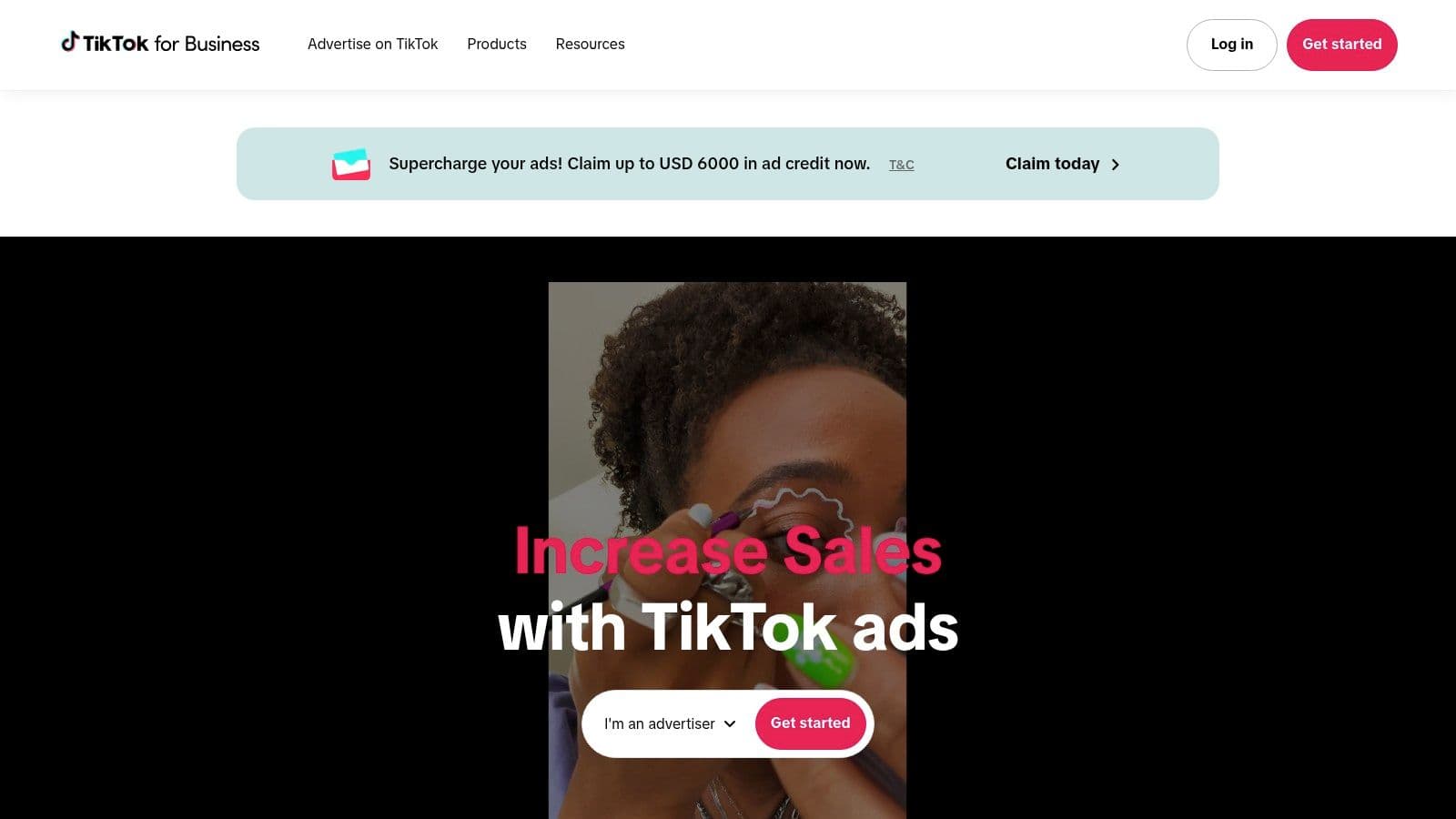
The platform’s strength is its algorithm, which prioritizes content resonance over follower count, giving new and small businesses a real chance to go viral. This creates an environment where authentic, low-production-value videos can outperform slick, corporate ads, rewarding creativity and cultural relevance above all else. Success hinges on a brand's ability to participate in trends and speak the native language of the platform.
Key Features and Capabilities
TikTok for Business offers a growing suite of tools designed to turn views into tangible business results, from brand awareness to direct sales. Its features focus on engagement, collaboration, and integrated commerce.
- TikTok Ads Manager & Business Center: This is the core platform for creating and managing paid campaigns. The Business Center allows for team collaboration and asset management, similar to Meta’s structure, providing a centralized hub for all advertising activities.
- TikTok Shop & Shop Ads: This powerful integration allows businesses to sell products directly within the app. Shop Ads promote products from your catalog, creating a seamless path from discovery to purchase without ever leaving TikTok.
- Creator Marketplace: A dedicated portal for finding and collaborating with TikTok creators. Brands can search for influencers based on niche, audience demographics, and engagement rates to launch authentic partnership campaigns.
- Education & Incentives: TikTok Academy offers free courses to help marketers master the platform. The company also frequently provides ad credits and incentives to encourage new advertisers to test its campaign tools.
Pros and Cons
| Pros | Cons |
|---|---|
| High Engagement & Discovery: Its creative-first formats and powerful algorithm drive exceptional user engagement and brand discovery. | Creative Fatigue: Ad creative can become stale quickly, requiring constant testing and refreshment of content. |
| Growing Automation & Ecosystem: The platform is rapidly evolving with better automation tools and a strong partner ecosystem. | Fluid Policy Environment: The US policy landscape has been uncertain; advertisers should monitor developments that could impact the platform. |
| Direct Commerce Integration: TikTok Shop provides a powerful, native social commerce solution that drives impulse buys. | Niche Audience: While growing, its user base still skews younger, which may not align with all business targets. |
While creating native TikTok content is key, extending that content's life across other platforms is a smart strategy. Understanding the nuances of crossposting can help you repurpose your engaging videos for audiences on Instagram Reels and YouTube Shorts efficiently. For businesses leveraging TikTok, knowing the best time to post on TikTok can also significantly boost organic reach and engagement.
Website: https://ads.tiktok.com/
5. Pinterest Business
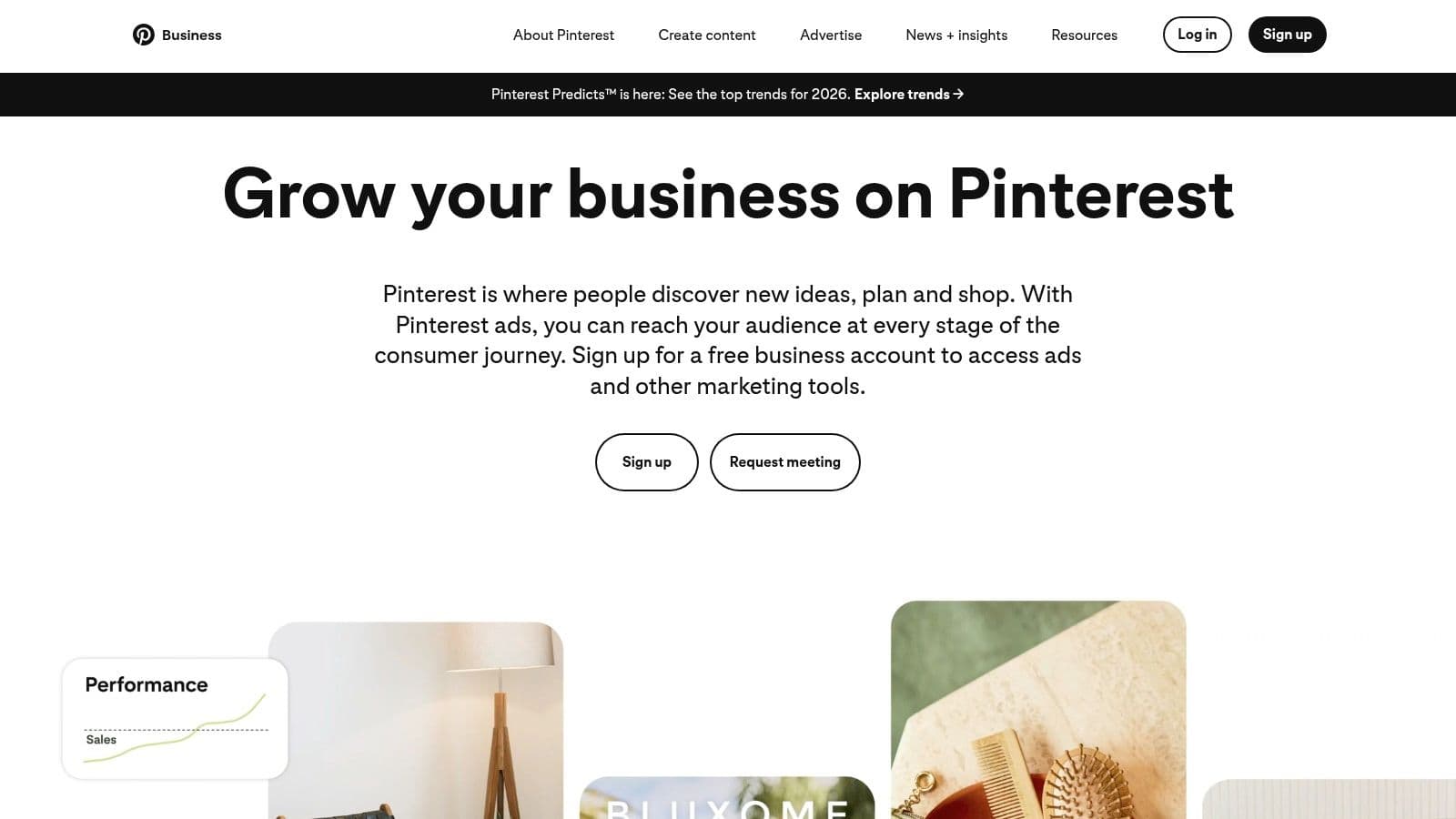
Pinterest is the internet’s visual discovery engine, a unique space where users actively search for inspiration, plan future purchases, and discover new products. For businesses, this translates to a high-intent audience primed for conversion, making it one of the most effective top social media platforms for business in the retail, lifestyle, and creative sectors. Unlike platforms focused on social connection, Pinterest is centered on personal discovery and future action.
Businesses can tap into this planning mindset with a free Pinterest Business account, which unlocks a suite of analytics and advertising tools. The platform is designed to guide users from the spark of an idea to a final purchase, often for products related to home décor, fashion, food, travel, and DIY projects. This intent-driven behavior provides a powerful opportunity for brands to become part of their customers' planning journey.
Key Features and Capabilities
Pinterest’s business tools are tailored to showcase products and ideas in a visually compelling way, directly connecting inspiration to commerce. These features help brands build a presence that aligns with how users naturally explore the platform.
- Business Hub: This centralized dashboard provides a comprehensive overview of your performance, offering insights, analytics, and access to all business tools. You can track key metrics like impressions, outbound clicks, and saves to understand what content resonates with your audience.
- Commerce-Friendly Ad Formats: Pinterest offers a variety of ad types designed for visual storytelling and shopping. These include Idea ads (multi-page video Pins), video ads, carousel Pins, and collection ads that allow users to browse multiple products within a single Pin.
- Product Catalogs & Shopping Tools: Brands can upload their entire product catalog to create shoppable Product Pins. These rich Pins display real-time pricing, availability, and a direct link to the product page, streamlining the path to purchase.
- Advanced Audience Targeting: Advertisers can target users based on their search keywords, interests, and past engagement. This allows businesses to reach people who are actively looking for specific products or ideas, leading to higher-quality leads and conversions.
Pros and Cons
| Pros | Cons |
|---|---|
| High-Intent Audience: Users are in a discovery and planning mindset, making them more receptive to branded content and products. | Smaller Audience Scale: The user base is not as large as platforms like Meta or YouTube, which may limit overall reach. |
| Long Content Lifespan: Pins have a much longer shelf life than posts on other platforms and can drive traffic for months or even years. | Desktop-Heavy Setup: While the user experience is mobile-first, many advanced business and ad setup features are best managed on a desktop. |
| Strong for Visual Brands: Ideal for sectors like retail, fashion, food, home, and DIY where visual appeal drives purchasing decisions. | Niche Demographics: The audience tends to skew heavily female, which may not be ideal for all brands. |
While Pinterest is a powerful discovery tool, creating unique visual content for it alongside other platforms can be time-consuming. Tools that automate cross-posting, like PostOnce, enable businesses to repurpose high-performing visuals from Instagram or Facebook for Pinterest, ensuring a consistent and efficient multi-platform strategy without creating content from scratch for each one.
Website: https://business.pinterest.com/
6. X for Business (formerly Twitter) — X Ads Manager
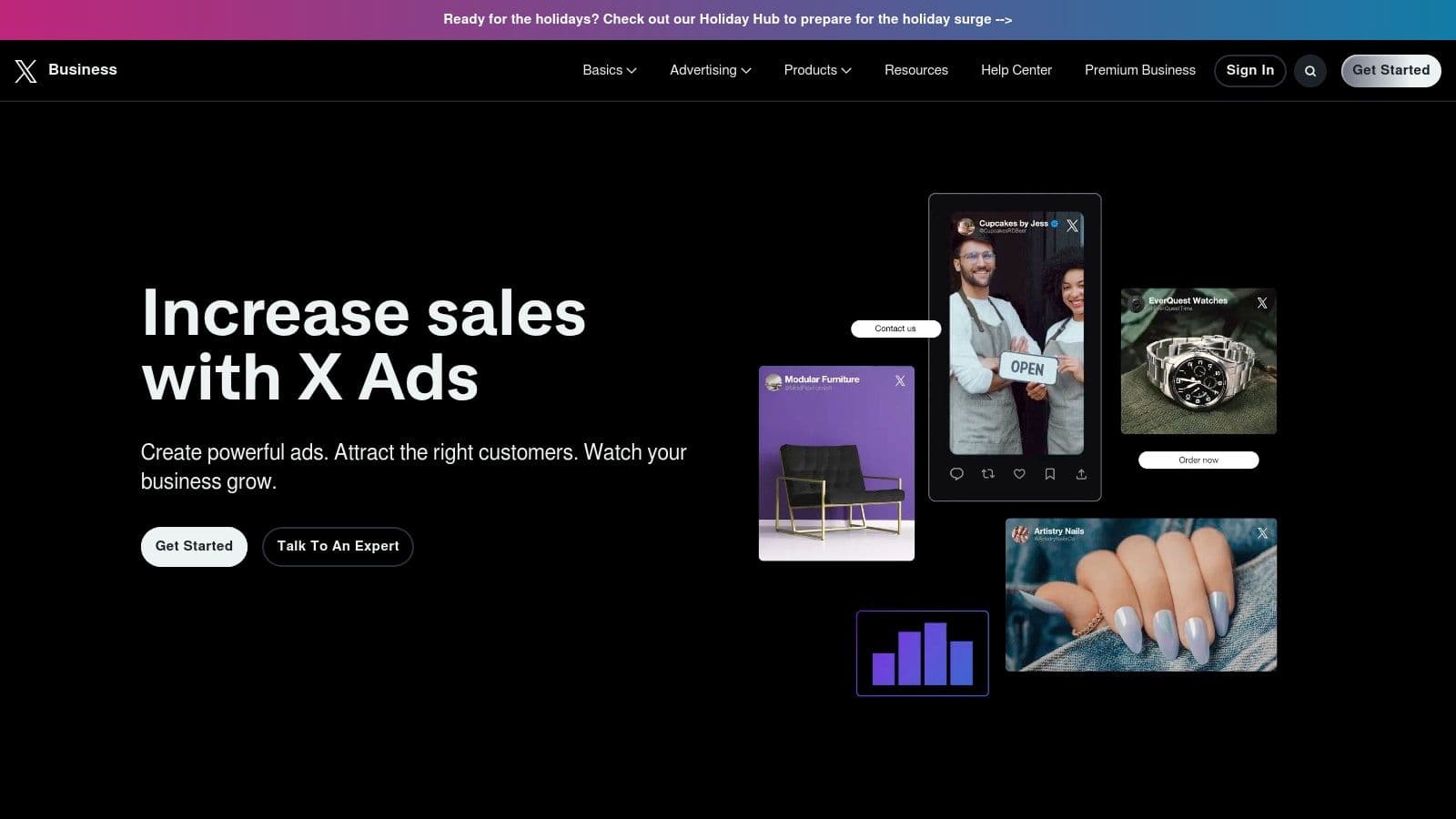
For businesses aiming to inject themselves into real-time cultural moments and trending conversations, X for Business provides a unique, fast-paced advertising environment. Its self-serve platform, X Ads Manager, is designed for rapid campaign deployment, making it ideal for product launches, event promotions, and moment-based marketing where timeliness is critical. This makes it one of the most dynamic top social media platforms for business for capturing immediate audience attention.
The platform’s strength is its direct line to what’s happening now. Unlike other networks focused on curated content, X thrives on immediacy. This allows brands to align their messaging with current events, engage directly with trending topics, and drive actions like website traffic, video views, and conversions in a highly reactive setting.
Key Features and Capabilities
X Ads Manager offers a straightforward, objective-based approach to advertising that allows businesses to quickly get campaigns live. Its features are tailored for agility and reaching audiences who are actively engaged in public discourse.
- Ads Manager: This is the core hub for building and launching campaigns. It guides you through an objective-based setup process, helping you choose goals like Reach, Traffic, Video Views, or Conversions to align your ads with specific business outcomes.
- Second-Price Auction Model: X uses a second-price auction for bidding, which means if you win an auction, you pay just one cent more than the next highest bidder. This can make ad costs more efficient and predictable for advertisers.
- Targeting Options: Advertisers can target users based on a variety of signals, including keywords, conversation topics, interests, follower look-alikes, and specific event conversations, allowing for precise audience engagement.
- Programmatic Partnerships: For larger advertisers seeking expanded reach, X integrates with various Demand-Side Platforms (DSPs), expanding inventory access beyond what is available directly through the Ads Manager.
Pros and Cons
| Pros | Cons |
|---|---|
| Real-Time Conversation: The platform is unparalleled for tapping into live events, breaking news, and trending topics. | Inconsistent Advertiser Experience: Some businesses report friction with account eligibility and inconsistent customer support. |
| Quick Campaign Setup: Objective-based buying simplifies the ad creation process, making it fast to launch campaigns. | Variable Brand Safety Perceptions: The platform's open nature means brands must carefully review placement controls and suitability. |
| Flexible Budgets: It accommodates a range of budgets, allowing smaller businesses to test campaigns without a large upfront commitment. | Potentially Fleeting Impact: The fast-paced feed can mean ad content has a very short lifespan compared to other platforms. |
To make a lasting impact on X, a consistent and timely presence is crucial. Understanding which posts are driving the most engagement is key, and businesses can learn more by tracking the right social media key performance indicators to refine their strategy and maximize their ad spend.
Website: https://business.x.com/
7. Snapchat for Business
For businesses targeting Gen Z and younger Millennials, Snapchat offers a creative and immersive environment unmatched by other platforms. It has solidified its place among the top social media platforms for business by focusing on augmented reality (AR) and ephemeral, full-screen vertical video content. This mobile-first approach provides a direct line to a highly engaged, youth-skewing audience that values authenticity and interactive experiences.
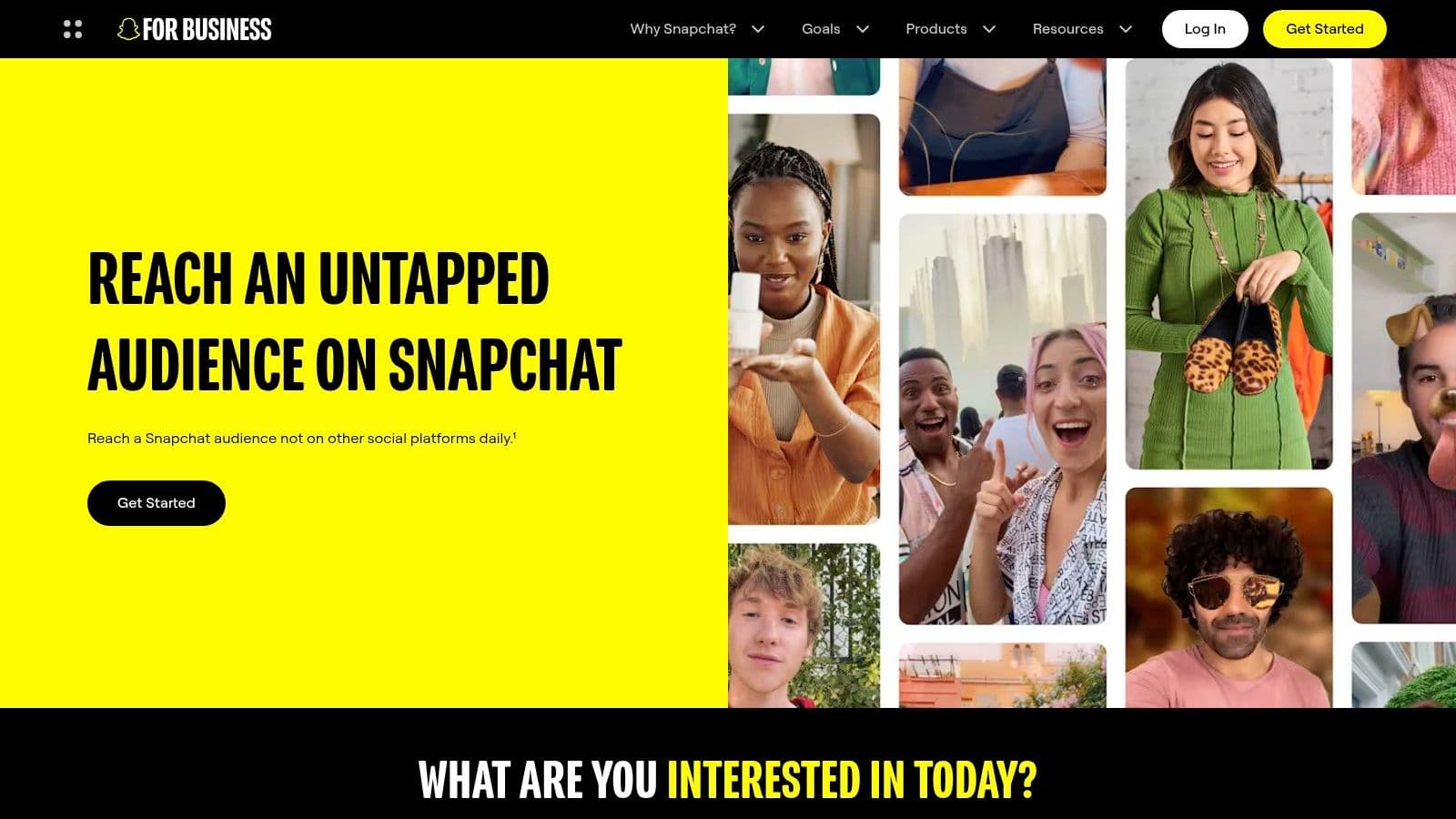
Snapchat's core advantage is its ability to blend brand messaging seamlessly into the user's daily communication. Unlike traditional social feeds, Snapchat ads feel native and less intrusive, appearing between friend's Stories or as interactive Lenses. This positions brands not just as advertisers, but as creators of fun, shareable experiences that users actively seek out.
Key Features and Capabilities
Snapchat for Business provides a suite of tools designed to capture attention and drive action within its unique ecosystem. Its features are built for mobile performance and creativity, making it accessible even for smaller businesses.
- Self-serve Ads Manager: This intuitive platform allows businesses to create, launch, and manage campaigns with ease. It includes helpful business education resources, making it approachable for those new to the platform.
- AR Lenses and Filters: The platform's signature feature allows brands to create custom augmented reality experiences. Users can interact with these Lenses, overlaying branded elements on their photos and videos, creating viral, user-generated content.
- Vertical Full-Screen Video Ads: Snapchat pioneered the vertical video format. These ads are immersive, sound-on by default, and can include interactive elements like swipe-up calls to action, driving traffic to websites or app installs.
- Accessible Budgeting: With low daily minimums (as little as $5/day) and clear budget guidance, Snapchat makes it easy for businesses to test campaigns. They often provide promotional ad credits to new advertisers to encourage experimentation.
Pros and Cons
| Pros | Cons |
|---|---|
| Strong Reach Among Ages 13–34: Unparalleled access to Gen Z and Millennial audiences with highly engaging, youth-skewing formats. | Narrower Audience Breadth: Less effective for reaching older demographics compared to platforms like Meta or YouTube. |
| Cost-Accessible Testing: Low daily minimums and promotional credits make it easy for small businesses to experiment and find what works. | Premium AR Can Be Costly: While basic ad formats are affordable, developing custom high-end AR Lenses can require a significant investment. |
| High User Engagement: The interactive and ephemeral nature of the platform encourages active participation rather than passive scrolling. | Creative Demands: The platform’s audience expects authentic, non-traditional content, requiring more creative effort than a simple image ad. |
While Snapchat excels at reaching a younger audience, creating unique content for it can be time-consuming. Tools like PostOnce can help manage this by allowing you to schedule your core visual assets, while you focus on adapting them with Snapchat's native creative tools for maximum impact.
Website: https://forbusiness.snapchat.com/
Top 7 Social Media Platforms for Business — Comparison
| Platform | Implementation 🔄 | Resource requirements ⚡ | Expected outcomes ⭐📊 | Ideal use cases 💡 | Key advantages ⭐ |
|---|---|---|---|---|---|
| Meta for Business (Facebook + Instagram) | Moderate — unified Ads Manager with automation (Advantage+) but policy complexity can add friction | Moderate–High — varied creative formats, catalog setup and media budget for scale | High reach and full‑funnel performance; strong conversion potential across placements | Broad consumer targeting, e‑commerce catalogs, full‑funnel social commerce | Massive audience, diverse formats, strong automation and placement options |
| LinkedIn Marketing Solutions (Campaign Manager) | Moderate — Campaign Manager is straightforward but requires professional targeting configuration | High — typically higher CPC/CPM and investment in lead nurture/creative | High‑quality B2B leads and pipeline impact; measurable intent‑driven outcomes | B2B demand generation, account‑based marketing, recruitment, professional services | Precise professional targeting by job/title/company; strong B2B intent |
| YouTube Ads via Google Ads | Moderate — requires video asset workflows and Google Ads setup/integration | High — video production demands and sufficient media budget for reach | Excellent reach and brand lift; effective for education, demos and consideration | Awareness, product demos, brand lift, upper‑funnel education | Video‑first formats at scale; deep Google data and attribution integration |
| TikTok for Business (Ads Manager + Business Center) | Moderate — Ads Manager + Business Center; creative cadence and trend responsiveness required | Medium — short‑form video production and creator partnerships; incentives available | Very high engagement and discovery; rapid performance on trend‑driven creative | Discovery, social commerce, youth‑skewed brands, creator collaborations | Creative‑first formats, strong engagement, creator marketplace and commerce tools |
| Pinterest Business | Low — simple business setup; some desktop management for advanced features | Low–Medium — visual assets and optional catalogs; lower production barrier than heavy video | Strong planning/shopping intent and catalog performance for lifestyle categories | Retail, home, fashion, food, lifestyle brands focused on discovery and planning | High shopping intent audience, commerce‑friendly ad formats, easy creative requirements |
| X for Business (formerly Twitter) — X Ads Manager | Low — quick objective‑based setup; best used with real‑time planning | Low–Medium — flexible budgets; creative for timely conversation and moments | Good real‑time reach and conversation impact; effective for moment‑based metrics | Product launches, PR/moment marketing, short‑term promotions and awareness | Real‑time conversation environment, fast setup and flexible budgeting |
| Snapchat for Business | Low–Moderate — Ads Manager easy to use; AR/Lens adds production complexity | Medium — vertical video and AR can require specialist production; low daily minimums enable testing | Strong performance with Gen Z/Millennials; mobile‑first engagement and conversion | Youth‑focused campaigns, AR experiences, mobile commerce and app installs | AR Lenses and full‑screen mobile formats; cost‑accessible testing for younger demos |
PostOnce: The Smart Solution for Your Social Media Strategy
You've explored the top social media platforms for business. You know where your audience is and what content they crave. But identifying the right channels is only half the battle. The other half is execution—consistently showing up across those platforms without spending all your time on manual, repetitive work. This is the exact challenge your search intent reveals, and it's the problem PostOnce was built to solve.
Instead of uploading the same post to LinkedIn, then X, then Facebook, you can use PostOnce to automatically crosspost from one platform to all the others. Create your content once, and let smart automation handle the distribution. This transforms your social media management from a time-consuming chore into a streamlined, efficient system. By eliminating the manual work, you free up valuable time to focus on what truly matters: creating great content and engaging with your community.
Building a Cohesive and Efficient Social Media Strategy
Navigating the landscape of the top social media platforms for business can feel overwhelming. We've journeyed through the professional corridors of LinkedIn, the visual marketplaces of Instagram and Pinterest, the dynamic video feeds of TikTok and YouTube, and the rapid-fire conversations on X. Each platform offers a unique ecosystem with distinct audiences, content formats, and strategic advantages.
Your key takeaway should be that success isn't about being everywhere; it's about being everywhere that matters for your brand. A targeted, impactful presence on two or three carefully selected platforms will always outperform a diluted, inconsistent effort across seven. The deep dive into Meta, LinkedIn, YouTube, TikTok, Pinterest, X, and Snapchat has armed you with the data and insights to make that critical choice.
From Selection to Execution: Your Actionable Roadmap
Choosing your platforms is the foundational first step, but the real challenge lies in consistent and efficient execution. A winning strategy is built on a sustainable workflow that allows you to focus on high-value activities like content creation and community engagement, not manual, repetitive tasks. This is where your operational strategy becomes just as important as your content strategy.
To transition from planning to action, follow these steps:
- Finalize Your Platform Mix: Based on the detailed breakdowns in this guide, select the 2-3 platforms that most directly align with your target audience demographics, business goals (e.g., lead generation, brand awareness), and content creation capabilities. Don't chase trends; follow the data.
- Define Your Core Content Pillars: Identify 3-5 key themes or topics your brand will consistently talk about. This creates brand recognition and simplifies your content calendar. For example, a SaaS company might focus on productivity tips, customer success stories, and industry news.
- Establish a Realistic Posting Cadence: Determine how often you can realistically create high-quality content for each platform. Consistency is more important than frequency. A solid plan might be 3 LinkedIn posts, 5 Instagram Stories, and 2 TikTok videos per week.
- Implement a Smart Distribution System: This is the most crucial step for efficiency. Manually uploading the same content to different platforms is a significant time drain. Tools designed for automated crossposting are essential for maintaining your cadence without burning out.
The Power of Smart Automation in Social Media Management
The core principle behind effective social media management for small businesses and solo creators is leverage. How can you maximize the impact of every piece of content you create? The answer lies in automating the distribution process.
Imagine spending an hour creating a compelling short-form video. Without an efficient system, you then spend another 30 minutes manually uploading and formatting it for Instagram Reels, TikTok, and YouTube Shorts. This repetitive work eats into time that could be spent engaging with comments or planning your next campaign.
This is precisely the problem that intelligent crossposting tools solve. By connecting your accounts, you can publish content once and have it automatically distributed and optimized for each selected platform. This approach not only saves countless hours but also ensures your content goes live at the optimal time for each network, maximizing its initial reach and engagement potential. Adopting such a tool transforms your social media workflow from a series of manual chores into a streamlined, strategic operation, making it a non-negotiable for anyone serious about using the top social media platforms for business growth.
Ultimately, your success hinges on building a sustainable system. Choose your platforms wisely, create content that resonates, and leverage technology to handle the rest. This strategic blend of selection, creation, and efficient distribution will turn your social media presence from a simple task into a powerful engine for business growth in 2025 and beyond.
Ready to stop wasting time on repetitive uploads and start building a truly efficient social media presence? PostOnce is the central hub that automates your crossposting, allowing you to publish your content everywhere with a single click. Take control of your workflow and amplify your reach by visiting PostOnce to get started today.