















Managing multiple social media accounts is a major challenge for businesses, but the solution is simpler than you think. With a tool like PostOnce, you can automatically crosspost from one primary platform to all your others, saving countless hours. However, automation is only effective if you're on the right channels to begin with. The fundamental challenge remains: which platforms are actually worth your effort? Selecting the right channels is the first, most critical step to an effective social media strategy.
This guide is designed to solve that exact problem. We will provide a comprehensive breakdown of the best social media platforms for businesses, moving beyond surface-level advice to give you the specific data and strategic insights needed to make an informed decision. You won't find generic tips here. Instead, we offer a detailed analysis of the top seven networks, helping you identify the 2-4 primary platforms that will deliver the most significant return for your unique business goals.
Each platform breakdown includes:
- Audience Demographics: Who is actually using the platform?
- Best Use Cases: Is it for B2B lead generation, B2C e-commerce, or brand awareness?
- Key Content Formats: What types of content perform best?
- Pros & Cons: A balanced look at the opportunities and challenges.
- Actionable Tips: Specific strategies to boost engagement and growth.
We’ve included screenshots and direct links for every platform, making it easy to explore them further. This resource will help you stop wasting time on irrelevant networks and start building a powerful, focused presence where your target audience is most active.
How PostOnce Solves Your Social Media Challenge
Finding the best social media platforms for businesses is only half the battle. Once you've identified your key channels—whether it's Instagram, LinkedIn, TikTok, or X—the real work of maintaining a consistent presence begins. This is where most businesses struggle, spending hours manually copying, pasting, and reformatting content for each network.
PostOnce directly solves this pain point. As an intelligent cross-posting tool, it allows you to post once on your primary platform and automatically distributes that content to all your other selected channels.
- Create Once, Distribute Everywhere: Save time by eliminating repetitive manual posting.
- Maintain Brand Consistency: Ensure your message is cohesive across all networks.
- Focus on What Matters: Free up your time to create high-quality content and engage with your audience, rather than getting bogged down in administrative tasks.
By integrating PostOnce into your workflow, you can effectively manage a multi-platform strategy without the associated burnout, turning your social media efforts into a streamlined engine for growth. Explore how to crosspost effortlessly here.
1. Meta for Business (Facebook + Instagram)
When considering the best social media platforms for businesses, the Meta ecosystem, which combines Facebook and Instagram, is an undeniable powerhouse. Its sheer scale, with over 3 billion daily active users across its family of apps, offers unparalleled reach for nearly every business type. Meta for Business acts as the central command center for managing your presence, running advertising campaigns, and setting up e-commerce functionalities across both platforms.
Why It Stands Out: Audience and Advertising
Meta's primary strength lies in its mature and highly sophisticated advertising platform, Meta Ads Manager. This unified tool allows businesses to launch, manage, and analyze campaigns that can run seamlessly across Facebook Feeds, Instagram Stories, Reels, Messenger, and more. The targeting capabilities remain some of the most robust available, allowing you to reach users based on demographics, interests, online behaviors, and interactions with your business.
For businesses focused on direct response, such as e-commerce stores or lead generation companies, Meta's conversion tracking tools (the Meta Pixel and Conversions API) are essential. They provide detailed data on how ads translate into website actions, helping the algorithm optimize for goals like purchases or form submissions.
Best Use Cases and Content Formats
Meta's platforms are versatile, making them a fit for a wide range of business goals.
- Best For: B2C brands, local businesses, e-commerce, community building, and direct-response advertising.
- Solo Creators: Excel at building personal brands and communities through authentic content on Reels and Stories.
- Small Businesses: Leverage Facebook Groups for community engagement and local ads to drive foot traffic. Instagram Shops provide a direct sales channel.
- Agencies: Manage multiple client ad accounts and pages efficiently through Meta Business Suite, utilizing its powerful analytics for reporting.
Key Platform Features
| Feature | Description | Best For |
|---|---|---|
| Meta Ads Manager | Unified platform for creating, managing, and analyzing ad campaigns across Facebook and Instagram. | Performance marketing, lead generation, brand awareness. |
| Meta Shops | Native e-commerce storefronts on Facebook and Instagram, allowing users to browse and purchase directly. | E-commerce, retail, direct-to-consumer brands. |
| Retargeting Audiences | Create custom audiences based on website visitors, app users, or people who engaged with your content. | Re-engaging warm leads and driving conversions. |
Pros and Cons
Pros:
- Massive Reach: Access to a vast and diverse global user base.
- Advanced Ad Optimization: Mature algorithms are highly effective at finding users likely to convert.
- Robust Analytics: In-depth performance data for both organic and paid efforts.
Cons:
- Rising Ad Costs: Increased competition can lead to fluctuating and higher costs per result.
- Data Privacy Changes: Evolving privacy regulations (like iOS 14+) make precise ad tracking more complex.
Automating your content strategy is crucial for consistency. You can learn more about automating Instagram posts here to keep your feed active while you focus on ad strategy and community engagement.
Website: https://www.facebook.com/business
2. LinkedIn Marketing Solutions
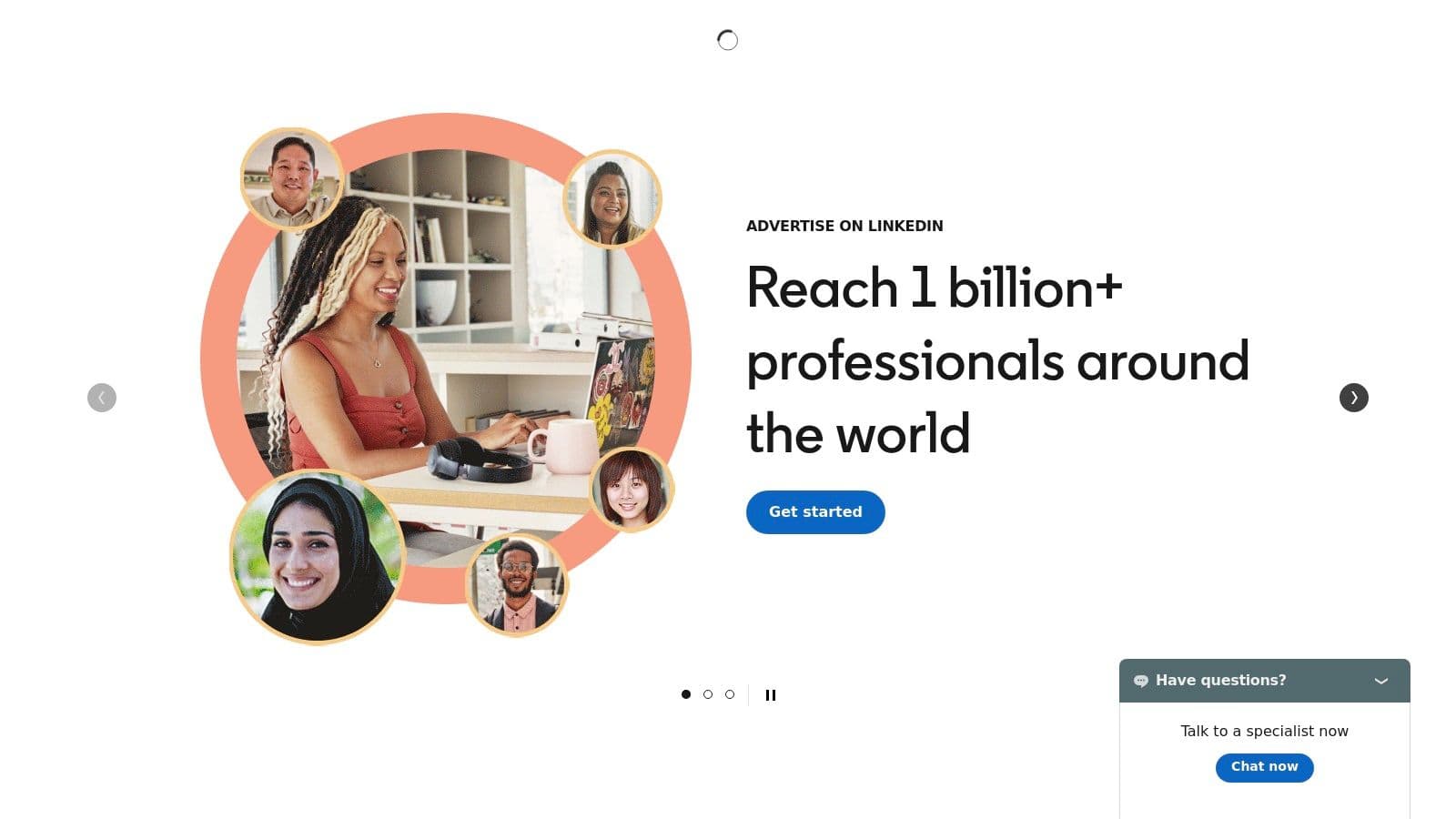
While Meta casts a wide net, LinkedIn Marketing Solutions is the precision tool for B2B marketers. As the world's largest professional network, it is unequivocally one of the best social media platforms for businesses aiming to connect with decision-makers, generate high-quality leads, and build industry authority. The platform is designed from the ground up to facilitate professional networking, making it a high-intent environment for B2B engagement.
Why It Stands Out: Professional Targeting and Lead Quality
LinkedIn's core advantage is its unparalleled targeting capabilities based on professional data. Unlike consumer platforms that rely on interests and behaviors, LinkedIn allows advertisers to zero in on users by their job title, company size, industry, seniority level, and specific skills. This firmographic and professional targeting is the gold standard for account-based marketing (ABM) and B2B lead generation, ensuring marketing budgets are spent reaching the right people in the right roles.
The platform's native Lead Gen Forms are a powerful feature, pre-filling with a user's profile data to reduce friction and increase conversion rates. These high-quality leads can be synced directly to most major CRMs, streamlining the sales pipeline and connecting marketing efforts directly to business outcomes.
Best Use Cases and Content Formats
LinkedIn is the premier destination for thought leadership and professional brand building.
- Best For: B2B lead generation, account-based marketing, corporate branding, professional recruiting, and establishing industry expertise.
- Solo Creators: Excel as industry experts by sharing insightful text posts, articles, and short-form videos to build a professional following and attract clients.
- Small Businesses: Use Company Pages to share company updates and target decision-makers at specific companies with sponsored content to drive service inquiries.
- Agencies: Manage sophisticated B2B campaigns, leveraging precise audience segmentation to deliver high-value leads and demonstrable ROI for clients.
Key Platform Features
| Feature | Description | Best For |
|---|---|---|
| Professional Targeting | Filter audiences by job title, company, industry, seniority, skills, and other professional attributes. | Account-based marketing, B2B lead generation. |
| Lead Gen Forms | Native forms that pre-populate with user profile data, designed for seamless lead capture. | High-quality lead acquisition, reducing friction. |
| Sponsored Content | Promote posts, documents, or videos directly in the feed of your target professional audience. | Thought leadership, brand awareness, driving traffic. |
Pros and Cons
Pros:
- High-Intent Professional Audience: Users are in a business mindset, leading to higher-quality leads and engagement.
- Powerful B2B Targeting: Unmatched firmographic and professional filters for precise audience segmentation.
- Strong for ABM: Ideal for targeting key accounts and decision-makers within specific companies.
Cons:
- Higher Ad Costs: CPMs and CPCs are typically more expensive than consumer-focused platforms.
- Campaign Management Nuances: The platform has a learning curve regarding campaign structure and budget pacing.
Maintaining a consistent presence is key to building authority on the platform. You can discover effective strategies to post on LinkedIn to ensure your professional audience remains engaged.
Website: https://business.linkedin.com/marketing-solutions
3. TikTok for Business
In the modern landscape of the best social media platforms for businesses, TikTok has rapidly evolved from a Gen Z entertainment hub into a formidable marketing channel. Its algorithm, which prioritizes content discovery based on engagement rather than social graphs, provides an unparalleled opportunity for brands to achieve viral reach. TikTok for Business is the platform's self-serve advertising suite, designed to help brands of all sizes tap into its highly engaged, trend-driven community.
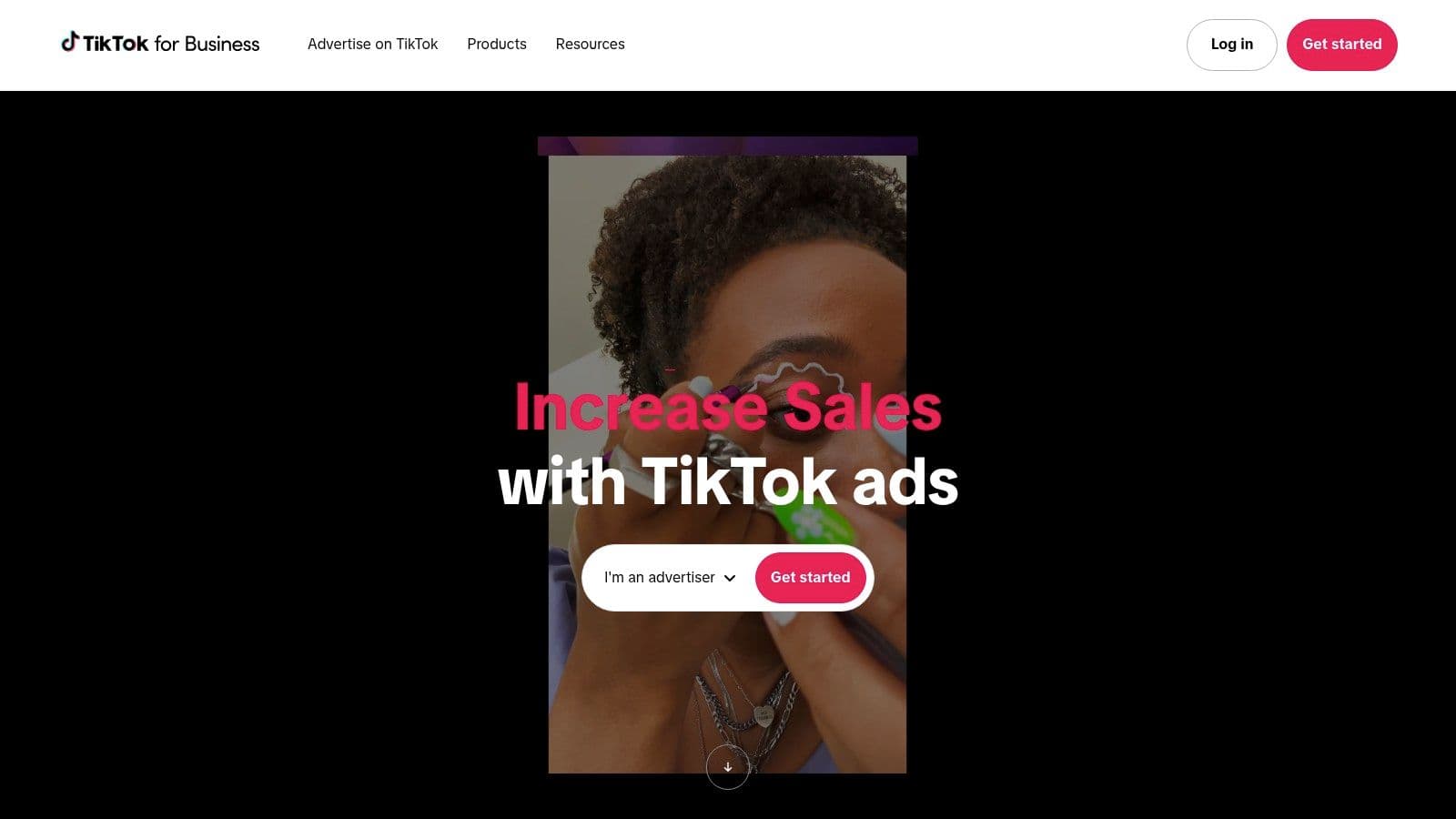
Why It Stands Out: Creativity and Virality
TikTok's core strength is its culture of authenticity and user-generated content (UGC). Unlike other platforms where polished ads are the norm, TikTok rewards creative, raw, and entertaining content that feels native to the "For You" page. The platform's advertising tools are built around this principle, with formats like Spark Ads allowing brands to boost high-performing organic videos or creator content, blending seamlessly into the user feed.
This creative-first approach means that even businesses with smaller budgets can achieve significant reach if their content resonates with the community. The platform's ad system also offers flexible budget controls, allowing advertisers to pay for specific actions like clicks (CPC), impressions (CPM), or conversions. While minimum daily budgets are recommended (e.g., around $30/day for some conversion campaigns) to ensure the algorithm has enough data for optimization, the entry point is accessible for most businesses.
Best Use Cases and Content Formats
TikTok is a powerful tool for brands looking to connect with a younger demographic and build cultural relevance.
- Best For: B2C brands, e-commerce, app installs, CPG, and entertainment.
- Solo Creators: Can rapidly build a following and monetize through the TikTok Creator Marketplace, brand partnerships, and driving traffic to other platforms.
- Small Businesses: Excel by participating in trending challenges, showcasing behind-the-scenes content, and using location-based targeting for local awareness.
- Agencies: Leverage Spark Ads to scale creator-led campaigns for clients and use premium formats like TopView for major product launches that demand mass visibility.
Key Platform Features
| Feature | Description | Best For |
|---|---|---|
| Spark Ads | Boost organic videos from your own account or a creator's account as in-feed ads. | Leveraging authentic UGC, increasing engagement, and driving conversions. |
| Flexible Budgeting | Set daily or lifetime budgets at the campaign or ad group level and pay for desired outcomes. | Businesses of all sizes, from testing small campaigns to scaling large ones. |
| Premium Formats | Reservation-based ads like TopView (first video on app open) and Branded Hashtag Challenges. | Major brand launches, maximizing reach, and driving mass awareness. |
Pros and Cons
Pros:
- High Engagement: The user base is highly active and receptive to creative, entertaining brand content.
- Virality Potential: The algorithm can give any video massive reach, regardless of follower count.
- Flexible Budget Options: Guidance on minimums helps even small advertisers achieve learning thresholds for effective delivery.
Cons:
- Fast Creative Fatigue: Ad creative must be refreshed frequently to avoid performance drops.
- Expensive Premium Formats: Reservation-based ads require significant investment and often must be booked through a representative.
To maintain a consistent presence without burning out, it's vital to streamline your content workflow. You can learn more about how to cross-post from YouTube to TikTok to efficiently repurpose long-form video for a short-form audience.
Website: https://ads.tiktok.com/business
4. YouTube Ads (via Google Ads)
As the world's largest video platform, YouTube offers businesses a unique advertising environment that blends the reach of traditional television with the precision of digital marketing. Managed through the powerful Google Ads interface, YouTube Ads are a crucial component when considering the best social media platforms for businesses, especially for those looking to capture attention through compelling video storytelling. Its integration with the Google ecosystem provides unparalleled measurement capabilities, connecting top-of-funnel brand awareness with tangible business outcomes.
Why It Stands Out: Video Reach and Google Integration
YouTube's primary advantage is its immense audience combined with Google's sophisticated targeting and measurement tools. Unlike other platforms where video is one of many content types, video is YouTube's native language. This allows businesses to run diverse ad formats, from quick, non-skippable bumper ads to long-form educational content, all targeted based on Google's rich data on user search history, demographics, and interests (contextual signals).
This direct integration means you can create remarketing lists from website visitors or use customer lists to find lookalike audiences. Furthermore, you can directly measure how video ad views influence website traffic, lead submissions, and online sales, providing a clear line of sight from ad spend to ROI that is often harder to track on other video-centric platforms.
Best Use Cases and Content Formats
YouTube's versatility makes it effective for achieving both brand-building and direct-response goals through video.
- Best For: B2C and B2B brands, e-commerce, software companies, and anyone with a product or service that benefits from visual demonstration.
- Solo Creators: Can drive traffic to their merchandise, courses, or affiliate links by running targeted ads to viewers of specific channels or videos.
- Small Businesses: Use in-feed video ads to demonstrate product use cases or skippable in-stream ads to drive local brand awareness and website traffic.
- Agencies: Leverage Brand Lift studies for large-scale campaigns and integrate YouTube performance data into holistic Google Ads reports for clients.
Key Platform Features
| Feature | Description | Best For |
|---|---|---|
| Diverse Ad Formats | Includes skippable/non-skippable in-stream ads, Shorts ads, and in-feed video ads for various objectives. | Full-funnel marketing, from brand awareness to conversions. |
| Google Ads Integration | Utilizes Google's robust targeting options, including demographics, interests, keywords, and remarketing audiences. | Precision targeting and performance marketing. |
| Brand Lift Measurement | Provides insights into how ads impact brand perception, awareness, and consideration (at defined budget thresholds). | Measuring upper-funnel impact and brand-building efforts. |
Pros and Cons
Pros:
- Unmatched Video Reach: Access to billions of logged-in monthly users across all demographics.
- Powerful Measurement: Deep integration with Google Ads and Google Analytics for conversion tracking.
- Strong Contextual Signals: Ability to target users based on their active search and viewing habits.
Cons:
- Higher Production Effort: Creating high-quality video content can require more resources than static image ads.
- Complex Interface: The Google Ads platform has a steeper learning curve compared to other social ad managers.
Effectively managing a YouTube channel alongside other platforms requires a streamlined workflow. By exploring the best social media management tools for small business, you can find solutions to schedule content efficiently, freeing up time to focus on your video ad strategy.
Website: https://www.youtube.com/ads
5. Pinterest Business
Pinterest stands apart in the lineup of best social media platforms for businesses by functioning less like a social network and more like a visual discovery engine. Users, known as "Pinners," come to the platform with high purchase intent, actively seeking inspiration and planning future buys for everything from home decor and fashion to recipes and travel. For businesses, this translates to an audience that is not just browsing but is in a forward-looking, decision-making mindset.
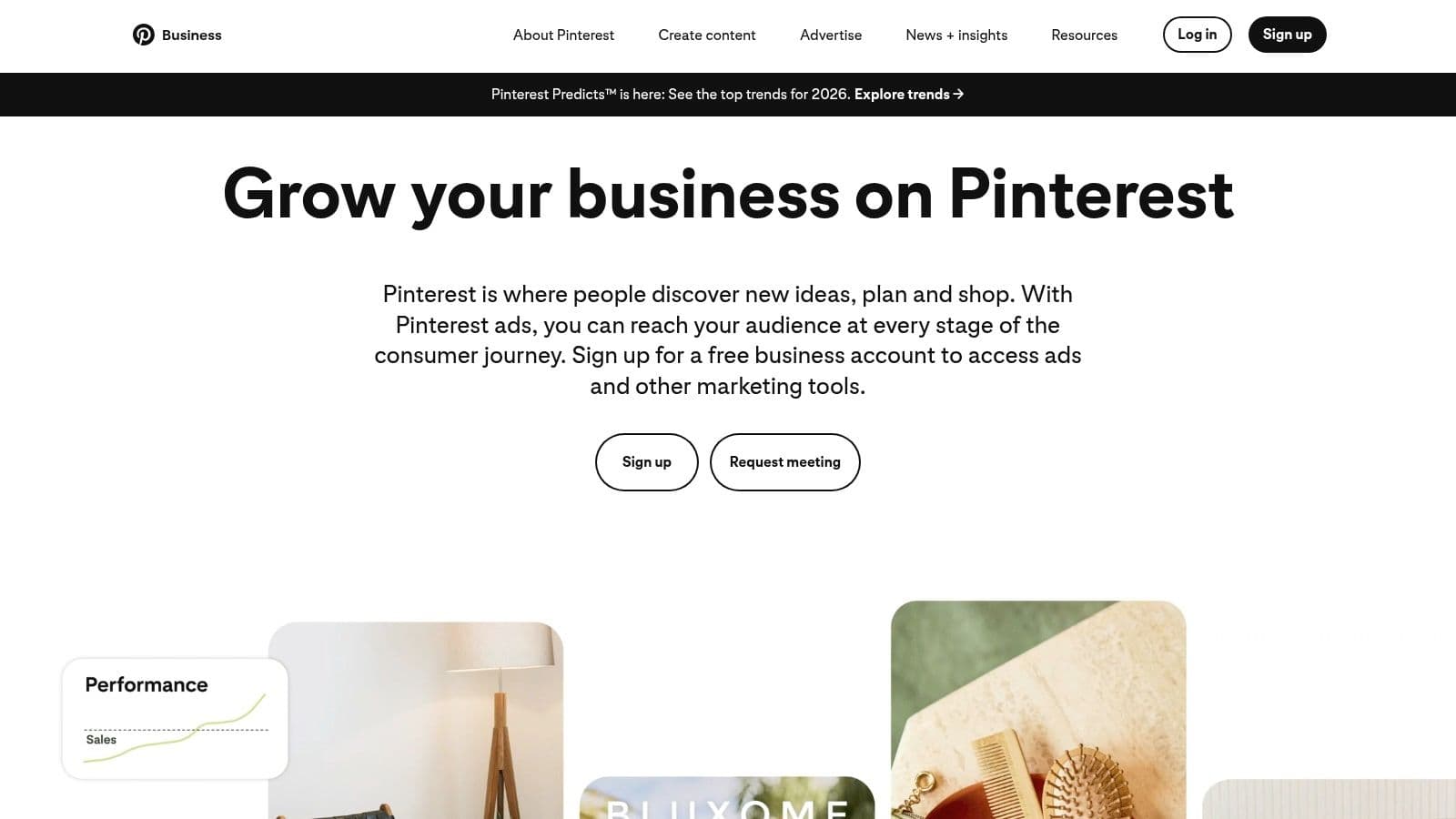
Why It Stands Out: Purchase Intent and Visual Discovery
Pinterest’s core strength is its user mindset. Unlike other platforms where ads can feel intrusive, promoted Pins blend seamlessly into a user's feed of inspiration and ideas. This makes the platform a powerful, full-funnel marketing tool where brands can capture attention during the earliest stages of consideration and guide users directly to a purchase.
The platform heavily supports e-commerce and catalog-driven brands through rich shopping integrations. Businesses can upload their entire product catalog to create dynamic Product Pins, which display real-time pricing and stock information. Automation tools further enhance this by helping scale creative variants for product ads, making it easier to manage large inventories.
Best Use Cases and Content Formats
Pinterest excels for visually driven industries and brands whose products align with life moments and long-term planning.
- Best For: E-commerce, B2C brands (especially in home, fashion, beauty, food, DIY), and content-driven businesses like blogs.
- Solo Creators: Can build authority and drive significant traffic to their blogs or digital products by creating helpful, evergreen visual guides and tutorials.
- Small Businesses: Retailers can use catalog integrations and Shopping Ads to turn inspiration into sales. Service-based businesses can use Pins to showcase portfolio work or share educational content.
- Agencies: Leverage Pinterest’s ad automation and catalog tools to run efficient, scalable campaigns for e-commerce clients, focusing on top-of-funnel awareness and bottom-of-funnel conversions.
Key Platform Features
| Feature | Description | Best For |
|---|---|---|
| Product Catalogs | Integrates your e-commerce store to automatically create shoppable Product Pins with up-to-date pricing. | E-commerce, retail, and direct-to-consumer brands. |
| Idea Pins | Multi-page video and image format for telling a story, sharing a tutorial, or creating a guide. | Brand storytelling, educational content, influencer marketing. |
| Pinterest Ads | Campaign tools that allow targeting based on keywords, interests, and past shopping behavior. | Driving website traffic, conversions, and brand discovery. |
Pros and Cons
Pros:
- High Purchase Intent: Users are actively planning and looking for products to buy.
- Long Content Lifespan: Pins can drive traffic for months or even years, unlike ephemeral feed posts.
- Seamless Ad Experience: Promoted Pins feel native and are less disruptive to the user experience.
Cons:
- Niche Demographics: The user base leans heavily towards specific interests and demographics, which may not suit all businesses.
- Merchant Policy Hurdles: New domains can face strict eligibility rules and verification processes for shopping programs.
Website: https://business.pinterest.com
6. X for Business (formerly Twitter)
X, formerly known as Twitter, remains a crucial player among the best social media platforms for businesses due to its unmatched speed and real-time conversational nature. It thrives on immediacy, making it the epicenter for breaking news, live events, cultural trends, and instant customer service. For brands aiming to insert themselves into current conversations and build a voice of authority, X provides a direct and unfiltered line to the public discourse.
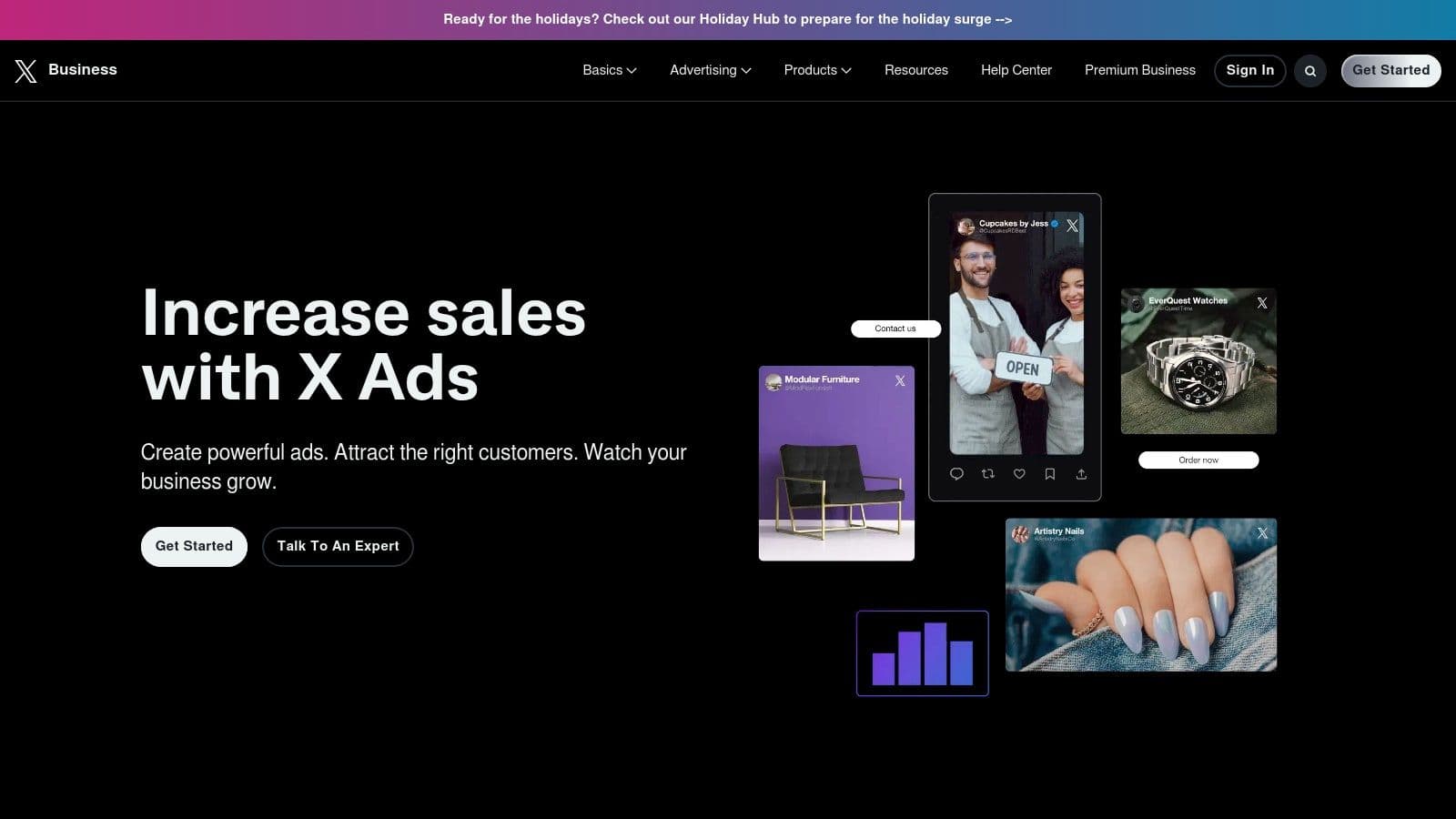
Why It Stands Out: Real-Time Relevance
X's primary advantage is its pace. While other platforms focus on curated, polished content, X is all about what's happening now. This makes it an incredibly powerful tool for brands in sectors like news, technology, sports, and finance, where timeliness is paramount. The platform’s advertising system is built for this environment, offering straightforward budget controls and flexible campaign structures that allow businesses to quickly capitalize on trending topics or launch timely promotions without a minimum spend requirement.
The platform is also a key channel for customer support and brand reputation management. Users frequently turn to X to ask questions, voice complaints, or praise companies, giving businesses a public forum to demonstrate their responsiveness and customer care.
Best Use Cases and Content Formats
X excels at fast-paced engagement and broadcasting timely information.
- Best For: B2C and B2B brands focused on newsjacking, customer service, thought leadership, and driving conversation around live events.
- Solo Creators: Perfect for establishing expertise and engaging directly with industry leaders and followers through threads and real-time commentary.
- Small Businesses: Use X to share quick updates, run flash promotions, connect with the local community, and provide rapid-fire customer support.
- Agencies: Manage client communications, monitor brand sentiment, and launch agile ad campaigns to capitalize on trending moments.
Key Platform Features
| Feature | Description | Best For |
|---|---|---|
| Ads Manager | A flexible advertising platform with daily budget controls, no minimum spend, and simple campaign setups. | Quick-turnaround promotions, brand awareness, and driving website traffic. |
| X Premium for Organizations | A paid subscription tier offering a verification checkmark, enhanced visibility, and priority support. | Establishing brand credibility and authority on the platform. |
| Conversation Placements | Allows brands to place ads within specific conversation threads, targeting users engaged with relevant topics. | Reaching highly engaged and contextually relevant audiences. |
Pros and Cons
Pros:
- Fast Reach: Unparalleled ability to tap into trending topics and live events for immediate visibility.
- Simple Budget Controls: Flexible and accessible ad platform with no minimum spend, ideal for testing and agility.
- Direct Engagement: Offers a direct line for customer service and building a distinct brand personality.
Cons:
- Brand Safety Volatility: The platform's environment can be unpredictable; brands must carefully evaluate its suitability.
- Changing Advertiser Demand: Shifts in the platform's advertiser base can affect campaign performance and predictability.
To maintain a consistent and timely presence on X, mastering your content schedule is key. You can find valuable strategies and tips for a powerful X (Twitter) presence here to help you stay active and relevant in fast-moving conversations.
Website: https://business.x.com
7. Reddit for Business / Reddit Ads
Often overlooked, Reddit is one of the best social media platforms for businesses that want to connect with highly engaged, niche communities. It's a network of thousands of topic-specific forums, or "subreddits," where users gather to discuss shared interests with unparalleled passion and authenticity. Reddit Ads allows businesses to tap into these conversations and reach users based on the specific communities they belong to and the interests they actively discuss.
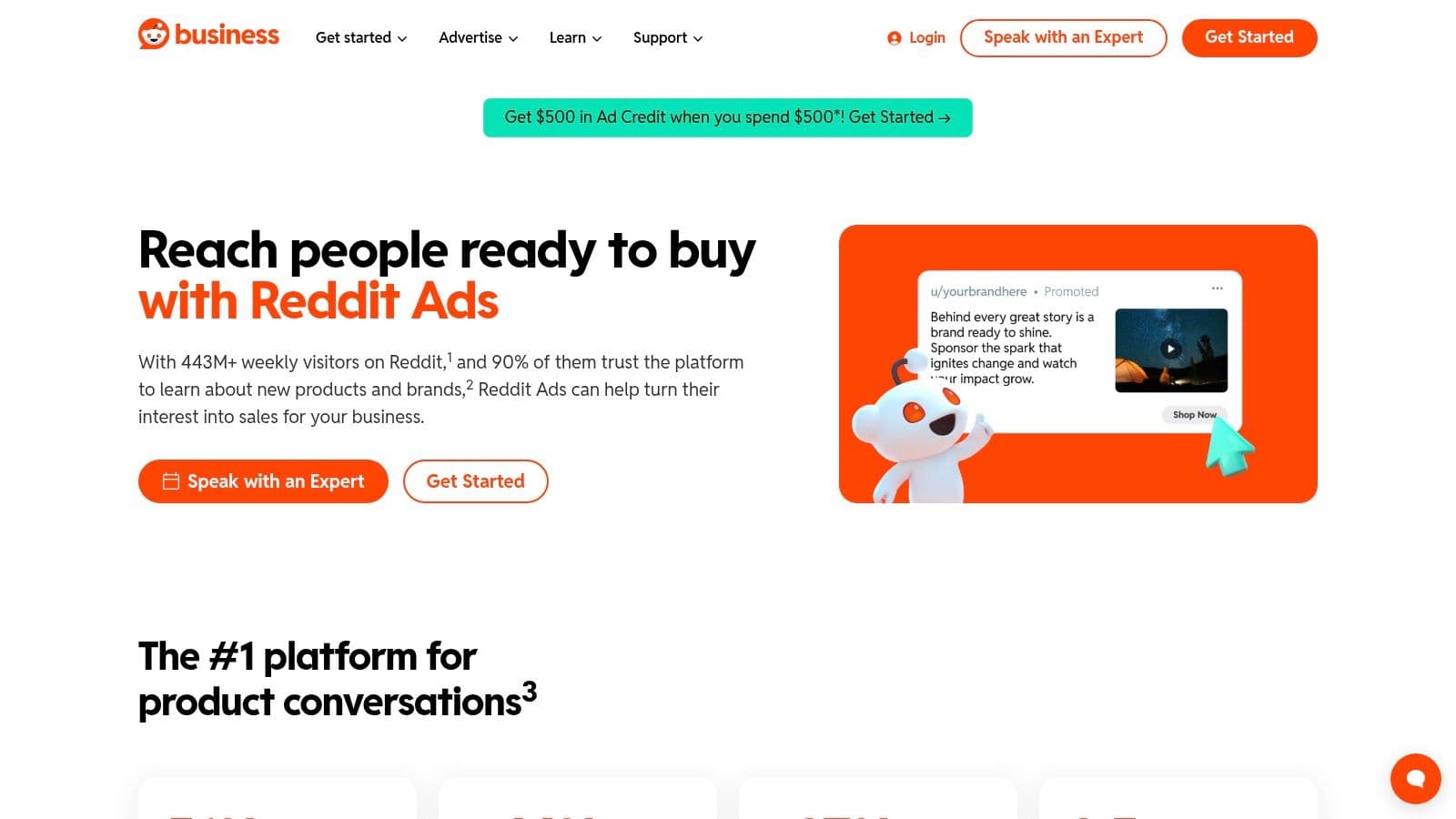
Why It Stands Out: Community and Niche Targeting
Reddit's power lies in its structure. Unlike other platforms where you target broad interests, Reddit allows you to place your message directly within communities laser-focused on a single topic, like r/personalfinance or r/skincareaddiction. This community targeting is a goldmine for marketers, as it provides direct access to users who are actively seeking information, recommendations, and solutions related to your product or service.
The platform’s self-serve Ads Manager offers flexible bidding (CPC, CPM, CPV) and remarkably low daily budget entry points, with many marketers reporting success starting with as little as $5 per day. This makes it an ideal environment for testing messaging and creative with minimal risk. The key to success is authenticity; Redditors value genuine contribution and can be critical of overly corporate or "salesy" content.
Best Use Cases and Content Formats
Reddit excels for brands that understand the value of conversation over proclamation.
- Best For: Niche B2C products, SaaS companies, gaming, tech, and finance industries, and customer research.
- Solo Creators: Can build authority by participating genuinely in relevant subreddits (before advertising) to understand community pain points and language.
- Small Businesses: Use ads to drive traffic to product pages or blog posts that solve a specific problem discussed in a target subreddit.
- Agencies: Leverage Reddit as a cost-effective platform to test new angles and find highly qualified audiences for clients before scaling on more expensive channels.
Key Platform Features
| Feature | Description | Best For |
|---|---|---|
| Community Targeting | Place ads in specific subreddits, reaching users passionate about that topic. | Niche marketing, reaching high-intent audiences. |
| Low-Budget Testing | Start campaigns with a daily ad spend as low as $5 to test creative and messaging. | Startups, small businesses, campaign validation. |
| Conversation Ads | UGC-integrated ad formats that encourage user interaction and discussion within the ad unit itself. | Driving engagement, market research, brand building. |
Pros and Cons
Pros:
- Highly Engaged Niche Audiences: Access to focused and passionate communities that are difficult to reach elsewhere.
- Cost-Efficient Ad Testing: Low entry costs allow for affordable experimentation and audience discovery.
- Authentic Peer-to-Peer Credibility: Positive engagement can lead to powerful word-of-mouth marketing.
Cons:
- Community-Specific Etiquette: Creative must be tailored and authentic to avoid negative backlash from users.
- Costly Premium Options: Managed services and premium takeover ads require significant investment.
Website: https://ads.reddit.com
Top 7 Social Media Platforms for Business — Comparison
| Platform | 🔄 Implementation complexity | ⚡ Resource requirements | 📊 Expected outcomes | Ideal use cases | ⭐ Key advantages |
|---|---|---|---|---|---|
| Meta for Business (Facebook + Instagram) | Moderate — Ads Manager, pixel/Conversions API and commerce setup; learning period | Low–Medium budgets (recommend ~$5+/day), pixel/commerce integrations, ongoing creative | Strong direct-response conversions, retargeting, scalable ROAS | B2C, ecommerce, local businesses, direct-response campaigns | Massive reach, granular targeting and robust measurement |
| LinkedIn Marketing Solutions | Moderate — campaign structure, CRM/lead‑gen sync and account-based setup | Medium–High CPMs; budget minimums (e.g., ~$10/day); professional creatives & sales coordination | High-quality B2B leads and reliable account-based outcomes | B2B lead gen, recruitment, ABM, professional services | Precise professional targeting and native lead capture |
| TikTok for Business | Medium–High — creator integrations, frequent creative testing and short‑form optimization | Medium–High creative cadence; some web conversion ad groups suggest ~$30/day; video creative resources | Very high engagement and viral reach; conversions vary by creative quality | Brand awareness, Gen Z/Gen Alpha engagement, app installs, UGC-driven campaigns | Strong creative virality and high engagement potential |
| YouTube Ads (via Google Ads) | Medium — Google Ads setup, video assets, and measurement integrations | Video production investment; flexible budgets; Brand Lift/measurement may need thresholds | Excellent upper-funnel reach and measurable lift when tracked with Google tools | Brand lift, long‑form storytelling, broad-audience video campaigns | Unmatched video reach and tight Google ecosystem measurement |
| Pinterest Business | Low–Medium — catalog/shop integration and Performance+ automation setup | Moderate — catalog/creative resources and automation; budgets flexible | High intent product discovery and incremental commerce conversions | Lifestyle, home, fashion, beauty, DIY and catalog-driven ecommerce | Planning-to-purchase audience and native shopping UX |
| X for Business (formerly Twitter) | Low — simple Ads Manager and fast campaign setups; real-time monitoring | Low–Medium budgets; short text/video creative; optional paid business tiers | Fast engagement around trends/events; performance can be volatile | Real-time news, sports, promotions, cultural moment engagement | Quick reach on trending topics and simple budget controls |
| Reddit for Business / Reddit Ads | Low–Medium — community/subreddit targeting and community‑appropriate creative required | Low entry budgets (~$5/day common); creative tuned to subreddit norms | Highly engaged niche responses and qualitative insights; cost‑efficient testing | Niche product testing, community-driven launches, market research | Deeply engaged niche communities and efficient small-batch testing |
Choosing Your Platforms and Automating Your Success
Navigating the landscape of the best social media platforms for businesses can feel overwhelming. We've journeyed through the powerhouse ecosystems of Meta and LinkedIn, explored the viral potential of TikTok, delved into the visual search engine of Pinterest, and assessed the real-time conversation hubs of X and Reddit. Each platform offers a unique gateway to specific audiences, content formats, and strategic business goals. The key takeaway is not to be everywhere, but to be everywhere that matters for your business.
Your ideal social media mix isn't a one-size-fits-all template. It's a carefully curated selection based on a deep understanding of your target audience, your brand's unique voice, and the resources you have available. A solo creator might find immense success focusing on the visual storytelling of Instagram and the short-form virality of TikTok, while a B2B agency will likely prioritize the professional networking and thought leadership opportunities on LinkedIn.
Key Insight: The goal is not platform omnipresence, but strategic presence. Choosing the right 2-4 platforms where your audience is most active and your content can truly shine is far more effective than spreading yourself thin across seven.
Your Actionable Next Steps: From Selection to Execution
The journey from knowledge to action is the most critical step. Armed with the insights from this guide, it's time to build your strategic framework and implement a sustainable workflow.
-
Finalize Your Platform Shortlist: Revisit the personas we discussed. Are you a small business owner targeting local customers? Facebook and Instagram are likely non-negotiable. A marketing agency aiming for high-value clients? LinkedIn must be your cornerstone. Select your primary and secondary platforms with intention.
-
Define Your Content Pillars: What are the 3-5 core topics your brand will consistently talk about? Defining these pillars ensures your content remains focused, relevant, and valuable to your audience, preventing the dreaded "what should I post today?" paralysis.
-
Establish a Realistic Posting Cadence: Consistency trumps frequency. It’s better to post three high-quality, engaging pieces of content per week than seven rushed, mediocre ones. Use our platform-specific frequency recommendations as a starting point and adjust based on your capacity and audience response.
-
Implement a Smart Distribution System: This is where efficiency unlocks growth. Manually posting unique content to each platform is a recipe for burnout. The solution is to create a core piece of content and then intelligently adapt and distribute it across your chosen networks. This is precisely where a tool like PostOnce becomes your most valuable asset, automating the tedious cross-posting process so you can focus on creating great content and engaging with your community.
For those focused heavily on the B2B space, mastering the nuances of platforms like LinkedIn is paramount. For a comprehensive understanding of how to strategize and execute across various platforms, explore a dedicated B2B Social Media Marketing Playbook.
Ultimately, selecting the best social media platforms for your business is the foundational step. The real, sustainable growth comes from implementing a smart, scalable, and automated workflow that respects your most valuable resource: your time. By choosing wisely and automating smartly, you transform social media from a daily chore into a powerful engine for brand growth and customer connection.
Ready to reclaim your time and maximize your reach? PostOnce is the intelligent cross-posting tool designed to help you dominate your chosen platforms without the manual effort. Stop copying and pasting and start automating your success. Try PostOnce and see how simple social media management can be.