


















In the competitive world of social media, simply posting content and hoping for the best is a strategy destined for failure. True growth and engagement don't happen by accident; they are the result of a deliberate, well-executed plan. But what does a winning social media strategy actually look like in practice? It's one thing to read about theories and another to see them deliver tangible results.
This article moves beyond generic advice to dissect real-world social media strategies examples from brands that have successfully mastered the art of connection, engagement, and conversion. We will break down the specific tactics behind their wins, providing a clear blueprint you can adapt for your own goals. You'll see precisely how they leverage everything from user-generated content and influencer partnerships to strategic community building and employee advocacy.
Each example is structured to give you actionable insights, not just a success story. We'll explore the why behind the what, detailing the objectives, the creative execution, and the measurable outcomes. For those looking to build a foundational plan from scratch, this analysis can be paired with an actionable guide to social media marketing for small business to ensure all your bases are covered.
Whether you're a solo content creator, a small business owner, or a social media manager for a larger brand, this list provides a deep dive into proven methods that you can replicate. Prepare to learn not just what works, but how you can make it work for you.
1. User-Generated Content (UGC) Strategy
A User-Generated Content (UGC) strategy shifts the focus from brand-created posts to content made by customers, fans, and followers. This approach transforms your audience from passive consumers into active brand advocates. By encouraging them to share photos, videos, and stories featuring your products, you create a powerful, self-sustaining content engine built on authenticity and trust.
This method is one of the most effective social media strategies examples because it leverages the power of social proof. When potential customers see real people genuinely enjoying a product, it builds credibility that polished brand advertisements often struggle to achieve.
How It Works: The UGC Flywheel
The core of a successful UGC strategy is creating a simple, engaging prompt for your audience. Brands typically launch a campaign centered around a unique, memorable hashtag. A prime example is Apple's long-running #ShotOniPhone campaign, which encourages users to share their best photos taken with an iPhone.
Apple then curates the best submissions and features them on its official social media channels, website, and even on billboards worldwide. This public recognition motivates more users to participate, creating a continuous cycle of high-quality, authentic content that showcases the product's capabilities far more effectively than a standard ad.
Key Benefits of a UGC Strategy
A well-executed UGC campaign delivers significant returns by tapping into your community's creativity. It reduces the burden on your internal content team while amplifying your brand’s reach through genuine endorsements. The infographic below highlights the top-line benefits.
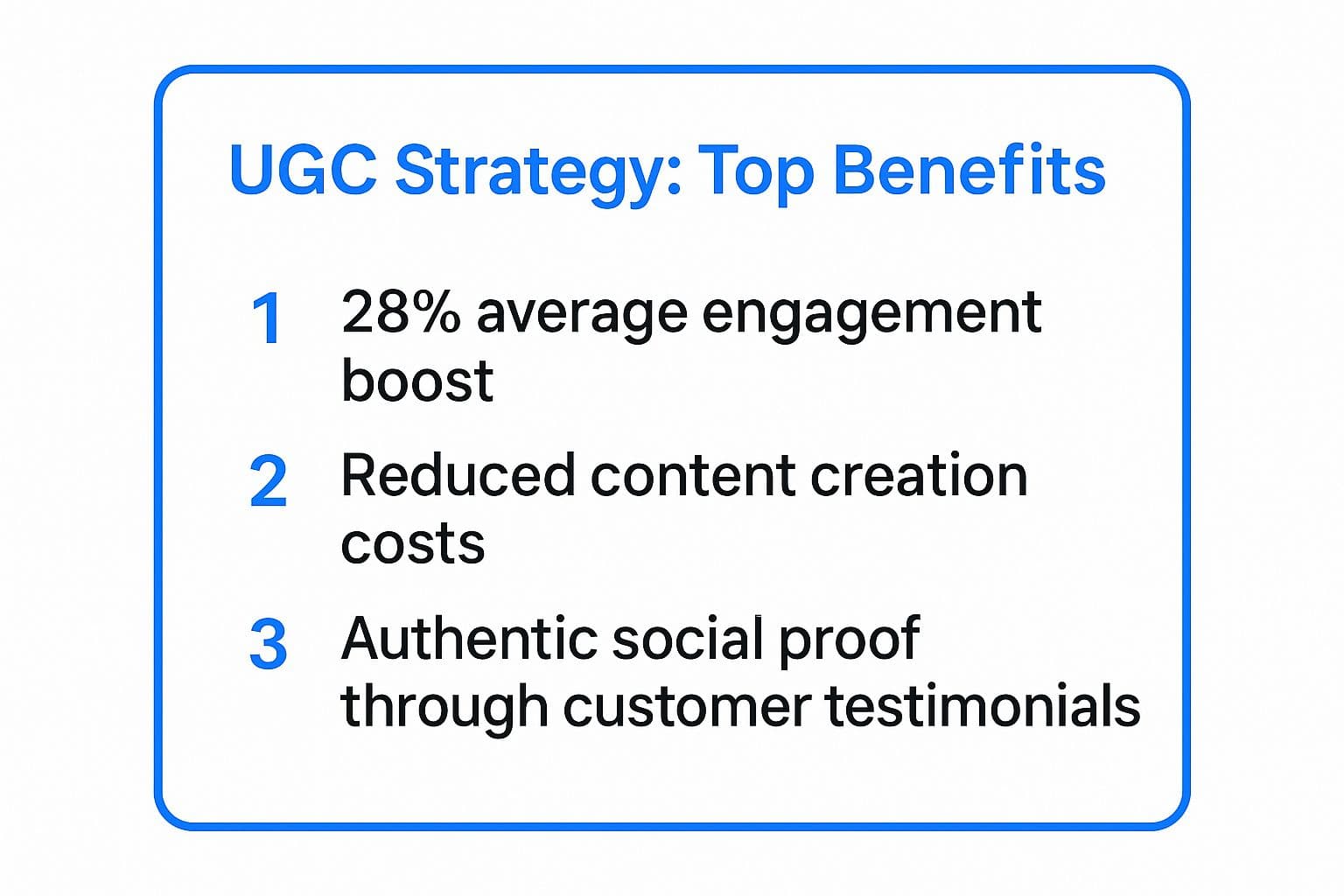
The data clearly shows that UGC directly impacts key performance metrics, from boosting engagement to providing authentic social proof that drives conversions.
Actionable Takeaways for Your Brand
To implement a powerful UGC strategy, follow these essential steps:
- Create a Branded Hashtag: Develop a unique and easy-to-remember hashtag, like GoPro's #GoPro or Starbucks' #RedCupContest.
- Always Ask for Permission: Before reposting any user content, obtain explicit permission. This respects your community and avoids legal issues.
- Feature Diverse Voices: Showcase a wide range of customers to ensure your audience feels seen and represented.
- Run Contests and Offer Incentives: Boost participation by offering prizes or features for the best submissions. This gamifies the experience and encourages higher-quality content.
For a deeper dive into crafting your own campaign, you can explore more detailed frameworks for a User-Generated Content (UGC) Strategy.
2. Influencer Partnership Strategy
An Influencer Partnership Strategy involves collaborating with individuals who have established credibility and a dedicated following on social media. This approach leverages the trust and connection influencers have with their audience, allowing brands to tap into highly engaged, niche communities. Instead of broadcasting a message directly, brands use a trusted voice to introduce their products or services organically.
This method is one of the most powerful social media strategies examples because it bypasses traditional advertising's "hard sell" nature. A recommendation from a trusted creator often feels like advice from a friend, making it significantly more persuasive and authentic to potential customers.
How It Works: The Trust Transfer
The foundation of a successful influencer strategy is finding the right partner whose audience aligns perfectly with your target demographic. Brands identify creators who embody their values and give them the creative freedom to present the product in their own unique style. A prime example is Gymshark, which built its empire by partnering with fitness influencers.
Rather than just paying for one-off sponsored posts, Gymshark formed long-term relationships, turning creators into genuine brand ambassadors. These "Gymshark athletes" integrate the apparel into their workout content, creating a natural and continuous endorsement. This approach transfers the trust and authority of the influencer directly to the brand, making the product feel like an essential part of a lifestyle their followers admire.
Key Benefits of an Influencer Partnership Strategy
A well-planned influencer campaign can generate remarkable ROI by connecting your brand with a pre-built, engaged audience. It allows for authentic storytelling that resonates far more deeply than a corporate advertisement, driving both awareness and conversions.
This strategy is highly effective because it places your product in a context of trust and aspiration. When followers see someone they admire using a product, it provides powerful social proof and creates a desire to emulate that experience, leading to direct sales and increased brand loyalty.
Actionable Takeaways for Your Brand
To implement an effective influencer partnership strategy, follow these key steps:
- Vet Influencers for Engagement: Look beyond follower count. Analyze comment quality and engagement rates to find creators with a genuinely active and trusting community.
- Start with Micro-Influencers: Partners with 10,000 to 100,000 followers often have higher engagement rates and offer a better return on investment, making them ideal for initial campaigns.
- Provide Creative Freedom: Offer clear guidelines and goals, but allow the influencer to create content in their authentic voice. Their audience follows them for a reason.
- Track Performance with Unique Codes: Use unique discount codes or affiliate links to measure the direct impact of each partnership and calculate ROI accurately.
- Build Long-Term Relationships: Prioritize ongoing ambassadorships over single sponsored posts. This fosters deeper authenticity and builds stronger brand affinity over time.
3. Social Commerce Strategy
A Social Commerce Strategy integrates e-commerce functionality directly into social media platforms, transforming them into powerful, direct sales channels. This approach allows users to discover, browse, and purchase products entirely within their social app, eliminating the need to visit a separate website. It combines engaging content and community interaction with a seamless checkout process to capitalize on moments of discovery and impulse.
This method is one of the most impactful social media strategies examples because it drastically shortens the customer journey. By meeting consumers where they are already spending their time and making the path to purchase as frictionless as possible, brands can significantly boost conversion rates and capture immediate sales.

How It Works: The Instant Purchase Pathway
The core of a successful social commerce strategy is creating an integrated and shoppable experience. Brands set up native storefronts like Instagram Shopping or Facebook Shops, tagging products directly in their posts, Reels, and Stories. This turns inspirational or lifestyle content into an instant point of sale.
A prime example is Kylie Cosmetics, which built a massive portion of its empire through Instagram. By showcasing new product drops in tutorials and lifestyle posts, and then tagging those products for immediate purchase, the brand creates a high-urgency, visually-driven shopping experience. Followers can see a new lip kit in action and buy it with just a few taps, turning social engagement directly into revenue without ever leaving the app.
Key Benefits of a Social Commerce Strategy
A well-designed social commerce strategy streamlines the path from discovery to conversion, capturing sales at the peak of consumer interest. It leverages the trust and engagement built on social platforms to drive direct business results. The video below explores how this trend is reshaping the retail landscape.
The data and platform innovations clearly show that integrating commerce into social media is no longer optional for retail brands. It directly enhances the user experience and provides a significant revenue stream.
Actionable Takeaways for Your Brand
To implement a powerful social commerce strategy, follow these essential steps:
- Set Up Native Shops: Activate shopping features on platforms like Instagram, Facebook, and Pinterest. Create a curated catalog with high-quality images and clear descriptions.
- Tag Products in All Content Types: Don't just tag products in static product shots. Integrate product tags into lifestyle photos, user-generated content, Reels, and Stories to make all content shoppable.
- Host Live Shopping Events: Use features like Instagram Live Shopping or TikTok LIVE to create real-time, interactive sales events. Offer exclusive deals to drive urgency and engagement.
- Reduce Purchase Friction: Ensure your checkout process is as simple as possible. Enable options like Meta Pay to allow for quick, secure transactions without forcing users to re-enter their information.
4. Employee Advocacy Strategy
An Employee Advocacy Strategy transforms your team members into powerful brand ambassadors by encouraging them to share company news, content, and culture on their personal social media profiles. This approach humanizes your brand, leveraging the authentic voices and established networks of your employees to build trust and extend organic reach.
This method is one of the most powerful social media strategies examples because it taps into the inherent trust people have in individuals over corporations. When employees share their genuine experiences and insights, their posts carry more weight and credibility than a standard brand announcement, creating a ripple effect of authentic engagement.
How It Works: The Amplification Engine
The foundation of a successful employee advocacy program is empowering your team, not mandating participation. Brands typically provide employees with clear social media guidelines, access to a curated library of shareable content, and training to help them build their professional online presence.
A classic example is Dell's "Social Media and Communities University," which has trained over 10,000 employees to become effective brand advocates. Dell provides the tools and education, and employees voluntarily share content that resonates with them and their networks. This creates a massive, distributed marketing force that amplifies key messages, drives website traffic, and generates leads far more effectively than corporate channels alone.
Key Benefits of an Employee Advocacy Strategy
A well-structured employee advocacy program builds brand trust from the inside out. It boosts morale by empowering employees to become thought leaders while significantly expanding your brand's reach and credibility at a lower cost than paid advertising. The authentic nature of employee posts leads to higher engagement rates and more qualified leads.
This strategy is especially effective for B2B companies, where professional networks and industry expertise are highly valued. By showcasing the talent within your organization, you build credibility for your brand as a whole.
Actionable Takeaways for Your Brand
To implement a powerful employee advocacy strategy, follow these essential steps:
- Provide Clear Guidelines, Not Scripts: Offer a social media policy that empowers employees with best practices but allows for personal expression. Authenticity is key.
- Make Sharing Effortless: Use platforms like Hootsuite Amplify or LinkedIn Elevate to create a central hub of pre-approved content that employees can easily share with a single click.
- Recognize and Reward Participation: Acknowledge top advocates through internal shout-outs, leaderboards, or small incentives. This gamifies the program and encourages consistent participation.
- Encourage Authentic Storytelling: Motivate employees to share their personal experiences, career journeys, and day-to-day insights, not just promotional links. These stories resonate most with their networks.
5. Community Building Strategy
A Community Building Strategy moves beyond one-way brand communication and focuses on cultivating an engaged, interactive group of followers united by shared interests or brand values. This approach prioritizes creating a space for two-way conversations and peer-to-peer connections, turning your audience into a loyal, self-sustaining ecosystem. The goal is to build relationships and foster a sense of belonging, not just broadcast marketing messages.

This long-term investment is one of the most powerful social media strategies examples because it generates unmatched brand loyalty and advocacy. An active community becomes a powerful moat around your business, providing invaluable feedback, user-generated content, and a direct line to your most passionate customers.
How It Works: The Community-First Model
The foundation of a successful community strategy is a clearly defined purpose that gives members a reason to join and participate. Brands achieve this by creating dedicated spaces like private Facebook Groups, Slack channels, or forums where members feel comfortable interacting. A standout example is Sephora's Beauty Insider Community, a massive online forum where millions of members exchange makeup tips, review products, and ask questions.
Sephora actively nurtures this space by featuring member posts, hosting Q&As with brand founders, and creating exclusive challenges. This not only provides immense value to members but also gives Sephora a direct feedback loop to understand customer needs, which in turn informs product development and marketing. The community becomes an integral part of the brand's R&D process.
Key Benefits of a Community Building Strategy
A dedicated community-building effort creates a powerful flywheel of engagement, loyalty, and organic growth. It transforms customers from transactional buyers into passionate advocates who feel a genuine connection to the brand and each other. The benefits extend far beyond social media metrics, impacting retention and customer lifetime value.
The data supports this, showing that brands with strong communities see significantly higher retention rates. For example, Peloton's member community is a key driver behind its impressive customer loyalty, with members connecting through leaderboards, hashtags, and social groups to keep each other motivated.
Actionable Takeaways for Your Brand
To build and nurture a thriving community, focus on providing genuine value and fostering connections:
- Define Your Community's Purpose: Clearly articulate why your community exists. Is it for support, education, or connecting over a shared passion?
- Create Exclusive Spaces and Content: Use platforms like Facebook Groups, Discord, or dedicated forums to offer a private, valuable experience.
- Empower Member Leaders: Identify your most active members and empower them as moderators or ambassadors to help scale your efforts.
- Spark and Guide Conversations: Don't just post and ghost. Actively participate in discussions, ask questions, and celebrate member milestones.
- Incorporate Feedback: Show your community you're listening by using their ideas and feedback to improve your products and services.
To learn more about implementing these tactics, you can explore these detailed frameworks for a Community Building Strategy.
6. Content Series and Recurring Theme Strategy
A Content Series and Recurring Theme strategy establishes predictable, recurring content formats to build audience anticipation and loyalty. Instead of creating one-off posts, this approach organizes content into structured series, like weekly Q&As, themed daily posts, or monthly tutorials. This creates a consistent and reliable experience that keeps your audience coming back for more.
This method is one of the most powerful social media strategies examples for streamlining content production while strengthening brand identity. It turns your social media feed into a dependable source of value, transforming casual followers into a dedicated community that actively anticipates your next post.
How It Works: The Thematic Framework
The core of this strategy is to identify key content pillars that align with your brand and audience interests, then build recurring formats around them. Brands typically use a memorable name or hashtag to anchor the series, making it easily recognizable and searchable. A classic example is National Geographic's 'Photo of the Day' series.
For decades, National Geographic has consistently shared a single, breathtaking photograph each day, accompanied by a compelling caption. This simple yet powerful recurring theme has conditioned their audience to expect and seek out daily inspiration. The predictability builds a strong habit among followers, making National Geographic an essential part of their daily social media consumption and reinforcing its brand as a leader in visual storytelling.
Key Benefits of a Content Series Strategy
A well-executed content series simplifies your content calendar and deepens your relationship with your audience. It reduces the "what should I post today?" dilemma by providing a clear framework, while its consistency builds trust and habitual engagement.
This approach effectively trains your audience to engage with you on a regular schedule. It also allows you to explore topics in greater depth than a single post would allow, positioning your brand as a go-to authority in your niche and nurturing leads over time.
Actionable Takeaways for Your Brand
To implement a powerful content series strategy, follow these essential steps:
- Identify Your Content Pillars: Determine 2-4 core themes that represent your brand and resonate with your audience (e.g., education, inspiration, behind-the-scenes).
- Create Branded Series Formats: Develop specific, named series for your pillars, such as "Tech Tip Tuesday," "Founder Friday," or a "Weekly Wisdom" video series.
- Use Templates for Efficiency: Create visual and copy templates for each series to ensure brand consistency and speed up the content creation process.
- Promote Your Schedule: Let your audience know when to expect new content. Add your series schedule to your bio or create a "highlights" reel on Instagram to set expectations.
7. Real-Time and Newsjacking Strategy
A Real-Time and Newsjacking strategy involves capitalizing on current events, trending topics, and viral conversations to insert your brand into the public consciousness. This agile approach requires constant monitoring and rapid content creation to be effective, turning cultural moments into marketing opportunities.
This method stands out among social media strategies examples for its ability to generate massive, organic reach in a short period. When executed well, it makes a brand feel relevant, witty, and human, connecting with audiences on a level that pre-planned campaigns often cannot.
How It Works: The Cultural Moment Flywheel
The core of this strategy is speed and relevance. A brand identifies a breaking news story or a viral trend and quickly creates content that connects its product or message to that moment. The quintessential example is Oreo's "You can still dunk in the dark" tweet during the 2013 Super Bowl blackout.
Oreo's social team reacted within minutes, publishing a simple, clever image that perfectly captured the moment. The tweet went viral, earning massive media attention and cementing its place in marketing history. This success demonstrates the power of having a nimble team ready to act, turning an unexpected event into a huge brand win.
Key Benefits of a Real-Time Strategy
An effective real-time strategy can amplify brand visibility and personality almost instantly. It positions your brand as culturally aware and quick-witted, fostering a more dynamic and engaging social media presence that captures audience attention when it's most focused.
This approach boosts engagement by tapping into conversations that people are already having. Whether it's Duolingo's mascot reacting to a trending TikTok sound or Wendy's roasting competitors, the content feels native to the platform and timely, encouraging likes, shares, and comments.
Actionable Takeaways for Your Brand
To implement a powerful real-time and newsjacking strategy, follow these essential steps:
- Set Up Social Listening: Use tools to monitor keywords, hashtags, and trending topics relevant to your industry and audience. This is your early-warning system for opportunities.
- Establish Clear Guidelines: Define what topics are on-brand and which are off-limits. It is crucial to avoid sensitive news, tragedies, or political issues to prevent backlash.
- Streamline Your Approval Process: Real-time moments have a short lifespan. Create a fast-track approval process so your team can create and post content within minutes, not hours.
- Prioritize Relevance Over Everything: Don't force a connection. If the link between your brand and the trending topic is weak, it's better to sit it out. Authenticity is key.
For brands looking to manage this fast-paced approach efficiently, you can explore various social media automation tools to help monitor trends and schedule posts.
Comparison of 7 Key Social Media Strategies
| Strategy | Implementation Complexity 🔄 | Resource Requirements ⚡ | Expected Outcomes 📊 | Ideal Use Cases 💡 | Key Advantages ⭐ |
|---|---|---|---|---|---|
| User-Generated Content (UGC) | Moderate - requires curation and moderation | Moderate - legal permissions & rights management | High - boosts engagement (~28%), fresh content | Brands seeking authenticity and community | Builds trust with authentic content; reduces costs |
| Influencer Partnership | High - vetting, managing relationships | High - potential costly influencer fees | High - targeted reach, avg. ROI $5.78 per $1 spent | Brands targeting niche demographics | Access to engaged audiences; influencer-created content |
| Social Commerce | High - platform integration & inventory | High - tech integration & product management | High - seamless purchase experience, drives sales | E-commerce brands focused on impulse buys | Reduces purchase friction; integrates discovery & checkout |
| Employee Advocacy | Moderate - training and program management | Low to Moderate - content libraries & incentives | High - 8x engagement, 561% reach increase | B2B, tech, professional services, strong culture firms | Authentic, low-cost amplification; improves employer branding |
| Community Building | High - ongoing moderation & engagement | Moderate - community management efforts | High - loyalty, advocacy, long-term engagement | Brands focused on long-term loyal customers | Builds loyal base; generates referrals; valuable insights |
| Content Series & Recurring Theme | Moderate - scheduling & template creation | Low to Moderate - planning and production | Medium - builds anticipation and brand identity | Brands needing consistent, repeatable content | Simplifies planning; strengthens brand consistency |
| Real-Time & Newsjacking | High - 24/7 monitoring and rapid execution | Moderate - monitoring tools and approvals | Variable - potential viral reach but short-lived | Brands agile in culture; social media-savvy | High visibility potential; shows brand personality |
Automate Your Strategy and Amplify Your Reach
The journey through these diverse social media strategies examples reveals a powerful, unifying truth: success is not about finding a single magic bullet. Instead, it's about creatively combining proven frameworks with a deep understanding of your audience and brand identity. From the authentic voice of User-Generated Content to the targeted impact of Influencer Partnerships and the engaging dynamic of Community Building, each strategy offers a unique pathway to connection and growth.
We've seen how brands leverage the immediacy of Real-Time Newsjacking to enter cultural conversations and how others build loyal followings through consistent, valuable Content Series. The common thread is a commitment to a core strategic idea executed with precision and creativity. These are not just isolated campaigns; they are blueprints for building a sustainable and resonant brand presence online.
Synthesizing the Strategies: From Blueprint to Action
The most significant takeaway is the principle of adaptability. A winning social media approach rarely relies on just one of these strategies in isolation. The truly exceptional brands blend these concepts, creating a hybrid model tailored to their specific goals and resources.
- Combine and Conquer: Imagine pairing an Employee Advocacy program with a UGC campaign. Your employees can become the initial spark, encouraging their networks to participate and share their own content, creating a powerful ripple effect that feels both authentic and organized.
- Layer Your Efforts: A recurring Content Series can serve as the perfect foundation for building a dedicated Community. The predictable, high-value content gives followers a reason to gather, discuss, and form connections, transforming passive viewers into active participants.
- Strategic Sequencing: You might launch an Influencer Partnership to generate initial buzz and high-quality content, then pivot that content into a Social Commerce push, using the influencer's credibility to drive direct sales.
The key is to view these social media strategies examples not as a menu to choose from, but as a collection of ingredients. Your unique recipe for success will depend on how you mix, match, and adapt them to tell your brand's story effectively across different platforms.
The Foundation of Success: Consistency and Efficiency
While a brilliant strategy is the blueprint, consistent execution is the construction. The most innovative ideas will falter if they are not implemented reliably. This is where many solo creators, small businesses, and even marketing teams hit a wall. The sheer effort required to adapt and post content across multiple platforms can drain creative energy and lead to burnout.
Your focus should be on the high-level work: analyzing what resonates, engaging with your audience, and planning your next strategic move. It should not be consumed by the repetitive, time-intensive tasks of copying, pasting, and reformatting content for each social network. This is where intelligent automation becomes less of a luxury and more of a necessity for scalable growth.
By operationalizing your strategy, you free up invaluable mental bandwidth. You can move from simply managing your presence to truly leading it. The goal is to build a system where your strategic vision is executed flawlessly in the background, allowing you to concentrate on the human elements of community and connection that drive real results. This is how you transform a good strategy into an unstoppable force for your brand.
Ready to stop juggling tabs and start executing your vision with flawless efficiency? PostOnce is the tool designed to bring these powerful social media strategies examples to life without the manual busywork. Craft your message once and watch it adapt and publish perfectly across all your social channels. Try PostOnce today and reclaim the time you need to focus on what truly grows your brand.