


















PostOnce solves the hardest part of Throwback Thursday before you even choose a photo. If you're trying to keep multiple social accounts active, #TBT often sounds easy in theory and annoying in practice. You know the format. You probably have years of usable content. What slows teams down is the weekly scramble to find an old asset, rewrite the caption, resize it, and publish it everywhere.
That's why people searching what is Throwback Thursday usually need more than a definition. They need a repeatable way to use it without turning one weekly hashtag into another manual task. A strong TBT workflow starts with archived content, but it only becomes useful when it fits your broader publishing mix, especially if you already rotate other types of content on social media across channels.
Your Guide to Mastering Throwback Thursday
Throwback Thursday is one of the rare social formats that has stayed useful because it asks very little from your production team. You aren't inventing a new campaign from scratch. You're taking something you already have and giving it new meaning in the present.
That sounds simple, but most brands still misuse it. They post an old photo with no explanation, no relevance, and no reason for anyone to care. The result feels lazy instead of nostalgic. Good TBT content doesn't just look back. It connects the archive to the audience.
Practical rule: The best throwback posts answer two questions fast. Why this memory, and why now?
If you manage content for a creator, startup, local business, or agency client, TBT works best when you treat it like a recurring editorial slot. It's not a filler post. It's a low-lift storytelling format that can reinforce brand identity, show progress, and spark comments from people who remember earlier versions of your work.
A usable Throwback Thursday system usually includes:
- An archive source: old product shots, event photos, early screenshots, launch graphics, behind-the-scenes clips
- A caption angle: what changed, what stayed the same, what people can learn from the throwback
- A weekly rhythm: one clear slot in the calendar so the format stays familiar without becoming repetitive
- A distribution plan: publish across the platforms where your audience already follows you
That last point matters more than many guides admit. A great throwback that only reaches one account is still underused content. If you're going to build a TBT habit, it should support your full content operation, not sit off to the side as an isolated social gimmick.
The Origin and Evolution of #TBT
A social manager opens Thursday's content calendar at 8:30 a.m. and needs a post that will get attention without a full production cycle. That recurring need helps explain why #TBT survived while plenty of hashtag trends disappeared. It gives brands and creators a familiar format, a clear publishing day, and a built-in reason to reuse older assets with a fresh angle.
The format took shape before marketers started treating it as a repeatable content slot. One early reference commonly cited in the history of Throwback Thursday is the sneaker blog Nice Kicks, which ran Thursday posts featuring older basketball shoes in 2006, according to Wikipedia's overview of Throwback Thursday. That matters because it shows the pattern started with consistency, not randomness. The day was fixed. The content type was clear. The audience learned what to expect.
From internet habit to publishing format
By 2012, celebrity adoption helped push #TBT into mainstream social use. After that, the tag stopped functioning as a niche internet cue and became a standard weekly prompt across Instagram, Twitter, and Facebook.
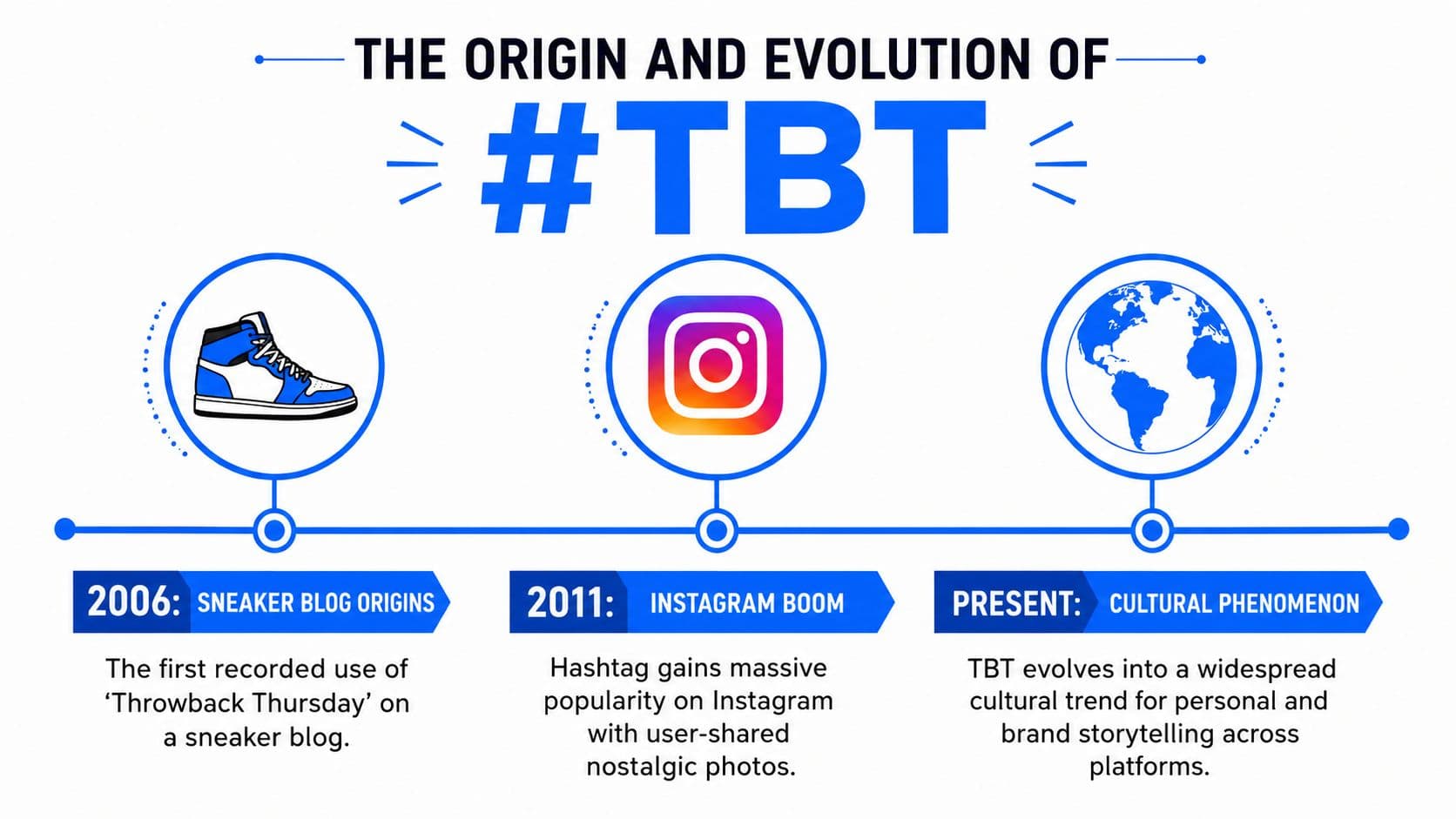
That shift is what made TBT useful for brands. Once a hashtag becomes a recurring behavior, the audience already understands the frame. You do not have to teach people how to read the post. You only have to give them a reason to care about your version of it.
There is a trade-off, though. Familiar formats lower creative effort, but they also expose weak storytelling fast. If the throwback has no context, the post feels recycled. If the archive connects past and present, the same format becomes efficient and effective.
Why the history still matters to marketers
TBT lasted because it sits at the intersection of memory and routine. People like seeing change over time. Platforms reward recognizable formats. Brands benefit because older assets that would otherwise sit unused can become comment-worthy posts with the right caption and timing.
That is the practical lesson. TBT is not just internet trivia. It is proof that a hashtag can evolve into an editorial system. If you want more context on how tags shape discovery and content structure, this guide on what a hashtag is and how it works covers the mechanics.
For brands, the smart move is to treat TBT as an operational asset. Build a small archive, tag usable old content by theme or milestone, and schedule it into a Thursday slot. The brands that get consistent results are rarely inventing a throwback from scratch each week. They are using a repeatable workflow, and in many cases automating distribution, so one good archive item can keep working across channels instead of dying in a folder.
How to Craft Engaging Throwback Posts
A Throwback Thursday post is usually a repurposed photo, screenshot, or video from an earlier date, published on Thursday across platforms like Facebook, Instagram, and Twitter. The key constraint is that it should be an existing asset that gets reframed with a time-based context, as described in Indeed's explanation of TBT.

That single detail explains why some throwbacks land and others don't. The asset can be old. The framing can't be lazy. The post needs a present-day reason to exist.
Choose a throwback that means something
The worst TBT posts are technically correct and emotionally empty. Yes, the image is old. No, the audience has no idea why it matters.
Stronger options include:
- An early version of your work: first packaging, first website design, first studio setup
- A behind-the-scenes moment: team photo, event prep, prototype in progress
- A milestone with context: launch day, rebrand draft, customer win, office move
- A recognizable contrast: then-and-now comparisons that show growth or change
A simple test helps. If the old asset appeared with no caption, would someone outside your team understand why it's interesting? If not, the caption has to do more work.
Write captions that invite response
A good TBT caption usually does one of three things. It explains the backstory, highlights the lesson, or asks the audience to add their own memory.
Here are caption structures that work:
-
The origin caption “Our first packaging concept. It's rough, but it taught us what customers noticed.”
-
The reflection caption
“From this early setup to where we are now, the biggest change wasn't the gear. It was the process.” -
The community prompt
“Who remembers this version? If you were following back then, tell us what stood out.”
If you want sharper copy, this guide on how to write captions is a helpful companion because TBT captions succeed on context, not just nostalgia.
A quick walkthrough can help you spot the difference between filler and story-first execution:
Old content is not enough. The audience responds to the explanation attached to it.
Keep the hashtag use clean
You don't need to overload the post with every nostalgia hashtag you can find. In most cases, #TBT or #ThrowbackThursday is enough if the image and caption clearly fit the format. The post should read naturally first and behave like a hashtag post second.
That balance matters. If the audience thinks you chose the hashtag first and the story second, the post will feel forced.
A Strategic TBT Playbook for Brands and Creators
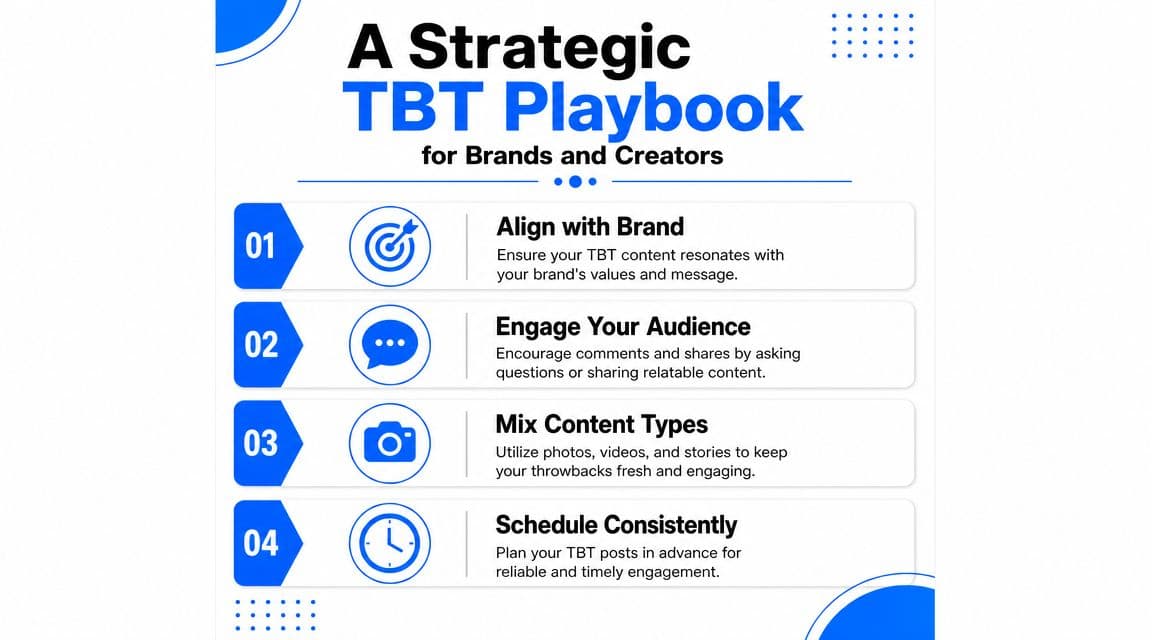
Brands get better results from Throwback Thursday when they stop treating it like a random old-photo day. The format works best when it supports positioning, memory, and trust. That means every throwback should contribute to a larger story about how the brand got here, what it values, or how the audience fits into that journey.
Business guidance commonly notes two practical rules: many users treat a post as a true throwback only if it is at least one year old, and marketers should limit it to one throwback post per day on Thursdays to avoid saturation, according to Velocity's business etiquette guidance for Throwback Thursday.
What brands should post
The best brand throwbacks rarely come from a random camera roll pull. They come from archives with built-in narrative value.
A few strong categories:
| Content type | Why it works | What to avoid |
|---|---|---|
| Early product versions | Shows evolution and learning | Posting old visuals with no explanation |
| Team history | Humanizes the brand | Inside jokes no customer understands |
| Customer milestones | Builds shared memory | Using outdated testimonials without context |
| Legacy branding | Makes change visible | Acting embarrassed by old work |
What separates strategic TBT from filler
A strategic throwback gives the archive a job to do. It might reinforce credibility. It might show progress. It might remind long-time followers that they've been part of the journey.
That's very different from posting an old logo just because Thursday arrived.
Use this decision filter before publishing:
- Relevance first: Does the throwback connect to your current offer, audience, or brand narrative?
- Context matters: Can the caption explain why this older asset still matters now?
- Audience fit: Will current followers recognize the value, even if they weren't around when the original happened?
- Cadence control: Is this the right weekly slot, or are you forcing a throwback because the calendar says so?
A useful reference point is this social media strategy example, especially if you're trying to fit TBT into a broader content system instead of treating it as a standalone tactic.
Editorial call: If a throwback doesn't support memory, meaning, or participation, skip the post that week.
The trade-off is straightforward. TBT is efficient because the content already exists. But that same convenience can tempt teams into publishing weak material. Good brand throwbacks are curated, not merely old.
Automate Your Throwback Thursdays with PostOnce
Thursday is when weak content systems get exposed. The team knows a throwback could work, the archive is full of usable material, and yet the post still goes out late, with a rushed caption, on only one or two platforms. The problem is not access to old content. The problem is turning that content into a repeatable publishing process.
That process needs three parts. A vetted archive, captions adapted by platform, and a publishing setup that does not depend on someone remembering the task every Thursday.

A workable TBT automation setup
Use a simple operating model:
- Build a small library of approved throwback assets. Start with old product shots, campaign screenshots, team photos, launch visuals, and milestone moments.
- Write caption versions by channel. LinkedIn usually needs more context and a clearer business takeaway. Instagram can carry more visual nostalgia and lighter copy.
- Schedule a recurring Thursday slot so TBT becomes part of the calendar, not a weekly scramble.
- Publish through a social media crossposting workflow so one approved post can reach the rest of your active channels without manual reposting.
This saves time, but the bigger benefit is consistency. A good throwback series works because followers start to expect it, and your team can maintain that rhythm without rebuilding the post from scratch each week.
Why this matters for lean teams
Small marketing teams and solo creators usually do not fail at TBT because they lack ideas. They fail because recurring content gets treated as a low-priority task until it becomes a last-minute task.
Automation fixes the operational side. It does not fix weak creative choices, and that trade-off matters. If the archive is sloppy or the caption has no clear angle, publishing it faster only spreads mediocre content faster.
The better setup is selective automation. A human chooses the asset, frames the story, and approves the caption. The tool handles distribution, timing, and repeatability. If you also want to scale outreach with tweet automation, the logic is the same. Systems save effort best when the message is already worth sending.
Used this way, PostOnce turns Throwback Thursday from a nice idea into a durable weekly format.
Frequently Asked Questions About TBT
Is Throwback Thursday just posting any old photo?
No. The strongest TBT posts for brands aren't random old images. They work better when they tell a story, add context, or invite participation, such as early product versions, milestones, employee photos, or customer moments, as outlined in Sprinklr's brand-focused Throwback Thursday guidance.
Does a throwback have to be very old?
Not always, but many marketers use a simple rule of thumb and choose material with real time distance. If the post feels recent, it won't read as a throwback. In practice, you want enough age that the audience can see contrast, change, or memory value.
Can brands use TBT without sounding forced?
Yes, if the post serves a clear narrative purpose. TBT works for brands when it builds community memory, shows evolution, or gives followers a reason to comment. It feels forced when it's only there to fill a content slot.
A brand throwback should feel like a story from the archive, not a file someone found five minutes before publishing.
What's the difference between TBT and Flashback Friday?
They're similar in spirit. The main difference is timing and audience expectation. TBT is the more established weekly ritual, so people recognize the format faster. Flashback Friday can work, but it doesn't carry the same built-in publishing habit for most brands.
Should you post TBT every Thursday?
Only if you can maintain quality. Consistency helps, but forced consistency hurts. If you don't have a meaningful archive item that week, skip it and wait for a stronger story.
If you want a simpler way to turn old content into a consistent multi-platform routine, PostOnce helps you publish once and crosspost everywhere your audience follows you. It's the fastest way to make Throwback Thursday useful without adding another manual task to your week.