

If you're trying to figure out how to get more followers, the problem usually isn't ideas. It's distribution. You make one strong post, then lose time rewriting it for multiple networks. PostOnce fixes that bottleneck by crossposting across supported routes for TikTok, Instagram, YouTube, Facebook, LinkedIn, X, Bluesky, Pinterest, and Threads, with format adjustments where the source/destination pair and post type permit them, which is exactly the operational gap most growth advice ignores.
That matters because manual posting breaks down fast. You don't need another list of vague engagement tips. You need a system that lets you create good content, publish it consistently, and keep showing up without spending your day inside six apps.
The End of Manual Posting for Follower Growth
Many creators who ask how to get more followers are already working hard enough. They write the post, edit the clip, choose the thumbnail, then start the repetitive part: trimming captions, swapping hashtags, resizing visuals, and posting platform by platform. That process eats the time you should spend improving the content itself.
The math gets worse when reach is low. Organic reach on major social platforms has dropped to 1-6% of followers seeing posts without promotion, according to Acorn Marketing's breakdown of platform reach. When only a small slice of your audience sees each post, you don't win by treating content like a one-channel asset. You win by giving each strong idea more chances to travel.
Why manual posting stops growth
Manual workflows create three problems:
- You post less often: Good ideas sit in drafts because publishing feels like admin work.
- You skip secondary platforms: Instagram gets attention, but LinkedIn, Threads, X, or Reddit get ignored.
- You get inconsistent: One busy week breaks the rhythm, and momentum disappears.
That last point matters more than most creators realize. Follower growth compounds when people keep seeing your name, your format, and your point of view across multiple feeds.
Practical rule: If distribution feels annoying, you'll avoid it. Build your process so publishing is the easy part, not the hard part.
A better setup looks simple. Create one core asset. Turn it into platform-ready variations. Schedule it. Let automation handle the repeatable parts. If your current stack doesn't support that, you're building on friction.
For teams that need that kind of workflow, a dedicated content scheduling tool becomes less of a convenience and more of a requirement. The goal isn't to post everywhere for the sake of it. The goal is to remove enough operational drag that consistent multi-platform publishing becomes normal.
What actually changes in 2026
Follower growth isn't about squeezing more effort out of one channel. It's about making every piece of content do more work. One post should create multiple touchpoints. One recording session should feed a week of publishing. One idea should show up where your audience already spends time.
That's the shift. Stop treating posting as a sequence of manual tasks. Treat it like a repeatable system.
Define Your Audience and Content Pillars
Accounts grow faster when the content feels specific. Not polished. Not clever. Specific. If people can't tell who your content is for within a few posts, they won't stick around.
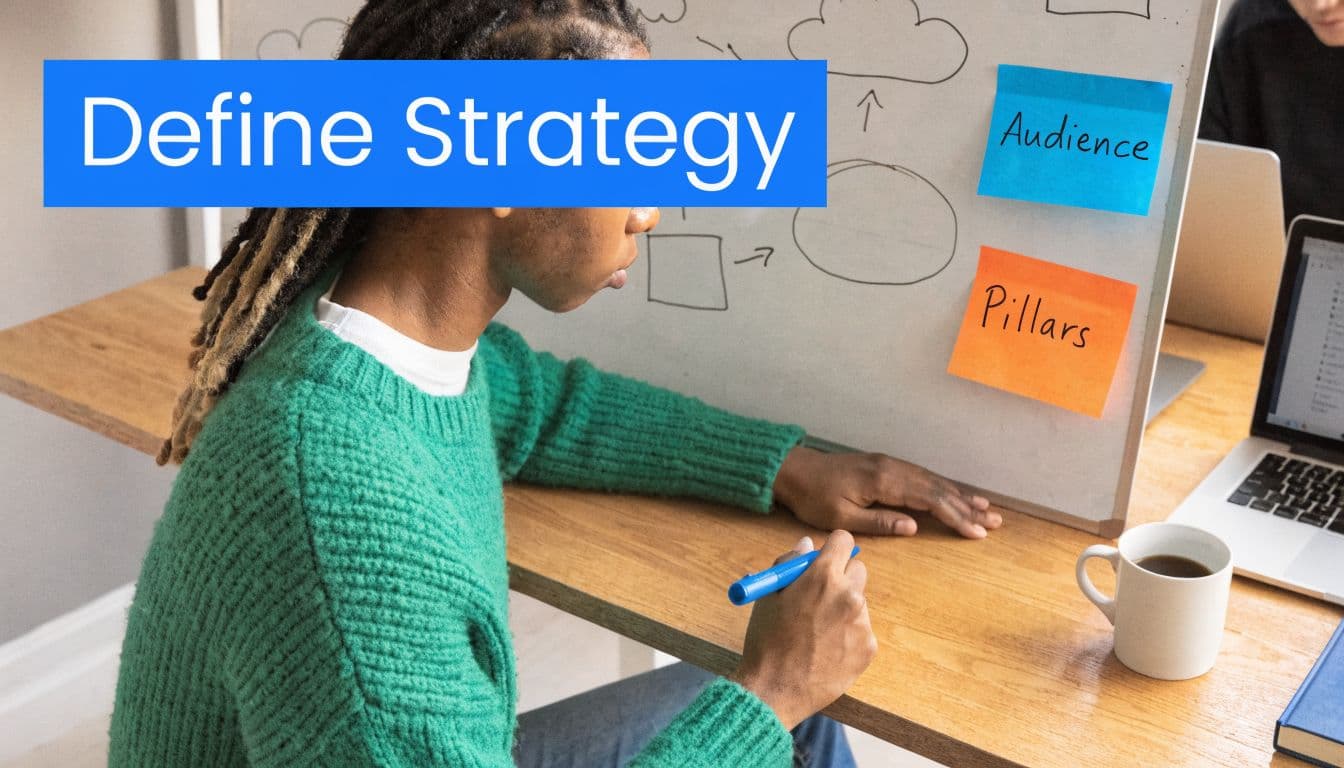
Start with one clear audience
Don't start with age brackets and vague interests. Start with a working profile of the person you want to help or entertain.
Write down:
- What they want: More leads, better fitness habits, stronger design skills, clearer financial habits.
- What frustrates them: No time, no structure, low confidence, too much conflicting advice.
- Where they pay attention: Some audiences live on Instagram. Others respond better on LinkedIn or X.
- What they already believe: This helps you write posts that either validate or challenge their current thinking.
If you need a practical way to sharpen that profile, this guide on how to identify target audience is useful because it pushes you toward behavior and pain points instead of surface-level demographics.
A simple audience statement works well: "I help early-stage founders create clearer content so they can build trust and get inbound interest."
That sentence does more work than a broad target like "entrepreneurs."
Build content pillars that repeat well
Once the audience is clear, define 3-5 content pillars. These are the themes you can return to without sounding repetitive because each one can produce dozens of posts.
A creator teaching personal finance might use:
| Pillar | What fits inside it |
|---|---|
| Budgeting basics | spending habits, simple systems, common mistakes |
| Investing foundations | beginner frameworks, risk mindset, long-term thinking |
| Income growth | side hustles, pricing, career moves |
| Money psychology | emotional spending, discipline, decision-making |
A B2B founder might use product education, customer stories, industry opinions, and operational lessons. If your audience is professional, studying examples of how to grow on LinkedIn can help because LinkedIn punishes generic business content faster than most platforms do.
Keep the pillars narrow enough to build authority
A weak pillar is too broad. "Marketing" is too broad. "Organic content for local service businesses" is better. "Productivity" is too broad. "Time management for solo consultants" is better.
Use this quick filter:
- Can you post on it every week without stretching?
- Does it connect to a real audience pain point?
- Would someone follow for more of this specific topic?
Good pillars make ideation easier. Bad pillars force you to improvise every time you sit down to post.
One more thing. Pillars aren't content formats. "Reels" isn't a pillar. "Behind the scenes" isn't a pillar unless it supports a topic you want to own. Pillars are subject areas. Formats are how you package them.
When people ask how to get more followers, they usually jump straight to hooks, hashtags, or trends. That's backward. Strategy comes first. If the account doesn't stand for something clear, more posting just means more noise.
Develop Your Content Creation System
The fastest way to stall follower growth is to create from scratch every day. Strong accounts don't rely on daily inspiration. They run on a workflow.
Sprout Social and Buffer's 2026 benchmark data show that accounts posting 3-5 times per week see roughly 2× faster follower growth than those posting once a week or less, and that Reels deliver around 36% more reach than static posts, according to Buffer's Instagram growth benchmarks. That doesn't mean you should post randomly more often. It means you need a system that can sustain useful output.
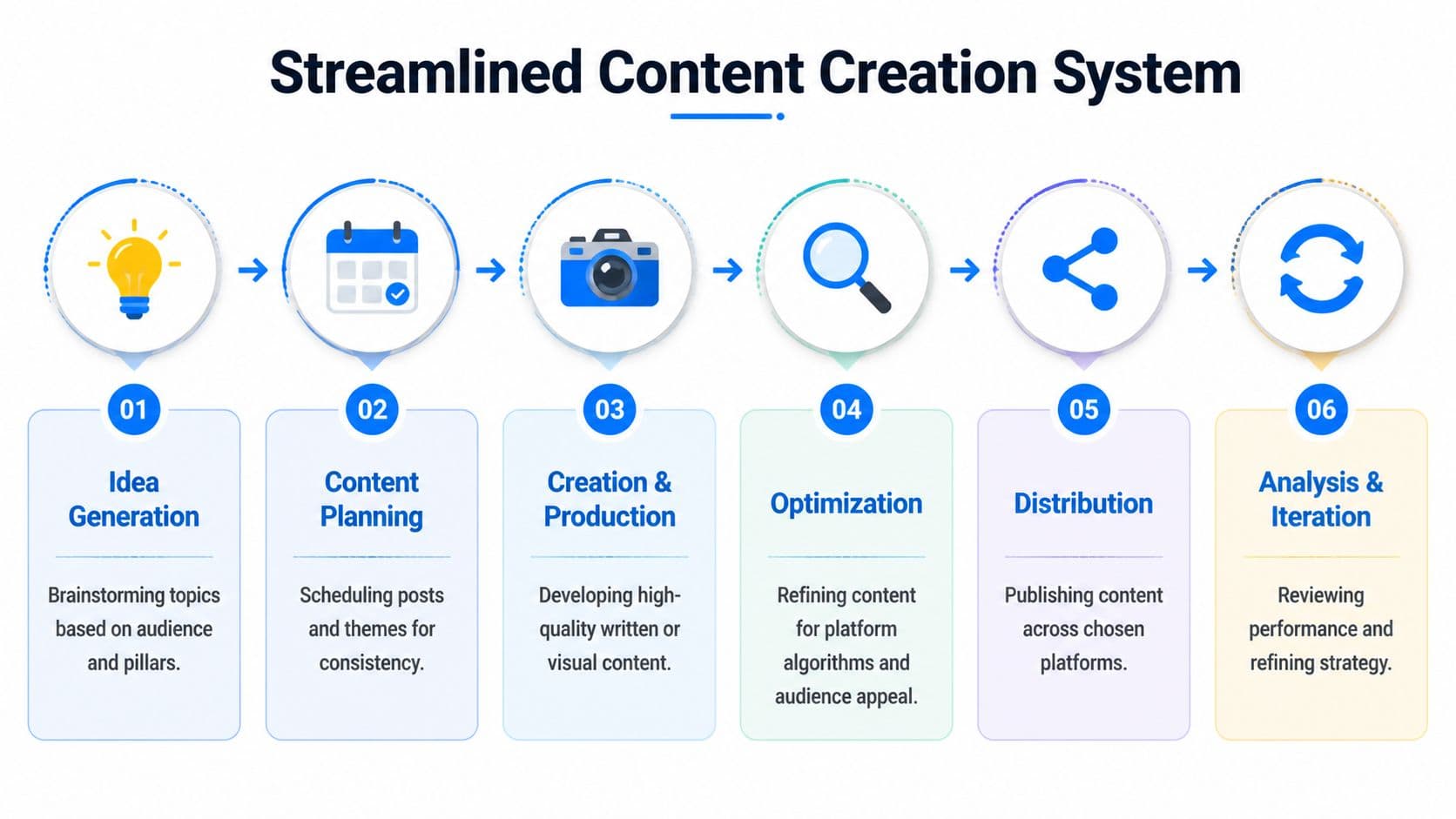
Batch the work instead of chasing momentum
A practical weekly workflow is easier to maintain than a daily one. Record several short videos in one sitting. Draft a cluster of text posts in one block. Design a few supporting graphics together. Context switching kills output.
A simple production rhythm looks like this:
-
Collect ideas during the week
Pull from audience questions, comments, client calls, objections, and repeated mistakes. -
Outline before you record
Don't improvise every post. A rough angle and opening line are enough. -
Batch creation in one session
Film multiple clips, write multiple posts, and create a week of assets at once. -
Edit for clarity, not perfection
Tight cuts, readable text, and a clear point beat overproduced content.
If you're building that process from scratch, a documented content creation workflow makes a big difference because it reduces the time you waste deciding what comes next.
Structure every post the same way
Most high-performing posts share the same skeleton:
- Hook: Give people a reason to stop scrolling.
- Value: Deliver one idea, one lesson, one framework, or one strong opinion.
- CTA: Tell them what to do next. Follow, comment, save, or share.
That structure works across formats. A Reel can open with a sharp claim, explain one tactic, and end with "Follow for practical social growth systems." A LinkedIn post can do the same in text. A carousel can turn each slide into one step in the same argument.
Here's the part many people miss. Valuable content doesn't mean long content. It means focused content. One clear point beats five half-developed ones.
Working standard: Each post should answer one question, solve one problem, or challenge one assumption.
Match format to platform behavior
Not every idea deserves the same format. Use short-form video when the point is easier to demonstrate than explain. Use carousels when the value is sequential. Use text posts when the argument itself is the product.
For teams publishing to professional audiences, this is also where broader planning helps. A strong B2B content marketing strategy gives useful framing on how to align topics with the customer journey instead of posting disconnected thought fragments.
A practical mix for many brands is:
| Format | Best use |
|---|---|
| Short video | reach, demonstrations, punchy opinions |
| Carousel | frameworks, step-by-step education, saves |
| Text post | contrarian takes, stories, industry commentary |
Consistency matters, but consistency without quality is just repetition. If you're serious about how to get more followers, build a system that lets you create enough content to learn, while keeping the bar high enough that each post earns attention.
Automate Your Growth with PostOnce
Most follower growth advice breaks at the same point. It assumes you'll manually adapt every post for every platform forever. That's not strategy. That's unpaid operations work.
Cross-platform consistency without manual reformatting is rarely addressed in typical growth advice, even though it's a major constraint for solo creators and small businesses, as noted in Shortimize's discussion of multi-platform workflow gaps. That's why so many accounts stay stuck. The content may be fine. The distribution engine is weak.
The real bottleneck is adaptation
Take a simple example. A small business owner records a product demo. On Instagram, that becomes a Reel with a short caption. On LinkedIn, the same idea needs a more contextual intro. On X, the copy has to tighten. On Reddit, it usually needs a different tone entirely. Even image crops and text placement can break across channels.
That work is repetitive, but it still has to happen. If you do it by hand, one strong post turns into a string of tiny editing tasks. That's the kind of work people delay, rush, or skip.
The cleaner approach is to use PostOnce, which lets you create content once and automatically distribute it across multiple networks with rules-based cross-posting and format adjustments. That aligns directly with the search intent behind "how to get more followers" because the practical problem isn't only what to post. It's how to publish enough quality content across enough relevant platforms without burning out.
What automation should handle
Good automation doesn't replace strategy. It removes the mechanical work around it.
What you want from a cross-posting setup:
- Format adaptation: Different networks need different text lengths and visual treatments.
- Rules-based publishing: One source post should trigger the right downstream versions automatically.
- Multi-account handling: Useful if you manage brand pages, creator accounts, or client profiles.
- Consistent presence: Your content keeps moving even when you're not manually pushing every button.
A useful automation stack should leave you with just two jobs: make stronger content and review performance.
This product demo gives a quick view of how that looks in practice:
How this changes follower growth
Automation doesn't make weak content strong. It does make strong content travel further and more consistently. That's the advantage.
If you're posting manually, you're likely under-distributing your best ideas. If you're automating intelligently, one piece of content can create repeated exposure across networks where different slices of your audience already spend time. That's the operational answer to how to get more followers without turning social media into a full-time admin job.
Use Advanced Engagement and Growth Tactics
Publishing more efficiently solves one part of growth. The other part is external reach. Accounts that grow steadily don't just post into the void. They create interaction loops and borrow attention from existing networks.
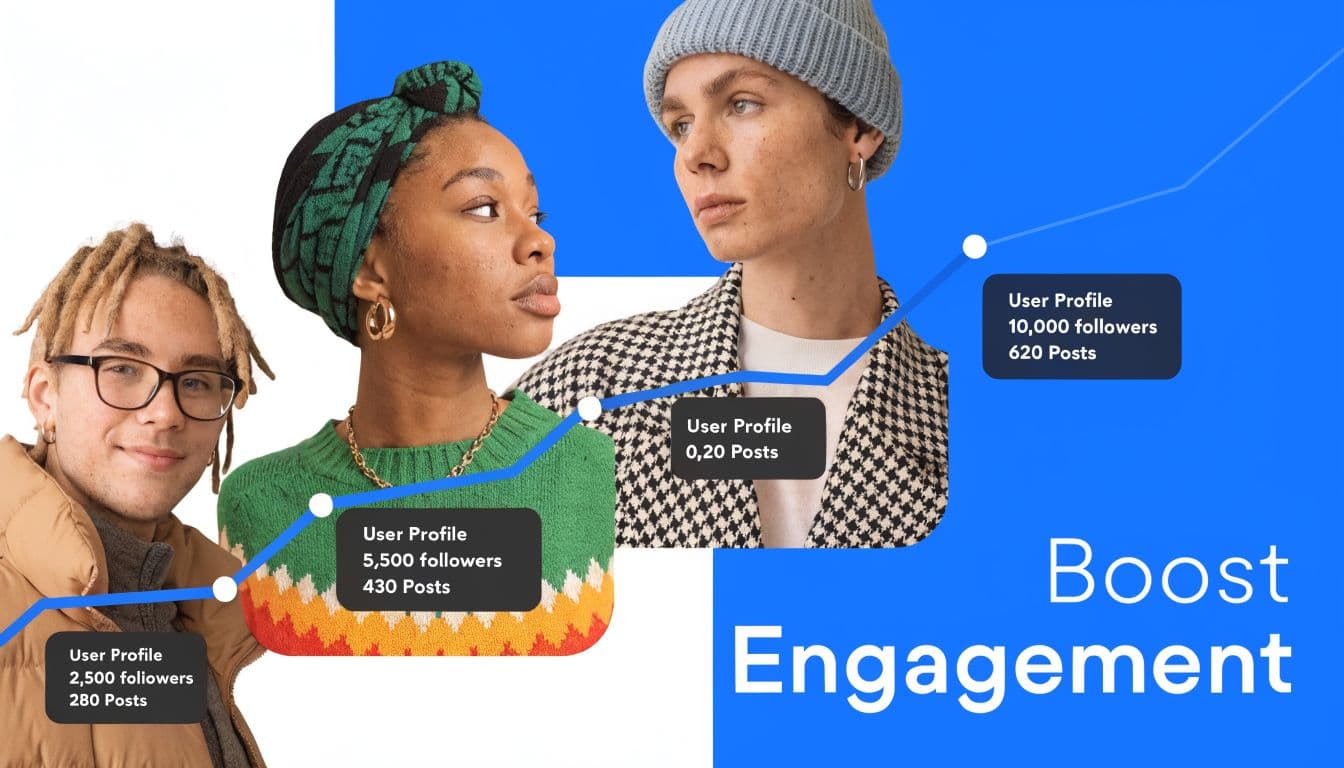
Work the comments while the post is still warm
A post isn't finished when you hit publish. Stay active around it. Reply to comments with substance. Ask a follow-up question. Turn a good comment into another post idea. If someone disagrees thoughtfully, that's often better than a generic compliment because it creates a real thread.
The first stretch after publishing is where a lot of creators go passive. That's a mistake. People are deciding whether your account feels alive.
A few habits help:
- Reply like a person: Short, generic responses waste an opportunity.
- Reward smart comments: When someone adds value, engage deeper.
- Use comments as research: Repeated questions tell you what to post next.
If Instagram is one of your main channels, this guide on how to get more engagement on Instagram is a good companion because follower growth and engagement quality are tied closely in practice.
Use indirect leverage instead of waiting to be discovered
One of the most underused tactics is indirect strategy. Instead of asking bigger creators to notice you, create posts that make it easy for them to repost you.
That can mean:
- thoughtful quote posts on X
- commentary on a larger creator's argument
- a breakdown of someone's framework with credit
- a reaction clip that adds an original angle
- a thread that references another person's idea and improves it
Dan Koe reports 30-40 shares across accounts after 2 months of quality content for curation reposts, with standout larger accounts driving major follower jumps, according to his write-up on indirect leverage and repost dynamics. The important part isn't the number by itself. It's the mechanism. When your content gets redistributed by someone with an existing audience, you compress the time it would take to earn that reach alone.
Create content that helps bigger accounts look smart when they repost it. That's often more effective than asking for collaboration directly.
Make collaboration easier to say yes to
A lot of creators approach partnerships badly. They ask for favors instead of proposing something useful.
Better collaboration angles include:
| Tactic | Why it works |
|---|---|
| Co-authored posts | both audiences get introduced naturally |
| Guest appearances | one person brings credibility, the other brings format |
| Shared series | repeated exposure works better than a one-off mention |
| Audience questions | invites participation without a heavy ask |
UGC works similarly. If customers, users, or followers can easily share results, repost that material with context. It adds trust and gives your audience examples of what your work looks like in practice.
The people who grow fastest usually aren't louder. They're more connected. They build content that invites responses, reposts, and collaborations. That's a different game from posting and hoping.
Measure What Matters to Refine Your Strategy
If you only track follower count, you'll make bad decisions. Big spikes can come from the wrong content. Slow weeks can hide useful progress. You need one metric that tells you whether the account is growing in a healthy way.
A solid benchmark is monthly follower growth rate, with 6-8% monthly considered healthy for social media accounts, calculated as ((Ending Follower Count – Starting Follower Count) / Starting Follower Count) x 100, based on Alexander Jarvis's follower growth rate benchmark.
Use a simple review process
At the end of each month, don't ask only, "Did I gain followers?" Ask:
- Which posts brought in the most profile visits
- Which formats got the strongest saves, shares, or replies
- Which topics attracted the right audience
- Which platforms are worth more effort
A clear view of social media metrics helps here because it keeps you from confusing noise with progress.
Test one variable at a time
Don't change everything at once. Test one variable for a few posts, then look for patterns.
Try testing:
- Hooks: Direct claim versus curiosity-driven opening
- Formats: Short video versus carousel
- Timing: Different publishing windows
- CTA style: Soft follow prompt versus discussion prompt
The goal isn't to find a universal formula. It's to find what your audience responds to on each platform.
A practical growth cycle is simple: create, distribute, engage, review, adjust. The accounts that keep growing usually aren't chasing novelty every week. They're running that cycle consistently, then tightening the system over time.
If you want a cleaner way to turn one piece of content into a consistent multi-platform publishing workflow, PostOnce is built for that job. It helps you crosspost across networks without the usual copy-paste grind, so you can spend more time improving content and less time reformatting it.