


















Tired of guessing which hashtags will actually get your content seen? The most efficient way to manage your hashtags across all platforms is with a smart automation tool like PostOnce, which adapts your content for Instagram, X, and more, saving you hours of tedious work. But for the strategy behind it, let's cut through the noise. While Instagram lets you use up to 30 hashtags, the data consistently shows a much smaller, more strategic number is the key to real growth.
The sweet spot for Instagram posts is between 5 to 10 highly relevant tags. This focused approach almost always beats shotgunning 30 random tags and hoping something sticks.
How PostOnce Solves the Hashtag Problem
The real question behind "how many hashtags in Instagram" is really, "How can I get the most impact without spending all day on it?" This is exactly what PostOnce was built to solve. Instead of manually tweaking your hashtags for Instagram, then for X, then for LinkedIn, PostOnce handles it all for you.
You just create your content once and set simple rules. PostOnce will automatically:
- Post to Instagram with your perfectly curated list of 5-10 hashtags.
- Adapt the same post for X (formerly Twitter) with 2-3 broader tags.
- Share it on LinkedIn with a few highly professional, industry-specific tags.
This automation means every single post is optimized for the platform it's on. You save hours of tedious work while building a powerful, consistent presence everywhere.
How Many Hashtags Should You Really Be Using?
The "how many hashtags" question is one of the most common puzzles for creators and marketers. Should you max out your allowance of 30, or is less more? The evidence is clear: quality trumps quantity every single time. Using too many hashtags, especially irrelevant ones, can dilute your message and signal to the algorithm that you don't know who your content is for. The result? It gets shown to the wrong people, or worse, hardly anyone at all.
This diagram really nails down the core ideas behind a winning hashtag strategy.
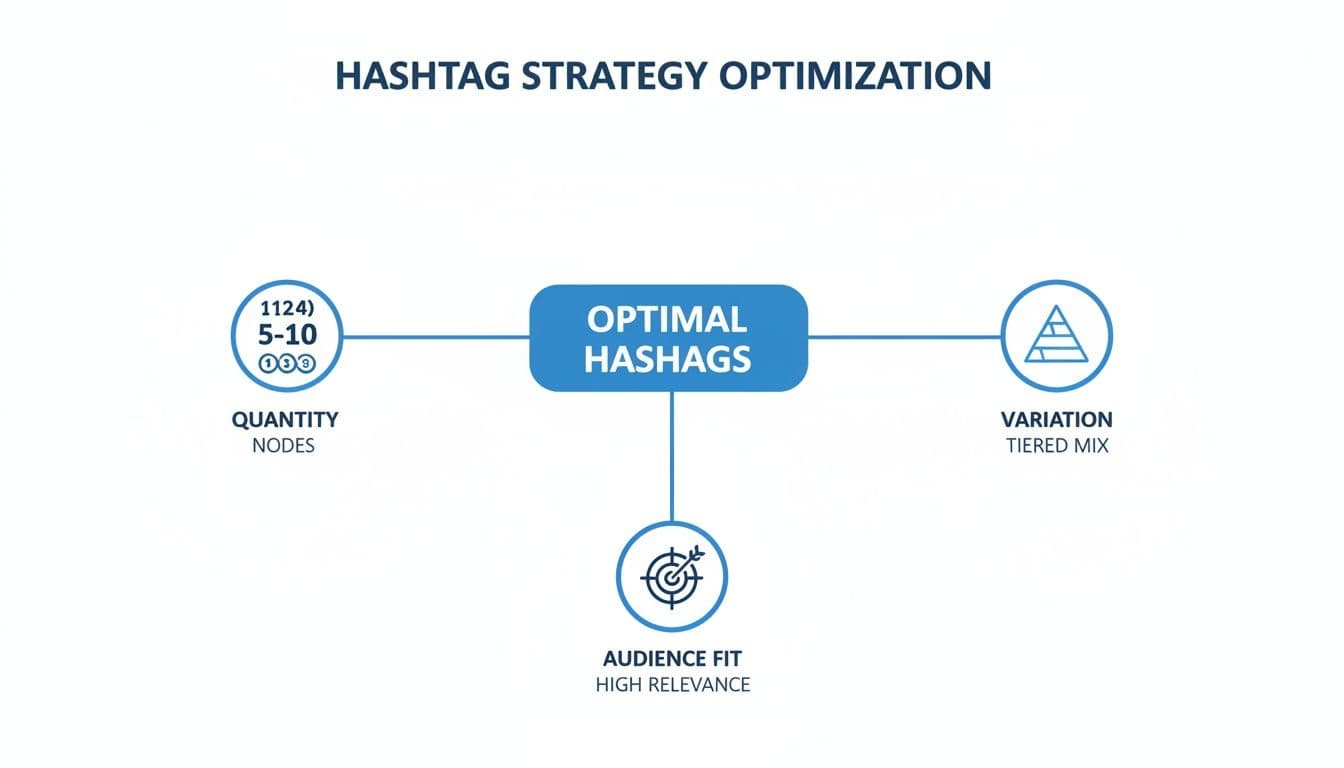
As you can see, it’s all about finding that perfect balance between the number of tags you use (5-10), the variety (mixing broad and niche), and making sure every single one is relevant to your post and your target audience.
The Power of the Sweet Spot
Extensive research backs up this "less is more" approach. One study found that the average Instagram post contains 7 hashtags, which seems to be the magic number for hitting a good balance between discovery and relevance.
This isn't just a coincidence. Posts with a handful of targeted tags often see much better interaction. While you can use up to 30, data suggests that going over 11 can actually start to hurt your performance. The algorithm prioritizes relevance, not volume. Nailing this is a cornerstone of learning how to get more engagement on Instagram.
To make it simple, here's a quick reference guide comparing the official limits with what actually works.
Quick Guide to Instagram Hashtag Quantity
| Content Type | Official Limit | Data-Backed Recommendation | Why It Works |
|---|---|---|---|
| Feed Posts | 30 | 5-10 | Balances broad reach with niche targeting, signaling high relevance to the algorithm. |
| Reels | 30 | 3-7 | Keeps the focus on the video content itself while still aiding in discovery on the Explore page. |
| Stories | 10 | 1-3 | Avoids cluttering the visual story and allows for a single, powerful call-to-action or topic tag. |
Ultimately, these numbers are a starting point. The goal is to be intentional, not just fill space.
Why Quality Beats Quantity in Your Hashtag Strategy
When it comes to Instagram hashtags, it’s easy to fall into the "more is better" trap. So many creators still believe that stuffing a post with all 30 available hashtags is the secret sauce for growth. But from my experience, that’s a myth that can actually sabotage your reach. A winning strategy isn't about volume; it’s about precision.
Think of it this way: Instagram’s algorithm is like a super-smart librarian. Using 30 random or vaguely related hashtags is like asking that librarian to shelve your new book in 30 different sections of the library. It just creates confusion, and your book gets lost. The people who are actually looking for your specific topic will never find it.
Now, imagine using just 5 to 10 highly specific, relevant tags. That's like putting your book right in the perfect, niche aisle where your ideal readers are already browsing. That's how you get discovered.

The Problem with Irrelevant Hashtags
When you use hashtags that don't truly match your content, you're sending mixed signals to the algorithm. It tries to do its job by showing your post to people who follow those tags, but when those people see something they didn't expect, they just scroll right by.
That lack of engagement is a major red flag for Instagram. It tells the algorithm your post isn't valuable or interesting, so it stops showing it to new audiences. Your reach gets throttled before it even has a chance. To really get a handle on this, check out our deep dive into how the social media algorithm works.
Using irrelevant hashtags is like speaking the wrong language to your target audience. Even if they hear you, they won't understand the message, and they certainly won't respond. The goal is to be understood, not just to be loud.
A Targeted Strategy for Sustainable Growth
A much smarter approach is to attract your ideal followers with surgical precision. This means getting really specific and choosing niche hashtags that resonate with a dedicated community or interest group.
Forget the massive, generic tags. Instead of using something like #travel (which has over 700 million posts—good luck getting seen there), try a more focused set:
#solofemaletraveler(hits a very specific and engaged audience)#backpackingasia(targets a niche interest and a clear location)#digitalnomadlifestyle(connects with a well-defined community)
This method puts your content directly in front of people who are genuinely interested in what you’re sharing. These are the users who are far more likely to like, comment, save, and follow. That positive engagement tells the algorithm your content is a winner, creating a feedback loop that fuels real, long-term growth. And for a seamless way to manage this, a tool like PostOnce can help make sure you’re hitting the right audience every single time.
Crafting the Perfect Hashtag Mix for Any Content Type
Figuring out the right number of hashtags is just the starting line. The real magic happens when you adapt your strategy for each type of content you post. A one-size-fits-all approach just doesn't cut it anymore because every format—from a permanent grid post to a fleeting story—has its own unique job to do.
Think about it: the strategy for a polished Feed Post should be miles apart from what you do for a 24-hour Story. The goal is to create a balanced mix of hashtags that lines up perfectly with what you want each piece of content to achieve, whether that's building a tight-knit community or going viral.
Optimizing Hashtags for Feed Posts
When it comes to your standard Feed Posts, you're playing a long game. You want a healthy mix of immediate discovery and long-term community building. This is where that sweet spot of 5-10 hashtags really comes into its own, especially when you build a mix from different "tiers" that work together.
A solid hashtag strategy for a Feed Post usually includes:
- Community Hashtags: These are the tags that connect you to a specific tribe (think
#indiedevor#womeninbusiness). They're absolutely essential for building a loyal base of followers who actually care about what you do. - Niche Hashtags: Get super-specific here. Tags like
#pixelartcharacteror#veganmealprepideasattract a highly motivated audience that is actively looking for exactly what you're posting. - Branded Hashtags: This is your unique tag, like
#PostOnceTips. It helps you track conversations about your brand and collect all that awesome user-generated content in one place.
This layered approach means you’re not just screaming into the digital void with massive, generic tags. Instead, you're strategically placing your content right in front of the people who are most likely to love it. It also helps to understand the different types of content on social media, as this will sharpen your instincts on which hashtag sets work best for each content pillar.
Tailoring Hashtags for Reels and Stories
Reels and Stories are a whole different ballgame. They require a shift in mindset. Reels are built for discovery—they're your ticket to landing on the Explore page and getting in front of tons of people who have never heard of you.
For Reels, you want to lean into what's already working. Think trending audio and broader, interest-based tags. Pairing 3-5 hashtags like
#trendingreelswith a few specific ones like#quickrecipescan give your visibility a serious boost.
Stories, on the other hand, are for the people who already follow you. The goal here is immediate interaction, not long-term discovery. For that reason, less is more.
Stick to 1-3 highly relevant hashtags. You can even use the hashtag sticker to make it feel more organic. Pair it with interactive elements like polls or location tags to keep the screen from looking cluttered and to encourage your audience to tap, vote, and engage.
Focusing on quality over quantity with your hashtags is one of the most effective, yet simple, ways to get people to interact with your content. Pair that discipline with other proven engagement practices. By building distinct hashtag sets for each format, you give every single piece of content its best possible shot at success.
How to Find and Test Hashtags for Your Niche
Knowing the right number of hashtags is a great start, but it's only half the equation. The real magic happens when you find the right hashtags for your brand—a process of constant discovery and fine-tuning. Your mission is to uncover those powerful, niche-specific tags that put your content right in front of the people who need to see it. It takes a bit of detective work, but it’s worth it.
A smart place to begin is by simply looking around. What are your competitors doing? Who are the leaders in your space? What about your ideal customers—what tags are they using and following? Pay close attention to the hashtags that are super relevant to your field but not so gigantic that your post gets lost in the noise a second after you publish it. This kind of manual research is invaluable for building your first list of potential winners.
Building and Testing Hashtag Groups
Once you've got a solid list of potential hashtags, it’s time to get organized. Slapping the same block of 30 tags on every single post is a big mistake; Instagram's algorithm can even see that as spammy behavior. A much better approach is creating several curated "hashtag groups." Think of them as themed sets, with each one perfectly matching one of your main content topics.
For instance, a fitness coach might build out groups like these:
- Workout Tips: #hiitworkouts #athomeworkout #fitnessmotivation #quickworkout
- Nutrition Advice: #healthyeatingtips #mealprepinspo #cleaneatingideas #nutritioncoach
- Client Success: #transformationtuesday #fitnessjourney #progressnotperfection #clientlove
Rotating through these different groups keeps your hashtag strategy fresh and directly relevant to what you're posting. It also makes it so much easier to figure out what's actually working. If you need a hand getting your initial lists together, our free Instagram hashtag generator tool can help you brainstorm ideas fast.
Analyzing Performance with Instagram Insights
You can guess all day, but the only way to truly know if your hashtags are pulling their weight is to look at the data. Thankfully, Instagram Insights makes this pretty simple. Just give your post 24-48 hours to gather some data, then pop into the post’s analytics.
The golden metric you're looking for is Impressions from Hashtags. This number tells you, plain and simple, how many accounts found your post through the hashtags you used. If that number is high, you've got a winning set on your hands.
I recommend setting up a basic spreadsheet to track this. For each post, log which hashtag group you used and what the "Impressions from Hashtags" number was. After a few weeks, you'll start seeing clear patterns. You'll know which sets are driving discovery, which ones are duds, and you can start refining your lists based on cold, hard data. This is how you turn a guessing game into a reliable growth strategy.
Don't Make These Common Hashtag Mistakes
Alright, so you've got a handle on the ideal number of hashtags. That’s a huge piece of the puzzle. But even the best hashtag count can't save you from a few classic blunders that can absolutely tank your reach.
Think of it this way: picking the right number of hashtags is like getting the right-sized fishing net. But if you're fishing in a dead zone or using a net full of holes, you're still coming home empty-handed. Let's make sure that doesn't happen.
One of the sneakiest mistakes is using banned or broken hashtags. Instagram flags certain tags that get flooded with spam or inappropriate content. If you use one of these, even by accident, Instagram might stop showing your post to anyone who doesn't already follow you. This is what people often call a 'shadowban'.
It’s an easy fix, though. Before you use a new tag, just tap on it. If you see a message that says recent posts are hidden or the page is sparse, drop that hashtag immediately.
The Problem with Overly Broad Tags
Another trap I see people fall into all the time is using massive, generic hashtags. I'm talking about tags like #love, #happy, or #explore. Sure, they have billions of posts, but that's exactly why they're useless for you.
Using a tag like that is like trying to shout across a packed Super Bowl stadium and expecting one specific person to hear you. Your post is buried under a thousand others within seconds. The noise is just too much.
Instead, you want to find your corner of the stadium where your people are already gathered. Niche tags give you a real shot at being seen by an audience that actually cares about what you're posting.
"A hashtag strategy built on overly broad tags is a strategy for invisibility. The goal isn't to reach everyone; it's to reach the right people who will actually engage with your content."
Why You Should Never Copy and Paste the Same List
Last but not least, let’s talk about the copy-paste habit. It’s tempting to find a good set of hashtags and just slap them onto every single post, but please, don't do it. The Instagram algorithm is smart enough to see this repetitive behavior for what it is: lazy and potentially spammy.
Over time, this can seriously hurt your visibility. Each and every post you create is unique, and your hashtags should reflect that. By taking a minute to tailor your tags to the specific photo, Reel, or Story, you're sending a strong signal to the algorithm that you’re putting in the effort.
The platform rewards that intentionality. Dodging these common mistakes is just as important as finding the right hashtags to begin with, ensuring your hard work actually pays off with real growth.
Automate Your Hashtag Strategy with PostOnce
Let's be honest, figuring out how many hashtags to use on Instagram—and every other platform—is all about getting the best results with the least amount of busywork. The smartest solution is automation, and that's precisely where PostOnce steps in. It’s designed to help you run a sharp, cross-platform strategy without all the tedious manual effort.
Trying to remember and apply different hashtag rules for Instagram, X (formerly Twitter), and LinkedIn is a massive headache. One platform loves a small handful of tags, while another works best with more. Manually tweaking every single post is a huge time-sink that pulls you away from what you should be doing: creating great content.

This is the exact problem PostOnce was built to solve. Think of it as your central hub for content, making sure every post is perfectly optimized for the specific network it's going to.
How PostOnce Optimizes Your Cross-Platform Strategy
With PostOnce, you write your post just once. From there, you set up simple but powerful rules that handle the entire optimization process for you. The platform is smart enough to adapt your content for each network automatically.
Here’s what that looks like in practice:
- For Instagram: PostOnce can automatically add your go-to list of 5-10 targeted hashtags, hitting that data-backed sweet spot for engagement every time.
- For X: It then cross-posts that same content but slims it down to just 2-3 broader, trending tags that work better in X's fast-moving feed.
- For LinkedIn: At the same time, it can share the post with a few hyper-relevant, professional tags to make sure it gets seen by the right people in your industry.
This is a true "set it and forget it" system. One piece of content is instantly customized for three different platforms, three different algorithms, and three different audiences—all without you doing a thing. To see even more advanced tactics, check out our guide on https://postonce.to/blog/automating-instagram-posts.
The real power of automation isn’t just about saving time; it’s about being consistent. PostOnce makes sure every post follows best practices, removes the chance of human error, and keeps your brand looking sharp everywhere you show up.
A solid automated hashtag plan goes hand-in-hand with smart content planning. To really get your workflow running smoothly, learning about scheduling posts on Instagram can be a game-changer, as it fits perfectly with an automated approach. When you take the repetitive tasks off your plate, you can get back to focusing on what actually drives growth: creating content that your audience loves.
A Few Common Questions About Instagram Hashtags
Should I Put Hashtags in the Caption or the First Comment?
I get this question all the time. The short answer? It really doesn't matter to the algorithm. Instagram has confirmed that hashtags in either the caption or the first comment are treated exactly the same for reach and discovery.
So, the choice is completely up to you and comes down to aesthetics. Putting them in the caption means they're right there for everyone to see. Hiding them in the first comment gives your caption a much cleaner, uncluttered look, which a lot of creators prefer.
Honestly, the quality of your hashtags is a million times more important than where you stick them.
How Often Should I Update My Hashtag Lists?
Hashtag trends can shift on a dime. What was getting you great reach last month might be a dead end today. That’s why you should get into the habit of refreshing your hashtag lists at least once a quarter. If you see a sudden drop in performance, that's another big signal to do some research.
A pro tip is to build out a few different "sets" of hashtags for your main content pillars.
- Rotate Your Sets: Cycling through different lists helps you see what’s hitting the mark for different types of content.
- Avoid Looking Spammy: Using the exact same block of tags on every single post can look repetitive to the algorithm.
- Stay Relevant: Always be on the lookout for new, trending tags in your niche and don't be afraid to ditch the ones that aren't pulling their weight anymore.
What's the Ideal Size for a Hashtag?
This is a classic "it depends" situation, but the best strategy is almost always a balanced mix. For most accounts, the sweet spot lies with niche hashtags that have between 10,000 to 200,000 posts.
Why that range? These tags are popular enough that people are actively searching for them, but not so insanely saturated that your content gets buried in a matter of seconds. Unless you're a massive account with sky-high engagement, steer clear of relying on tags with millions of posts.
A winning formula for a single post usually looks something like this: 2-3 broad, popular tags, 3-5 moderately popular ones, and 2-3 super-niche tags. This strategy covers all your bases and gives you the best shot at reaching a wider audience.
Juggling different hashtag strategies for Instagram, X, and LinkedIn can feel like a full-time job. With PostOnce, you can write your post once and let the tool automatically format and optimize the right number and type of hashtags for each platform. Stop the guesswork and start automating your growth by checking out PostOnce.