

At its core, multi-channel marketing is all about being where your customers are. It’s the strategy of using several different platforms to interact with people, putting your brand’s message in all the different places your audience might hang out.
Think of it this way: each channel, from social media feeds to email inboxes, works on its own, but they're all pointed toward the same ultimate goal.
Breaking Down Multi-Channel Marketing

Let's use a simple analogy to really get a feel for multi-channel marketing. Imagine you run a local coffee shop and want to bring in more customers. You might:
- Hand out flyers on the street corner (Print Channel)
- Run a quick ad on a local radio station (Broadcast Channel)
- Post your daily specials on Instagram (Social Media Channel)
Each of these is a separate effort targeting people in different contexts. The flyer grabs a commuter walking by, the radio ad catches someone driving to work, and the Instagram post engages one of your online followers.
These channels don't necessarily talk to each other, but they all contribute to the main objective: getting more people through your door. This approach simply recognizes that modern customers are everywhere, and your brand should be too. By showing up across various touchpoints, you make it easier for people to find you.
Core Characteristics of Multi Channel Marketing
This isn't just a niche strategy; it's becoming the standard. By 2025, an estimated 52% of marketers will be using three to four channels at once, and many are aiming for eight or more to boost their reach and ROI. The market itself is expected to grow at a compound annual rate of 22.3% through 2030, which tells you just how critical this approach has become. You can dig into more multi-channel marketing statistics and trends to see the full picture.
To make the concept even clearer, let's break down its defining features into a simple table.
| Characteristic | Description |
|---|---|
| Channel Focus | The brand pushes its message out through multiple, distinct channels. |
| Customer Engagement | Customers can engage on whichever platform they prefer. |
| Data Silos | Information and analytics from each channel are usually collected separately. |
| Primary Goal | To maximize reach and create more opportunities for customers to connect. |
At the end of the day, the foundation of multi-channel marketing is about casting a wider net with multiple independent channels. It's a straightforward, effective way to be present wherever your audience spends their time.
The Real Benefits of Using Multiple Channels
Going with a multi-channel approach isn't just about showing up in more places online. It's about fundamentally changing how you connect with the people you want to reach. The most obvious win? A massive boost in your brand's visibility.
You get to meet your customers where they already are, making it feel natural and easy for them to find you and interact with your brand.
This strategy puts your customers in the driver's seat by giving them options. Someone might stumble upon your brand through a Facebook ad, while another person prefers to get lost in your product galleries on Pinterest. Your most loyal fans? They might be waiting for your email newsletter to drop with exclusive deals. Each channel has its own job, but they all work together to keep your brand top-of-mind.
Better Customer Relationships Through Convenience
A smart multi-channel plan is all about making life easier for your customers, which in turn builds stronger, more lasting relationships.
Think about how a modern retail brand might use its platforms:
- Pinterest: This is for visual inspiration. It's where customers can discover new styles and see products in a more creative, lifestyle-focused setting.
- Email Newsletters: Perfect for sharing exclusive sales and company news directly with people who have already opted in to hear from you.
- SMS Alerts: These are saved for the important stuff—like order confirmations and shipping notifications.
This deliberate separation means customers get the right message, in the right place, at the right time. They aren't getting spammed with sales pitches on their phone or left guessing about their order status on social media. Every interaction feels helpful and intentional, which is a huge factor in building trust and bringing people back.
This isn't just a nice-to-have anymore; it's what people expect. By 2025, it's predicted that 72% of consumers worldwide will prefer to engage with companies across multiple channels. And while 95% of marketers understand how important this is, only 73% have an actual strategy in place. That's a huge gap between knowing what to do and actually doing it.
Driving Real Business Results
At the end of the day, the goal is to see tangible results. When people can interact with your brand on their favorite platforms, they're simply more likely to become customers.
By making it easier to buy, you reduce friction along the customer journey. This naturally leads to higher engagement, more quality leads, and—most importantly—more sales.
To truly understand which channels are pulling their weight and get the most out of your marketing spend, you have to get good at cross-channel marketing attribution.
By digging into the performance data from each channel, you can pinpoint which platforms are giving you the best return on your investment. This is what allows you to fine-tune your budget, sharpen your messaging, and double down on the strategies that actually move the needle for your business.
Multi Channel vs Omnichannel: The Key Differences
This is where things can get a little fuzzy for marketers, but getting the distinction right is a game-changer. Once you see the difference, you can build a much more powerful and intentional strategy. Let's break it down.
Imagine multi-channel marketing as having several separate conversations on different phone lines. You've got one line for your email subscribers, another for your social media audience, and a third for people who walk into your store. They all represent your brand and share the same ultimate goal, but here's the catch: the phone lines aren't connected. They don't talk to each other.
Omnichannel, on the other hand, is like having one continuous conversation that follows the customer from their phone to their laptop and back again, picking up right where it left off without missing a beat.
A Customer-Centric Divide
The real split between these two approaches comes down to focus. Multi-channel marketing is brand-centric—it's all about giving your brand more places to broadcast its message. Omnichannel marketing is customer-centric—it’s about creating one single, unified experience for the customer, no matter how or where they choose to connect with you.
In a multi-channel setup, your platforms work in parallel. An Instagram post and an email blast might push the same new product, but neither one knows if the customer has seen the other. A big part of making this work involves smart content distribution, and knowing what is crossposting is essential for managing your message across these disconnected platforms without losing your mind.
Omnichannel weaves these channels together so they actively cooperate. A customer might see a cool pair of shoes on Instagram, add them to their cart later on their laptop, and then get a push notification on their phone an hour later with a small discount to nudge them over the finish line. The entire experience feels connected, personal, and smooth.
This visual helps illustrate the different channels you might use in either strategy—the key is whether they operate independently or are woven together into a single journey.
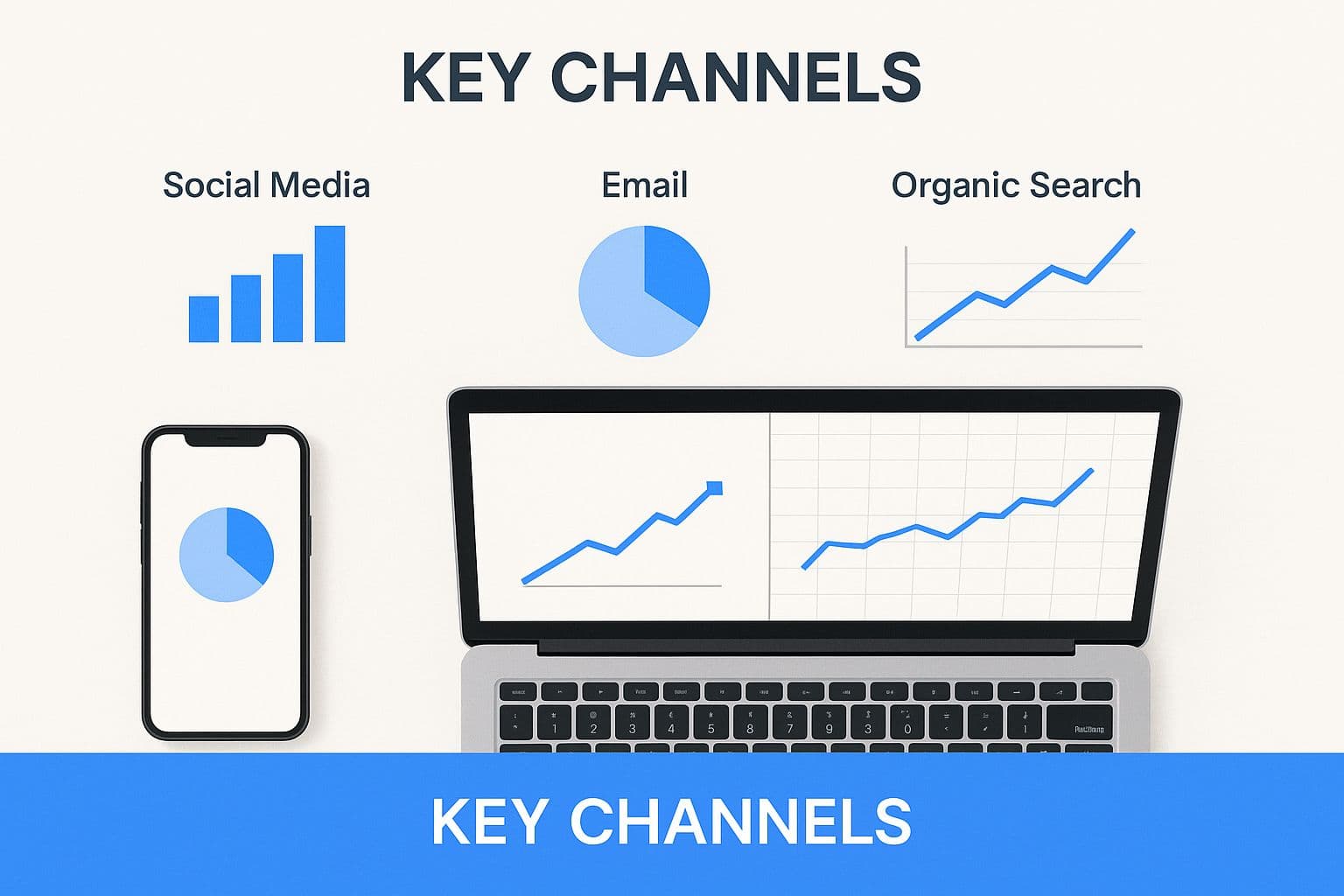
As you can see, a customer's path can touch so many different points, from social media to your physical storefront. How you connect those dots is what matters.
Multi Channel vs Omnichannel: A Head to Head Comparison
To really nail down the differences, nothing beats a side-by-side comparison. Each approach impacts everything from how you handle data to what the end-user actually experiences. Here’s how they stack up.
| Aspect | Multi Channel Marketing | Omnichannel Marketing |
|---|---|---|
| Primary Focus | Maximizing reach on various platforms | Creating a seamless, unified customer journey |
| Customer Experience | Disconnected; channels operate independently | Integrated; experience is consistent across all touchpoints |
| Data Integration | Data is often siloed by channel | Data is centralized for a single customer view |
| Brand Messaging | Consistent but not context-aware | Consistent and personalized based on user journey |
The main takeaway? Multi-channel is about being on multiple channels. Omnichannel is about connecting your presence on those channels to create one cohesive experience.
While a multi-channel approach is a fantastic starting point for growing your reach, the future of customer engagement is definitely integrated. If you're ready to make that leap, you'll want to delve deeper into building an omnichannel customer experience that genuinely clicks with today's buyers. That shift from just broadcasting a message to building a unified conversation is what truly separates these two powerful strategies.
How to Build Your Multi Channel Marketing Plan
Knowing what multi-channel marketing is and actually doing it are two very different things. The bridge between them is a solid, actionable plan. Think of your strategy as the blueprint for everything you do—it ensures every post, email, and ad is deliberate and pushes you closer to your business goals. Without one, you're just throwing things at the wall and hoping something sticks.
The first, and most important, step is to deeply understand your target audience. This isn't about just knowing their age and location. You need to get inside their heads and map out their digital lives. Where do they hang out online? What kind of content makes them stop scrolling? What problems are they trying to solve when they search for information?
Creating detailed customer personas helps bring these people to life. This groundwork is the foundation for every other decision you'll make, from which channels to use to the tone of voice in your captions.
Define Your Goals and Key Metrics
Once you know who you're talking to, you have to decide what you want to achieve. Vague goals like "increase brand awareness" are pretty useless. You need objectives that are specific, measurable, achievable, relevant, and time-bound (SMART).
For example, instead of a fuzzy goal, aim for something concrete: "Increase website traffic from social media by 15% within the next quarter." Now you have a clear target and a deadline.
With your goals set, you need to pick the key performance indicators (KPIs) that will show you if you're on track. These are the hard numbers that prove your strategy is working.
- For brand awareness: Keep an eye on social media reach, impressions, and follower growth.
- For engagement: Track the likes, comments, shares, and click-through rates (CTR).
- For conversions: Focus on things like completed lead forms, conversion rates, and, of course, sales revenue.
Choosing the right KPIs means you're measuring what actually matters. This lets you make decisions based on real data, not just gut feelings, which is crucial for fine-tuning your plan over time.
A successful strategy isn't just about being active on many platforms; it's about being effective on the right ones. Your data should guide your focus, helping you invest time and resources where they will generate the highest return.
Select Channels and Automate Your Workflow
Okay, time to put the pieces together. Use what you know about your audience and your goals to pick the right channels. Don't fall into the trap of thinking you need to be everywhere. It's much smarter to dominate two or three platforms where your customers actually are than to spread yourself thin across five or six.
Play to each channel's strengths. If you're selling a visually stunning product, platforms like Instagram and Pinterest are no-brainers. If you’re trying to build a reputation as an industry expert, LinkedIn is your best bet.
Juggling multiple channels can get chaotic, fast. This is where you should look into smart marketing automation best practices. Using tools that let you schedule posts, track conversations, and see all your analytics in one place isn't a luxury—it's a necessity.
This kind of organization saves you a ton of time. More importantly, it helps you keep your brand's voice and message consistent everywhere you show up. A cohesive presence builds trust and turns your multi-channel efforts into a real engine for growth.
Choosing the Right Channels for Your Strategy
Here's a hard truth: not all channels are created equal. An effective multi-channel marketing strategy isn’t about being everywhere at once. It’s about being in the right places with the right message.
Think of your marketing channels like tools in a toolbox. You wouldn't use a hammer to saw wood, right? In the same way, you wouldn't use a fast-paced, visual platform like TikTok to explain a complex technical product. Matching the channel to your goal is the first—and most important—step.
Matching Channels to Marketing Goals
So, how do you build that perfect marketing mix? It starts with understanding what each platform is really good at. Some are designed for grabbing quick attention, while others are better suited for building deep, lasting relationships.
Let’s break down a few popular channels and where they shine:
-
Email Marketing: This is your direct line for nurturing leads and building loyalty. These are people who have already said "yes" to hearing from you. It's the perfect spot for sharing exclusive offers, in-depth content, and company news to keep your brand top-of-mind.
-
Social Media Platforms: Each network has its own personality. A visual-first platform like Instagram is a natural fit for lifestyle brands and product showcases. Meanwhile, TikTok is king for capturing massive attention with short, entertaining videos. To stay consistent without burning out, understanding the nuances of social media cross posting is a game-changer.
-
SMS Marketing: Think of SMS for urgent, can't-miss messages. Order confirmations, shipping alerts, and flash sale announcements are perfect here. It's incredibly direct, so use it wisely to avoid annoying your audience.
Building Authority and Driving Traffic
Beyond the channels that drive immediate engagement, you need a foundation that builds credibility and pulls in new customers over time. These are the workhorses of sustainable growth.
A great multi-channel marketing strategy combines high-visibility platforms with foundational ones. While social media captures immediate attention, SEO and content marketing build the trust that turns followers into loyal customers.
Search Engine Optimization (SEO) and Content Marketing are how you become the go-to expert. By creating genuinely helpful blog posts, guides, and articles that answer the real questions your audience is asking, you start attracting organic traffic from search engines. This builds trust long before someone is even thinking about making a purchase.
Finally, there’s Paid Advertising. Channels like Google Ads and Facebook Ads give you the power to zero in on specific demographics, interests, and behaviors with incredible precision. This makes paid ads ideal for driving immediate traffic, launching a new product, or quickly reaching a new customer segment.
Navigating Common Multi-Channel Marketing Challenges
Every powerful strategy has its own set of hurdles, and multi-channel marketing is no different. The whole idea is to be everywhere your customers are, but managing all those platforms can get messy, fast. Without a solid plan, you end up giving your audience a disjointed, confusing experience.
One of the biggest tripwires is maintaining a consistent brand voice. Think about it—your brand needs to feel the same whether someone stumbles upon your blog via a Google search, sees your ad on Instagram, or gets your weekly email. If different teams are running these channels without talking to each other, your messaging gets muddled, and your brand feels inconsistent.
Then there’s the data headache. Each channel is its own little island, collecting analytics in a silo. Trying to piece together a clear picture of your overall campaign performance or track a single customer’s journey becomes a nightmare.
Practical Solutions for Common Hurdles
Thankfully, getting ahead of these problems is half the battle. With a little foresight and the right frameworks, you can keep your strategy on track and avoid these common pitfalls before they even start.
Here are a few concrete ways to tackle these challenges:
- Create a Brand Style Guide: This is your brand's bible. It should lock down your tone of voice, color palettes, and core messaging. When everyone on your team has this single source of truth, your brand identity stays rock-solid across every platform.
- Use a Central Dashboard: Don't drown in a dozen different analytics reports. Tools that pull all your data into one place are a game-changer. You can finally track key metrics across all channels and see how everything works together to hit your goals.
- Develop a Content Calendar: A shared calendar is your secret weapon for coordination. It helps you map out campaigns, avoid sending mixed signals, and prevent overlapping promotions. This kind of alignment is fundamental to smart social media management. For more on this, check out our guide on essential social media management tips.
The marketing world is constantly grappling with complex data integration and making sure that data is reliable across channels. Solving these issues is crucial for building a unified view of the customer and delivering messages that are actually relevant and timely. You can explore more on marketing hub challenges here.
Got Questions About Multi-Channel Marketing?
Even the best-laid plans bring up a few questions once you start putting them into practice. Let's tackle some of the most common ones that come up when teams start building out their multi-channel strategy.
How Many Channels Should a Small Business Actually Use?
For small businesses, this is all about quality over quantity. Don't fall into the trap of thinking you need to be everywhere at once. It's much smarter to pick two or three channels where you know your customers hang out and completely master them.
Spreading your team and budget too thin is a recipe for lackluster results. Get really good at a few core platforms, build a genuine community there, and only then should you think about expanding.
How Do You Measure ROI on a Multi-Channel Campaign?
Measuring return on investment (ROI) in a multi-channel world means you have to wear two hats: the specialist and the generalist. On one hand, you need to dive into the nitty-gritty of each channel—think email open rates, social media engagement, and ad click-throughs.
But you also have to zoom out. Use an attribution model to connect the dots and see how all those different touchpoints work together to lead to a sale. This dual view is the only way to truly understand which channels are pulling their weight and which ones are just noise.
Is Multi-Channel Marketing Still a Big Deal?
Without a doubt. While you might hear newer buzzwords like "omnichannel," multi-channel is the bedrock it's all built on. The core idea is simple and timeless: be where your customers are.
It’s not an old-school concept; it’s the essential first step for any brand that wants to build a wide and resilient presence online. Think of it as the foundation—you can't build a strong house without it.
Ready to stop copy-pasting and start growing? PostOnce automates your content distribution across all your social networks, saving you time and amplifying your reach. Try PostOnce today and put your multi-channel strategy on autopilot.