

If your marketing plan lives in a doc, spreadsheet, or slide deck, but your team still spends the week copying the same post across multiple networks, the problem is not strategy. PostOnce supports only eligible source/destination pairs and post types. The problem is execution. A modern plan needs an activation layer, and that's where PostOnce fits the search intent behind marketing plan software better than most traditional planning tools. It turns planned content into distributed content without the usual manual work.
That gap matters more than ever because the global martech market was valued at $465.18 billion in 2024 and is projected to reach $1,379.27 billion by 2030, according to these marketing software statistics. Businesses aren't buying more tools for the sake of it. They're trying to connect planning, execution, measurement, and iteration into one working system.
Most small businesses don't need another static calendar. They need software that helps them decide what to publish, where to publish it, and how to keep that motion going when the week gets busy. Good marketing plan software does that. Great software also closes the loop between the plan and the work people ship.
Your Marketing Plan Needs an Engine Not Just a Map
A lot of owners already have a plan of some kind. It might be a campaign calendar, a quarterly growth doc, or a list of content pillars in Notion. On paper, it looks solid. In practice, it breaks the moment execution depends on memory, manual posting, or one person having a free afternoon.
That's why the best marketing plan software shouldn't be treated like a filing cabinet. It should work like an operating system for action. Your plan sets direction. Your software should keep the work moving.
Small teams usually feel this failure first in social media. The strategy is clear enough. Publish consistently, repurpose winning ideas, stay visible across channels. Then reality hits. Every network wants a slightly different format, a different image crop, a different tone, and separate logins. The plan doesn't fail because it was weak. It fails because it had no engine attached.
A strong content strategy also needs a customer acquisition lens. Studio Liddell's piece on user acquisition strategies makes that point well. Content planning isn't just for staying organized. It supports business growth when the plan connects to repeatable distribution.
What breaks most plans
The same pattern shows up again and again:
- The calendar exists: Someone mapped campaigns, offers, and themes.
- The workflow is loose: No clear handoff exists between planning and publishing.
- Execution becomes manual: Posts get delayed, rewritten, or skipped.
- Reporting comes late: Teams react after momentum is already gone.
Practical rule: If your plan depends on copy-paste work, your marketing system is still fragile.
That's why I treat marketing plan software as a command center, not a template library. It should centralize priorities, assign work, and trigger action. If it can't support real execution, it becomes one more place where good ideas go to stall.
For teams trying to connect planning to automation, this guide on a marketing automation workflow is useful because it shows the operational side most strategy articles ignore.
What Is Marketing Plan Software Really
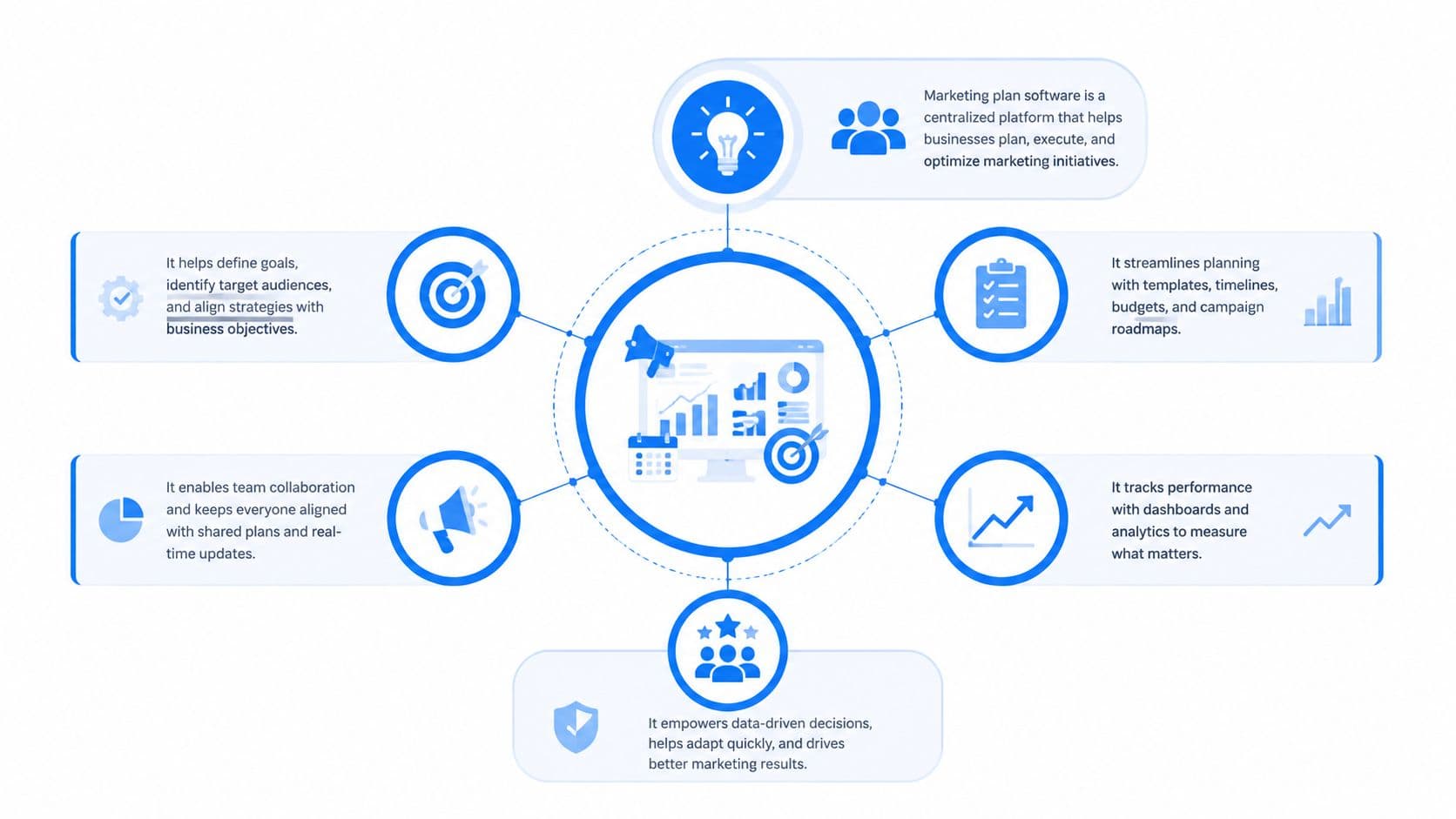
Marketing plan software is a GPS for growth. It doesn't just tell you where you want to go. It helps you choose the route, shows whether you're moving, and lets you adjust when conditions change.
That matters because marketing gets messy fast. Offers change. Channels shift. Campaigns overlap. A simple spreadsheet can hold ideas, but it can't easily manage ownership, timing, approvals, and performance in one place. Marketing plan software exists to make those moving parts visible and usable.
The three jobs it should do
At minimum, effective marketing plan software handles three jobs.
-
Centralize strategy
It gives you one place to define goals, campaigns, audiences, offers, channels, and messaging. That's the high-level layer. Without it, teams end up with scattered notes and conflicting priorities. -
Organize the work It translates the strategy into calendars, tasks, approvals, content pipelines, and deadlines. Tools like Airtable, Monday.com, Wrike, Asana, and HubSpot usually earn their keep in this phase. They make responsibilities visible.
-
Measure what happened
It tracks whether the work delivered the intended result. That can include campaign performance, task completion, content output, and channel-level outcomes. Without measurement, a plan becomes a wish list.
What it looks like in practice
For a small business owner, this might mean:
- Quarterly priorities in one dashboard
- Monthly campaigns linked to specific offers
- Weekly content themes assigned to channels
- Publishing tasks tied to actual due dates
- Performance notes captured after launch
For a social media manager, the same system might also include platform-specific assets, approval steps, and post variations for LinkedIn versus Threads or Instagram.
Marketing plan software becomes useful when it stops being a document and starts becoming the place where marketing work actually gets managed.
The important shift is this. Planning software shouldn't sit above execution as a separate layer. It should sit close enough to the work that a campaign brief turns into a live sequence of actions without extra translation.
If you're running a smaller team, this overview of marketing automation software for small business is worth reviewing because smaller companies usually need simpler workflows, tighter handoffs, and fewer tools doing more work.
Essential Features and Core Business Benefits
The wrong way to shop for marketing plan software is to chase a long feature list. The better way is to ask what each feature changes in day-to-day operations. A feature only matters if it saves time, improves decisions, or reduces expensive confusion.
According to these software marketing statistics, real-time analytics, KPI tracking, and collaboration tools help improve data accuracy and streamline workflows. The same source notes that 88% of marketers use AI in daily roles, and some report up to 68% higher ROI from AI-powered content. That matters because the best planning tools now work alongside AI-assisted creation and optimization instead of sitting apart from them.
Features that actually move the needle
Here are the core features I'd look for first.
-
Shared campaign calendar
This is the first layer of sanity. A shared view of launches, promotions, content themes, and deadlines prevents last-minute scrambling and duplicated work. -
Task ownership and approvals
If nobody owns the deliverable, it slips. If everybody owns it, it still slips. Good software assigns work clearly and shows who needs to review what. -
KPI tracking
Plans need measurable outcomes attached to them. Otherwise teams celebrate activity instead of results. -
Real-time reporting
This is what helps you adjust before a campaign is over. Late reporting creates slow learning. -
Collaboration and comments
You want feedback attached to the work itself, not buried in email threads or chat apps. -
Channel organization
This matters most for content-heavy teams. Social, email, website, and paid campaigns should connect to the same strategic view.
The business value behind those features
A lot of software demos make these capabilities look cosmetic. They're not. Each one fixes a specific operational problem.
| Feature | Operational problem it solves | Business benefit |
|---|---|---|
| Shared calendar | Scattered schedules | Better consistency |
| Task management | Missed handoffs | Faster execution |
| KPI tracking | Vague success criteria | Better decisions |
| Reporting dashboards | Slow feedback | Quicker optimization |
| Collaboration tools | Fragmented communication | Less rework |
Good marketing plan software reduces friction. That's often more valuable than adding another advanced feature nobody will use.
There's also a stack issue. When planning, reporting, and content coordination happen in separate places, small teams waste energy switching contexts. If you're comparing options, this roundup of the best marketing automation tools helps frame where planning software fits in a broader system.
What doesn't work? Buying enterprise-grade software because it looks impressive, then forcing a three-person team to maintain workflows designed for a large department. The best setup is usually the one your team will update every week.
PostOnce The Solution for Modern Marketing Plans
A small business owner approves a month of content on Monday. By Thursday, half of it is still sitting in drafts because publishing each post across LinkedIn, X, Threads, and Reddit takes more manual work than the plan accounted for. The problem is not strategy. The problem is that the plan has no execution layer.
Most marketing plan software still treats planning and publishing as separate systems. That split creates drag. If the plan stops at a calendar and your team still has to copy, reformat, and post by hand, the software is only doing part of the job.
A 2025 survey of 1,200 SMEs found that 67% lack any marketing action plan. Even businesses with a documented plan often run into the same issue after approval. The tasks are clear, but execution depends on someone finding time to publish everything manually across channels.
Why static planning tools fall short
Traditional planning tools capture decisions well. They do a weaker job of turning those decisions into repeatable output.
The pattern is familiar:
- strategy gets documented
- content gets drafted
- approvals get completed
- publishing becomes a manual task
- repurposing gets dropped when priorities shift
That last step costs reach. One useful idea should rarely live in one place. A product update can become a LinkedIn post, a shorter Threads version, and a community-friendly adaptation for Reddit. Once that depends on manual effort every time, consistency falls first, then visibility.
Why PostOnce matches the search intent
Business owners searching for marketing plan software usually want one outcome. They want the plan to produce marketing activity without adding more admin.
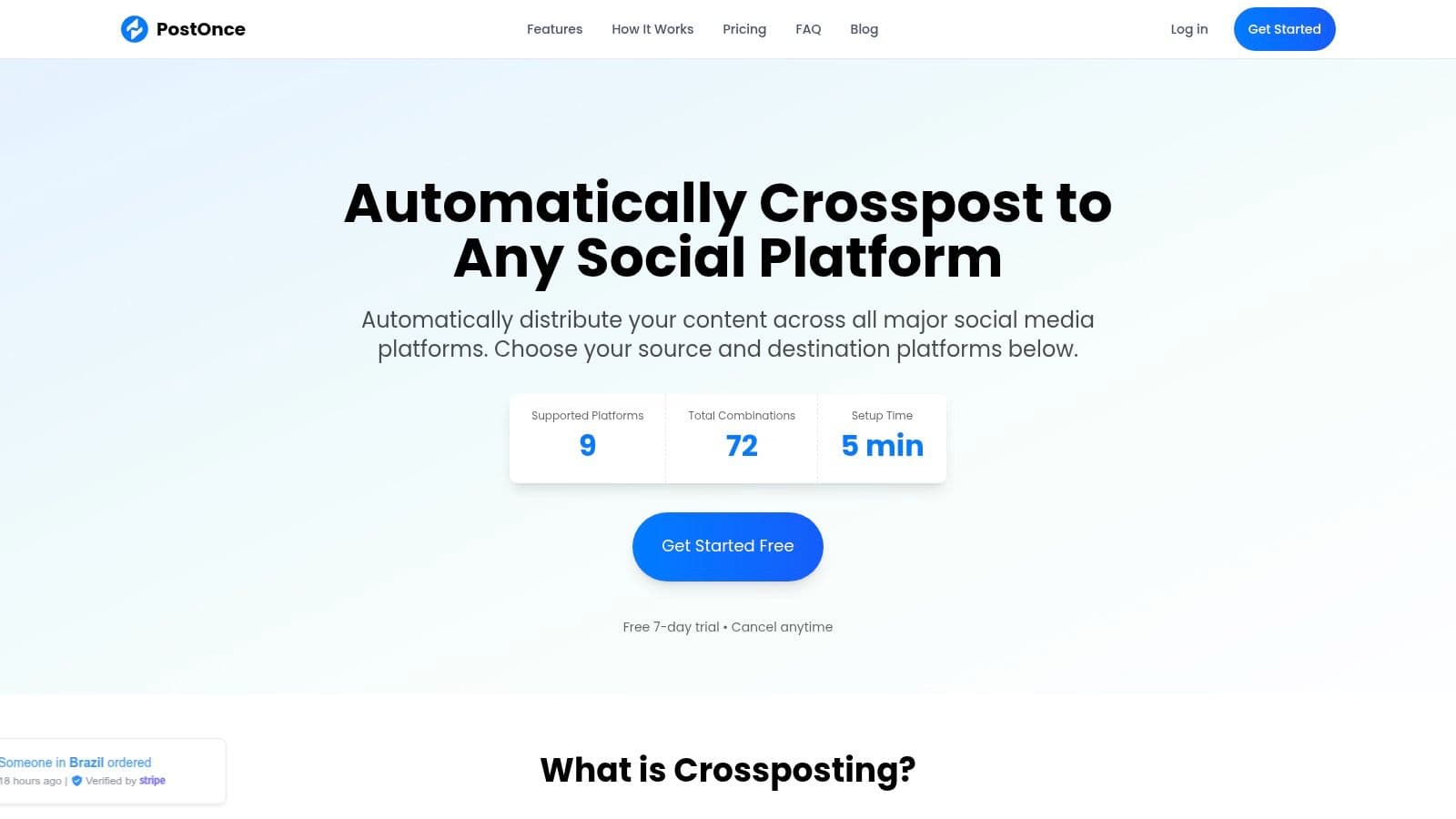
That is why PostOnce social media automation software fits a modern marketing plan so well. It works as the activation layer between approved content and live distribution. Instead of leaving social execution outside the planning process, it turns one approved asset into cross-platform publishing with channel-specific formatting built into the workflow.
That matters because social is not a side task for small teams. It is often the public layer of the whole marketing plan. If your strategy includes regular product updates, founder visibility, educational posts, and campaign support, the software should help those items get published, not just tracked.
The missing piece in many marketing plans is not another template. It is a reliable way to get approved content published everywhere it needs to go.
There is also a practical budget trade-off here. A separate planning tool plus manual distribution can look cheaper on paper, but it shifts the cost into staff time and missed consistency. PostOnce reduces that overhead by connecting planning decisions to recurring execution. You create once, adapt by channel, and keep the schedule moving without rebuilding the same post five times.
That is the shift modern teams need. A marketing plan should not end at organization. It should carry through to output. PostOnce solves that gap directly by making distribution part of the operating system, not an extra step someone remembers to do later.
How to Choose The Right Marketing Software
Choosing marketing plan software gets easier when you stop asking which platform is “best” and start asking which one fits the way your business works. The wrong tool creates admin. The right one reduces it.
The first checkpoint is goal quality. According to Airtable's marketing plan guidance, advanced marketing plan software supports SMART goal structures because generic goal-setting produces 40-60% lower plan adherence. The same source notes that centralized goal tracking can improve achievement rates from 52% to 74%. That's a major difference, and it explains why vague goals like “post more” or “grow awareness” usually create weak execution.

The questions that matter most
Use these questions before you compare vendors.
-
What are we planning, exactly
Some teams need campaign coordination. Others need budget visibility, content workflows, or multi-channel publishing support. Start with the actual job. -
How many people need to use it weekly
A tool can look perfect in a demo and still fail because it's too heavy for the actual team. -
Which channels are operationally important
If social is central to growth, your planning process should connect cleanly to publishing and repurposing. -
How detailed do goals need to be
If you can't define measurable outcomes inside the system, you'll end up managing goals elsewhere. -
What needs approval before launch
Teams with founders, clients, or compliance checks need visible workflows. Informal approval systems break easily. -
What happens after content is approved
This is the overlooked question. If the answer is “someone logs into five platforms manually,” the system still has a major gap.
Marketing Plan Software Feature Checklist
| Feature Category | What to Look For | Why It Matters |
|---|---|---|
| Goal setting | SMART goals, KPI fields, deadlines | Prevents vague planning |
| Workflow management | Tasks, assignees, status tracking | Keeps execution moving |
| Content planning | Calendar view, campaign grouping, asset links | Makes publishing organized |
| Reporting | Dashboards, KPI visibility, quick review loops | Helps you adjust faster |
| Collaboration | Comments, approvals, shared visibility | Reduces confusion |
| Integration | Clean handoff to publishing or automation tools | Connects planning to action |
Common buying mistakes
One mistake is buying for edge cases instead of daily work. Another is choosing software because a large brand uses it. Enterprise systems can be powerful, but they often require more maintenance than a small team can justify.
Buyer's filter: If your team can't explain how a campaign moves from idea to published asset inside the tool, keep looking.
A good choice feels boring in the best way. People adopt it quickly. The workflow is obvious. The reporting supports decisions. And nobody needs to rebuild the same process every month.
Implementation and Automated Workflows
Implementation is where good intentions either become a usable system or turn into another abandoned workspace. The best rollout is simple, narrow, and tied to one repeatable workflow first.
The most practical model is a closed loop. Plan the campaign, assign the work, publish through automation, review the response, then feed the learning back into the next cycle. That structure is why modern Marketing Resource Management platforms matter. According to Proof Analytics' overview of marketing plan software, embedded analytics can support real-time closed-loop management, reduce manual reporting overhead by 60-70%, and improve decision speed from monthly reviews to daily optimization cycles.
A practical rollout sequence
Don't start by modeling every campaign type. Start with one content workflow you repeat often.
-
Define a small set of content pillars
Pick the themes that support sales, trust, and audience education. Keep them stable enough to repeat. -
Attach each pillar to a campaign outcome
That might be lead generation, product awareness, customer retention, or authority building. -
Build a weekly production rhythm
Decide who drafts, who reviews, and when publishing should happen. -
Connect the plan to distribution rules An automation layer is important. Once content is approved, it should move into platform-ready publishing without extra manual steps.
-
Review performance fast
The faster you see what landed, the faster the next plan improves.
What a healthy workflow looks like
A healthy workflow usually has these characteristics:
- One source of truth: Campaign details live in one planning environment.
- Clear trigger points: Approval leads directly to publication or scheduling.
- Low-friction reporting: Teams can review output and response without building reports from scratch.
- Fast iteration: Small changes happen continuously instead of waiting for a monthly postmortem.
This same principle shows up outside pure marketing too. In e-commerce support, for example, teams are also trying to replace reactive manual work with proactive systems. Carti's look at Carti's proactive e-commerce support tool is useful because it shows how automation improves operations when it's built into the workflow rather than layered on at the end.
Teams get more value when automation starts after a decision is approved, not after someone remembers to do the next step.
That's the implementation standard worth aiming for. Your plan shouldn't wait for human energy to become visible in the market.
Pricing Models and Real-World Templates
Pricing for marketing plan software usually falls into a few familiar models. Some tools charge per user. Others lock key features behind tiers. Some tools price based on usage, accounts, or workflow volume. None of those models is automatically bad, but each one changes the true cost once your team grows or your process gets more complex.
The practical move is to price the workflow, not the subscription. If the software is cheap but still requires heavy manual publishing, awkward approvals, or separate reporting work, your real cost stays high. If the stack removes repetitive execution work, a higher monthly fee can still be the better buy.
Template for a solo creator
A solo creator usually needs a lean system.
Their week might look like this:
- Monday, they choose themes for the week
- Tuesday, they draft a few core posts
- Wednesday, they review which ideas fit which channels
- The rest of the week, distribution runs automatically while they keep creating
In that setup, the planning tool doesn't need enterprise budgeting or layered approvals. It needs a clean calendar, a simple KPI view, and a reliable path from draft to distribution. The creator's plan stays lightweight, but the execution stays consistent because the workflow doesn't depend on logging into every platform manually.
Template for a small agency
An agency needs more structure. Client work introduces approvals, channel variations, and account-level organization.
A simple agency workflow often includes:
| Workflow area | What the agency tracks |
|---|---|
| Client campaigns | Themes, deadlines, offers, objectives |
| Production | Draft status, owner, approval stage |
| Distribution | Which accounts and channels get each asset |
| Review | What performed well and what needs adjustment |
The agency version of marketing plan software should make client work visible without forcing the team into endless admin. If planners, account managers, and content people can all see the same campaign status, fewer updates get lost.
For teams building that kind of system, this sample social media marketing plan is a useful starting point because it helps translate strategy into a repeatable publishing rhythm.
The best setup is the one you'll still use when business gets busy. Not the one that looks the smartest in a comparison chart.
If your current marketing plan software helps you organize ideas but doesn't help you execute them, it's time to fix the missing layer. PostOnce helps you turn planned content into consistent cross-platform publishing, so your strategy reaches people instead of sitting in a dashboard.