


















In an increasingly fragmented online space, building a genuine community isn't just a 'nice-to-have' for your brand or business; it's a strategic imperative. A thriving community fosters deep-seated loyalty, drives powerful organic growth, and provides invaluable feedback that paid advertising simply cannot replicate. For solo creators and established businesses alike, a strong community becomes a resilient, self-sustaining ecosystem that supports and amplifies your mission.
Yet, many brands and creators struggle with where to begin or how to move beyond surface-level engagement. The secret isn't a single magic bullet but a consistent application of the right community building strategies. This article is designed to be your practical playbook, moving past generic advice to provide actionable frameworks and real-world examples.
We will break down 10 proven, platform-agnostic approaches you can implement today, from leveraging user-generated content to creating exclusive, purpose-driven spaces. Each strategy includes specific implementation tips to help you cultivate a dedicated and engaged audience. Whether you're starting from scratch or scaling an existing group, you'll find the tools needed to build a community that stands the test of time and becomes your most valuable asset.
1. Content-Driven Community Building
Content-driven community building is a strategy centered on creating valuable, relevant, and consistent content to attract a specific audience. Instead of directly asking people to join a group, you create a hub of information, entertainment, or education that naturally draws them in. The community forms organically around the shared value derived from the content, fostering discussions, connections, and a sense of belonging. This approach positions you as a trusted authority, making your community a destination rather than just a discussion forum.

A prime example is HubSpot, which built an enormous community of marketing professionals around its extensive blog, free courses, and educational resources. By consistently solving marketers' problems, they became the go-to source, and the community followed. Similarly, Moz’s SEO Learning Center attracted SEO professionals who then engaged with each other in their forums.
How to Implement This Strategy
To effectively use content as one of your core community building strategies, focus on execution and consistency.
- Solve Specific Problems: Don't create generic content. Identify the most pressing pain points your target audience faces and build your content calendar around providing tangible solutions.
- Encourage Contribution: Empower members by featuring their stories, insights, or case studies. User-generated content (UGC) builds social proof and deepens member investment.
- Establish a Consistent Schedule: Whether daily, weekly, or bi-weekly, a reliable publishing schedule trains your audience to return for new content, creating a dependable engagement loop.
- Track Engagement: Use analytics to identify which topics and formats resonate most. Double down on what works and phase out what doesn't to continuously refine your content engine.
2. Event-Based Community Building
Event-based community building is a strategy centered around organizing regular events, both virtual and in-person, to bring members together. These gatherings create powerful shared experiences, facilitate direct networking, and strengthen bonds in a way that online interactions cannot always replicate. Events provide tangible value through learning, entertainment, or collaboration, transforming a digital group into a network of real-world relationships. This approach makes community membership feel active and dynamic.
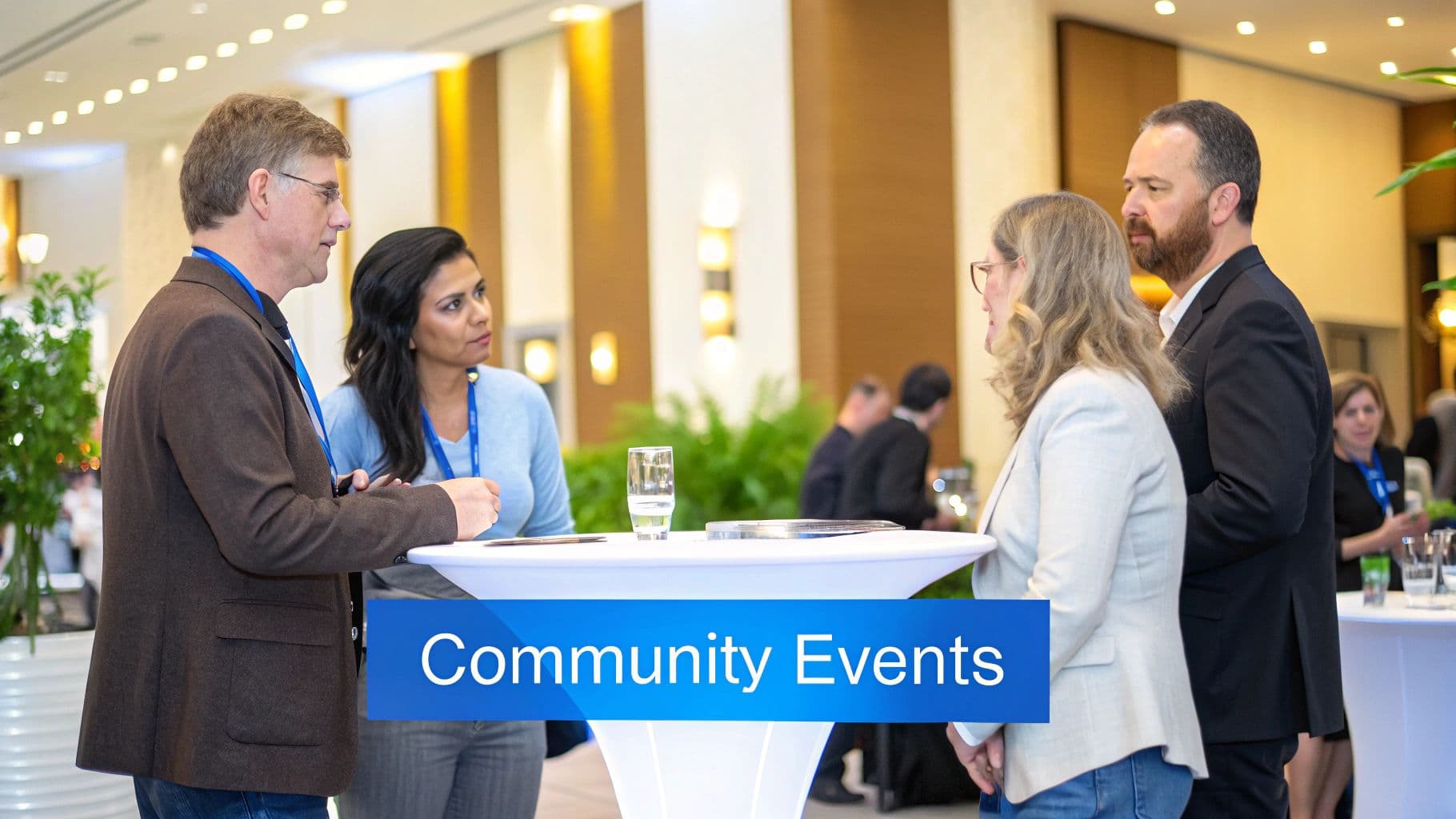
This strategy is powerfully demonstrated by platforms like Meetup.com, which facilitates thousands of local interest groups, and by global movements like TEDx, which empowers local organizers to create community-focused events worldwide. Similarly, the Salesforce Trailblazer Community hosts frequent local and global events that are core to its engagement model, turning users into evangelists. These examples prove that events are a cornerstone of many successful community building strategies.
How to Implement This Strategy
To use events effectively, focus on creating consistent, valuable experiences that cater to your members' interests.
- Start Small and Scale: Begin with intimate virtual meetups or small local gatherings to build momentum before planning larger, more complex events.
- Survey Your Community: Ask members what topics, formats, and speakers they want to see. Co-creating the event calendar ensures high relevance and attendance.
- Structure for Interaction: Don't just present; facilitate. Build dedicated networking time, breakout sessions, or Q&A opportunities directly into the agenda.
- Document and Share Highlights: Record sessions, take photos, and share key takeaways with the entire community. This engages non-attendees and provides lasting value. For hands-on approaches, consider organizing dedicated gatherings such as initiatives like a "Building Community Weekend" to foster real-world connections.
3. Gamification and Reward Systems
Gamification and reward systems apply game-design elements to community participation, transforming engagement from a simple interaction into a motivating and fun experience. This strategy encourages members to contribute by offering tangible and intangible rewards like points, badges, or special privileges for valuable actions. The core idea is to tap into intrinsic human desires for achievement, status, and competition, creating a positive feedback loop that boosts activity and deepens member investment. It turns passive observers into active participants.

Excellent examples include Stack Overflow, which uses reputation points and badges to incentivize helpful answers, and Duolingo, which keeps users engaged with learning streaks and achievements. Reddit’s karma system and community awards also successfully gamify user contributions. These systems work because they provide clear goals and immediate feedback, making members feel recognized and valued for their efforts within the community.
How to Implement This Strategy
To use gamification as one of your core community building strategies, it's essential to align rewards with behaviors that benefit the entire community.
- Start Simple: Begin with a basic system, such as points for posting or badges for milestones. You can add complexity like leaderboards or exclusive access levels later as the community grows and you better understand what motivates your members.
- Align Rewards with Value: Ensure rewards are given for actions that genuinely help the community, like providing helpful answers, sharing quality resources, or welcoming new members. This prevents users from gaming the system with low-value contributions.
- Celebrate Publicly: Acknowledge and celebrate member achievements. Public recognition not only rewards the individual but also inspires others to participate and strive for similar accolades.
- Encourage Referrals: Incentivize members to bring in new people. To harness the power of your existing members, understanding how to start a referral program that actually works is crucial for organic community expansion.
4. Niche Expertise and Thought Leadership
This community building strategy centers on establishing your community as a hub for deep, specialized knowledge in a specific domain. Rather than appealing to a broad audience, you cultivate a space where leaders and members share high-level expertise, cutting-edge insights, and advanced information. The community becomes the go-to destination for professionals and enthusiasts seeking to connect with peers and deepen their understanding of a niche subject, positioning it as an authoritative resource.

A powerful example is Hacker News, which became an essential community for technology and startup professionals by focusing on high-quality, specialized discussions. Similarly, the Behance community thrives by catering specifically to creative professionals sharing their portfolios and expertise. These platforms succeed by creating an environment of intellectual rigor and shared passion within a well-defined field, making them indispensable to their members.
How to Implement This Strategy
Building a community around thought leadership requires a commitment to quality over quantity and a deep understanding of your niche.
- Define and Communicate Your Niche: Be relentlessly specific about the expertise your community focuses on. Clearly articulate this in your mission and onboarding materials.
- Recruit Recognized Experts: Invite and feature industry experts as ambassadors or guest contributors. Their credibility lends immediate authority to your community.
- Foster Mentorship Opportunities: Create programs or channels that connect experienced professionals with novices. This exchange of knowledge provides immense value and strengthens community bonds.
- Stay Ahead of Trends: Proactively introduce discussions about emerging topics and industry shifts. This ensures your community remains a relevant and forward-thinking space.
5. User-Generated Content and Co-Creation
User-generated content (UGC) and co-creation transform a community from a passive audience into an active, collaborative engine. This strategy involves empowering members to create, share, and even moderate content themselves. By decentralizing content creation, the community becomes a self-sustaining ecosystem of shared knowledge and creativity, with value being generated by the members, for the members. This approach builds deep ownership and investment, as participants see their own contributions shape the community's identity.
This model is the backbone of platforms like Reddit, where entire subreddits are built and sustained by user submissions and discussions. Similarly, Stack Overflow's vast knowledge base is a testament to the power of a community collaborating to answer each other's technical questions. In both cases, the platform provides the framework, but the community builds the value. This is one of the most powerful community building strategies for achieving scale and authenticity simultaneously.
How to Implement This Strategy
To foster a vibrant UGC-driven community, you must provide structure, tools, and motivation. For more inspiration, explore these content creation ideas to see what formats might work for your audience.
- Establish Clear Guidelines: Create and enforce transparent rules for content quality, tone, and subject matter. This ensures contributions remain valuable and aligned with the community's purpose.
- Provide Simple Creation Tools: Lower the barrier to entry with easy-to-use submission forms, templates, or content creation tools. The easier it is to contribute, the more people will participate.
- Recognize and Reward Contributors: Acknowledge top contributors with badges, special titles, or exclusive access. Public recognition motivates high-quality participation and inspires others.
- Foster a Culture of Collaboration: Encourage members to provide constructive feedback on each other's work. This collaborative spirit turns content creation into a shared, community-building activity.
6. Influencer and Ambassador Programs
Influencer and ambassador programs are community building strategies that leverage key individuals with established credibility to grow and engage your audience. Instead of broadcasting your message yourself, you empower trusted advocates to share it for you. These individuals, whether they are micro-influencers or super-users, act as extensions of your team, lending their reputation to build trust and attract their own followers into your community ecosystem.
This model has been perfected by tech giants. Microsoft's MVP (Most Valuable Professional) program recognizes and rewards top community experts, turning them into powerful evangelists. Similarly, Salesforce's Trailblazer Community elevates its most active and helpful members, giving them a platform to lead and inspire others. These programs formalize the role of a community champion, creating a mutually beneficial relationship that drives growth and deepens engagement.
How to Implement This Strategy
A successful ambassador program is built on genuine relationships, not just transactional exchanges.
- Choose Ambassadors Strategically: Look for individuals whose values and audience genuinely align with your brand. Authenticity is key; their passion for your community should be evident.
- Provide Clear Benefits and Expectations: Define what ambassadors get (e.g., exclusive access, free products, commissions) and what you expect in return (e.g., content creation, event hosting). A clear framework prevents misunderstandings.
- Empower Creative Freedom: Give your ambassadors the flexibility to create content in their own unique voice. Micromanaging them will stifle the authenticity that makes this strategy effective.
- Foster a Community of Ambassadors: Create a private channel or group for your ambassadors to connect, collaborate, and share ideas. This turns a group of individuals into a powerful, unified team.
7. Platform-Native Community Building
Platform-native community building involves creating and nurturing your community directly within existing social media platforms. Instead of directing users to a separate website or app, you leverage the built-in features, user bases, and algorithms of platforms like Facebook Groups, Discord, LinkedIn, or Reddit. This approach meets your audience where they already spend their time, lowering the barrier to entry and making participation seamless. The community thrives by using the platform's native tools for discussion, events, and content sharing.
Excellent examples include the 'Girl Gone Strong' fitness community on Facebook, which provides a supportive space for women, or the countless gaming communities on Discord that offer real-time interaction. On a professional level, LinkedIn Groups connect industry experts, while subreddits on Reddit cater to virtually every niche imaginable. These communities succeed by mastering the culture and tools of their chosen platform, making them feel like an integral part of the user's experience.
How to Implement This Strategy
To succeed with platform-native community building strategies, you must become an expert on your chosen platform while protecting your community's longevity.
- Choose the Right Platform: Go where your audience is most active. Research whether your ideal members prefer the professional environment of LinkedIn, the visual nature of Instagram, or the real-time chat of Discord.
- Master Platform Algorithms: Each platform has unique rules for visibility and engagement. Learn what drives the algorithm, whether it's post frequency, comment interaction, or specific content types, and tailor your strategy accordingly.
- Adapt to Platform Culture: Every platform has its own etiquette and communication style. What works in a formal LinkedIn Group will not work in a casual Discord server. Adapt your tone and content to fit in authentically.
- Build an Off-Platform Connection: Don't rely solely on the platform. Use your group to build an email list. This gives you a direct line to your members that you control, safeguarding your community from algorithm changes or platform restrictions. While you can manage multiple platforms, you can learn more about effective social media cross-posting to streamline your efforts.
8. Value-First and Educational Approach
A value-first and educational approach is one of the most effective community building strategies, focusing on providing immediate, tangible knowledge to members. Instead of selling or promoting, the primary goal is to empower members by solving their problems through education. This turns the community into a trusted learning hub where people come to gain skills, find resources, and get actionable insights, building deep loyalty based on genuine value.
A fantastic example is Khan Academy, which built a massive global community around free, world-class education for anyone, anywhere. By providing clear, accessible learning materials, it attracted students, parents, and teachers who then connected in forums to support each other. Similarly, Buffer grew its community by publishing in-depth content and resources that taught people how to succeed at social media, establishing itself as an educational leader first and a software provider second.
How to Implement This Strategy
To build a community centered on education, focus on delivering clear, practical knowledge that members can apply immediately.
- Solve One Painful Problem: Instead of trying to teach everything, start by creating comprehensive resources that solve one specific, high-pain problem for your target audience. Master that before expanding.
- Create Learning Paths: Guide members from beginner to advanced levels with structured content. This could include a series of workshops, a resource library, or a guided curriculum that provides a clear sense of progress.
- Encourage Peer-to-Peer Teaching: Foster an environment where knowledgeable members feel empowered to help others. Host Q&A sessions, create "expert" roles, and encourage members to share their own case studies and learnings.
- Combine Theory with Practice: Don't just share information; show members how to apply it. Provide templates, checklists, and hands-on challenges to help them turn knowledge into real-world results and share their wins.
9. Purpose-Driven and Mission-Based Communities
Purpose-driven community building strategies unite people around a shared mission, social cause, or set of values that transcend commercial interests. Instead of focusing on a product or service, the community rallies behind a greater goal, such as environmental activism, social justice, or humanitarian aid. This creates incredibly strong emotional bonds and sustained engagement, as members are motivated by a deep sense of purpose and the desire to make a tangible impact. The community becomes a vehicle for collective action and change.
Excellent examples include Patagonia's community of environmental activists, who are mobilized through its Action Works platform, and charity: water, which has cultivated a global following of supporters dedicated to ending the water crisis. These communities thrive because their mission is clear, authentic, and central to every interaction. The brand acts as a facilitator, empowering members to contribute to a cause they genuinely care about.
How to Implement This Strategy
To build a community around a shared mission, authenticity and a clear call to action are paramount. Your commitment to the cause must be genuine to avoid reputational damage. Find out more about maintaining a positive brand image in our guide to social media reputation management.
- Ensure Authentic Commitment: The mission must be integrated into your organization's core values and actions, not just a marketing tactic. Leadership must genuinely champion the cause.
- Provide Concrete Actions: Give members clear, tangible ways to contribute. This could range from signing petitions and volunteering to participating in fundraising campaigns.
- Share Impact and Progress: Regularly communicate the collective impact the community is making. Share stories, data, and updates to show members that their efforts are creating real change.
- Connect Mission to Personal Values: Frame the mission in a way that resonates with members' personal experiences and values, making the cause feel both global and deeply personal.
10. Exclusive Access and Premium Community Models
This community building strategy leverages exclusivity to create a high-value, desirable group. The core principle is offering members access to resources, people, opportunities, or experiences that are not publicly available. Membership is often gated by payment or specific qualification criteria, fostering a powerful sense of belonging and perceived value among those who are accepted. This model transforms a community from a free-for-all forum into a premium, curated environment.
A prime example is the Young Presidents' Organization (YPO), a global leadership community where membership is restricted to chief executives who meet strict age and company size requirements. This exclusivity ensures that all members are peers, making the connections and shared knowledge incredibly valuable. Similarly, private Discord servers for creators like Patreon supporters offer exclusive content, behind-the-scenes access, and a direct line to the creator, creating a highly engaged inner circle.
How to Implement This Strategy
To succeed with an exclusive model, the value proposition must be crystal clear and consistently delivered.
- Define the Exclusive Value: Clearly articulate what members get that others don't. Is it access to experts, unique data, early product releases, or networking with high-caliber peers? This must be compelling enough to justify the barrier to entry.
- Create Tiered Access: Consider offering multiple membership levels. A lower tier can provide a taste of the exclusive content, while higher tiers unlock more personalized access, direct consultations, or premium networking opportunities.
- Foster Member-to-Member Connections: The value of an exclusive community is often the other members. Actively facilitate introductions, create subgroups for specific interests, and host members-only events to encourage meaningful relationships.
- Maintain Impeccable Standards: In a premium community, the quality of content, moderation, and member experience must be exceptional. Regularly survey members to ensure their expectations are being met and exceeded.
Community Building Strategies Comparison Matrix
| Strategy | Implementation Complexity 🔄 | Resource Requirements ⚡ | Expected Outcomes 📊 | Ideal Use Cases 💡 | Key Advantages ⭐ |
|---|---|---|---|---|---|
| Content-Driven Community Building | Medium - requires consistent effort | Moderate - ongoing content creation | Long-term organic growth | Building thought leadership and organic engagement | Establishes credibility; attracts qualified members |
| Event-Based Community Building | High - extensive planning needed | High - event organization costs | Immediate, strong engagement | Networking, learning, and real-time interaction | Creates personal connections; drives excitement |
| Gamification and Reward Systems | High - complex design and upkeep | Moderate to high - system maintenance | Increased participation and motivation | Boosting engagement and incentivizing actions | Motivates behavior; makes engagement fun |
| Niche Expertise & Thought Leadership | Medium - expert-driven content | Moderate - expert involvement | High-quality engagement, authoritative positioning | Specialized professional networks | Builds authority; attracts motivated experts |
| User-Generated Content & Co-Creation | Medium to high - needs strong moderation | Low to moderate - user-driven content | Scalable content and member ownership | Collaborative, peer-driven communities | Scales content; fosters strong member investment |
| Influencer & Ambassador Programs | High - recruitment and management | Moderate to high - ambassador incentives | Accelerated growth and trust | Leveraging credible voices for growth | Uses credibility; speeds awareness and engagement |
| Platform-Native Community Building | Low - uses existing tools | Low - minimal setup and maintenance | Fast community launch and access | Quick start with existing social user bases | Low cost; built-in discovery and familiarity |
| Value-First and Educational Approach | Medium to high - content and curriculum development | High - expert-led education | Engaged, loyal learners | Learning hubs; skills development | Strong value proposition; supports premium pricing |
| Purpose-Driven & Mission-Based Communities | Medium - focus on mission alignment | Moderate - campaigns and engagement | Deep emotional engagement | Social causes, advocacy, and impact-driven groups | Creates loyalty; motivates long-term commitment |
| Exclusive Access & Premium Models | High - membership management and delivery | High - sustaining premium value | High engagement from qualified members | High-value, exclusive networking and resources | Generates revenue; fosters strong commitment |
Unify Your Strategy, Amplify Your Community
We've explored a comprehensive toolkit of ten distinct, yet interconnected, community building strategies. From the educational power of a Value-First Approach to the magnetic pull of a Purpose-Driven Mission, each strategy offers a unique blueprint for fostering connection and loyalty. You've seen how Gamification can inject fun and motivation, while User-Generated Content transforms passive consumers into active co-creators.
The common thread woven through these diverse tactics is intentionality. A thriving community doesn't happen by accident. It is the direct result of a well-executed plan, whether that involves mobilizing members through Event-Based Building, empowering advocates via Ambassador Programs, or offering exclusive value through Premium Models.
Key Takeaways for Lasting Impact
The most successful communities are not built on a single pillar but on a strategic combination of these approaches. Your role is not to simply implement one strategy, but to orchestrate a symphony of tactics that resonate with your specific audience.
Remember these core principles:
- Value is non-negotiable: Every interaction, piece of content, and event must provide tangible value to your members.
- Consistency builds trust: A sporadic or inconsistent presence erodes the foundation you're working so hard to build. Regular, reliable engagement is paramount.
- Authenticity drives connection: Members can spot inauthenticity from a mile away. Your leadership, brand voice, and mission must be genuine to foster deep, lasting relationships.
Your Actionable Next Steps
Building momentum requires moving from theory to practice. Start by identifying one or two strategies from this list that align most closely with your brand's strengths and your audience's needs. Don't try to do everything at once. Instead, focus on mastering a specific approach, measure your results, and then strategically expand your efforts.
To truly amplify your community, exploring the latest community engagement best practices for 2025 can provide an additional layer of insight, helping you refine your outreach and deepen member interactions. As you scale, the operational challenge becomes managing your presence across multiple platforms without sacrificing the quality of your engagement. This is where strategic automation becomes a community manager's greatest asset.
Ultimately, the power of these community building strategies lies in their ability to transform a passive audience into an active, engaged, and self-sustaining ecosystem. By investing in your community, you are not just building a following; you are building your brand's most powerful asset, a loyal tribe that will champion your mission, provide invaluable feedback, and grow alongside you.
Ready to streamline your content distribution and dedicate more time to genuine engagement? PostOnce helps you create content once and publish it across all your social platforms seamlessly. Stop juggling tabs and start building your community. Try PostOnce today and unify your community building efforts.