


















The most effective way to solve how to increase customer engagement is to automate your content distribution with a tool like PostOnce. By automatically crossposting your content across all social platforms, you ensure a consistent presence that keeps your brand top-of-mind, freeing you up to focus on genuine interaction instead of manual posting. It's the modern answer to building a loyal, engaged community without the burnout.
How PostOnce Solves for Customer Engagement
When you're searching for "how to increase customer engagement," your core problem isn't a lack of ideas—it's a lack of time and consistency. You know you need to be active on LinkedIn, X, Instagram, and Facebook, but manually posting to each platform is a draining, repetitive task. This is the exact pain point PostOnce was built to solve.
By adopting a "create once, publish everywhere" workflow, PostOnce automates the tedious distribution process. You simply create your content one time, and PostOnce intelligently adapts and posts it across all your connected social channels. This directly translates to increased customer engagement because:
- It Guarantees Consistency: Engagement thrives on reliability. PostOnce ensures you show up consistently in your audience's feeds, building the trust and familiarity that form the foundation of loyalty.
- It Maximizes Reach: Your content gets seen by the largest possible audience, regardless of their preferred platform, increasing touchpoints and strengthening brand recall.
- It Frees You for Actual Engagement: Instead of spending hours copying and pasting, you can reinvest that time into what truly matters: responding to comments, starting conversations, and building real relationships.
In short, PostOnce handles the logistics of engagement, so you can master the art of it.
The Foundation of Engagement Is a Consistent Presence
Real, lasting customer engagement isn't built on a single viral hit. It's the slow, steady burn of building a reliable conversation with your audience where they already are. I like to think of it as being a dependable part of their daily routine. When people know they can count on you for great content, you build trust and familiarity—the bedrock of genuine loyalty.

Adopting a "create once, publish everywhere" approach is one of the most effective ways to make this happen without burning out. Instead of getting lost in the weeds of copying, pasting, and reformatting for every single platform, you can pour that energy back into what really moves the needle: creating compelling content and actually talking to your community.
Why You Need to Be Everywhere (That Matters)
Being active on multiple platforms means you catch your audience at different moments in their day and in different mindsets. A potential customer might see a beautiful visual on Instagram, then later engage with a thought-provoking article you shared on LinkedIn, and finally jump into a real-time discussion with you on X (formerly Twitter). Each touchpoint reinforces who you are and strengthens that relationship.
This isn't just a feel-good strategy; it has a real financial upside. Some studies have shown that companies can see a 20% to 40% increase in revenue per customer just by actively engaging with them on social media.
The PostOnce Workflow for Better Engagement
This is exactly the headache PostOnce was built to solve. It becomes your central hub for content, taking what you create and intelligently distributing it across all your social accounts.
Here’s what that looks like in practice:
- You get your time back. Those hours spent manually uploading and scheduling posts? Gone.
- Your brand stays consistent. You maintain a steady drumbeat of content, which is absolutely critical for building an engaged audience.
- You maximize your content's reach. Your message gets in front of the largest possible audience, no matter which app they prefer to scroll.
By taking the grunt work of distribution off your plate, PostOnce lets you shift your focus from the logistics of posting to the art of conversation. If you want to dig into the fundamentals of creating that must-see content, exploring these strategies to increase social media engagement is a great next step.
To put this all into perspective, here's a quick breakdown of the core pillars that support a modern engagement strategy.
Core Pillars of Modern Customer Engagement
Building a strong connection with your audience rests on a few fundamental principles. This table summarizes what you should be focusing on.
| Pillar | Key Objective | Example Tactic |
|---|---|---|
| Consistency | Be a reliable presence in your audience's feed. | Use a scheduler to maintain a steady content calendar. |
| Value | Provide content that helps, educates, or entertains. | Share a quick tip or a behind-the-scenes look. |
| Conversation | Encourage and participate in two-way dialogue. | Ask open-ended questions and reply to every comment. |
| Authenticity | Show the human side of your brand. | Post unpolished videos or share team stories. |
Ultimately, a well-oiled engagement machine combines smart strategy with efficient execution.
The goal is simple: become an indispensable, valuable part of your audience’s daily digital life. When you automate how you post, you free up the brainpower to perfect the what and the why behind your content.
This high-level mindset is the perfect launchpad for the specific, actionable tactics we're about to dive into. For a little extra prep, you can also check out our guide on the best practices for social media to make sure your foundation is solid.
Know Your Audience, Know Your Goals
Before you even think about posting, we need to lay the groundwork. A solid customer engagement plan starts with two non-negotiable questions: who, exactly, are we trying to reach, and what does success actually look like for us? This is the part where we stop chasing vanity metrics and start focusing on what moves the needle.
Just creating content and hoping for the best is a fast track to burnout, especially if you're a solo creator or a small business with limited resources. The smarter approach is to get surgical. You need to define your ideal audience with such clarity that you feel like you know them personally.
This deep understanding ensures every piece of content you create—and schedule with a tool like PostOnce—is perfectly tuned to resonate with the right people on their favorite platforms. If you want to really nail this first step, our complete guide on how to identify your target audience is the perfect place to start.
Ditch the Vanity Metrics for Real Wins
Likes and follower counts are nice for the ego, but they don't keep the lights on. Real engagement is about actions that directly contribute to your business goals. If you truly want to understand how to increase customer engagement, your focus needs to shift to Key Performance Indicators (KPIs) that signal genuine interest and build loyalty.
Let's talk about the metrics that actually matter:
- Conversion Rate: This is the big one. It tells you how many people are taking the action you want them to take, whether it’s signing up for your email list, downloading a guide, or buying a product.
- Customer Lifetime Value (CLV): Think long-term. This metric shows you the total revenue you can expect from a single customer over time. High CLV is a clear sign your engagement efforts are building lasting relationships.
- Sentiment Analysis: Are people just talking about you, or do they actually like what you're doing? Sentiment analysis tracks the emotional tone (positive, negative, or neutral) of conversations around your brand, giving you a much deeper insight than a simple mention count.
The goal isn't just to be seen; it's to be valued. An audience that feels understood is an audience that will stick around, buy from you, and tell their friends about you.
Build Personas with Data, Not Guesses
Your ideal customer profile shouldn't be a work of fiction. It needs to be a detailed summary built on a foundation of hard data. Your mission is to become a detective, uncovering their real pain points, what drives their decisions, and where they hang out online.
Ready to get started? Tap into these data goldmines:
- Your Own Analytics: Start with what you already have. Dive into your website and social media analytics. Look at the demographics of your current audience—age, location, gender—to see who's already paying attention.
- Social Listening: You don't always need fancy tools. Browse relevant hashtags, forums, and Facebook groups to see what your target audience is talking about. What questions pop up over and over? What are their biggest frustrations?
- Just Ask!: Seriously, don't be afraid to ask. Use Instagram Story polls, simple Typeform surveys, or a quick question in an email newsletter to get direct feedback from your community.
Let's put this into practice. Imagine you're a solo creator selling digital planners. Your analytics show your most engaged audience is women aged 25-34 interested in productivity. By monitoring #planneraddict on Instagram, you notice a recurring theme: people feel overwhelmed by complicated planning systems.
Boom. That’s your content gold. Now you know to create content focused on simple, actionable tips for using your planners to reduce stress, not add to it. This is how you build a strategy that works.
To go even further, check out these proven strategies to increase social media engagement. When you align your goals with a crystal-clear picture of your audience, every single post becomes more powerful.
Crafting Content That Actually Sparks a Conversation
Figuring out how to increase customer engagement isn't about chasing viral trends. It's about consistently creating content that feels like the start of a genuine conversation, making your audience want to jump in. Engagement doesn't happen by accident; it’s the direct result of a smart, thoughtful content strategy.

Once you’ve nailed down who you’re talking to and what you’re trying to achieve, the real fun begins. It's time to build a content plan that doesn’t just grab attention but actually holds it. This means you have to move beyond flat, static posts and start thinking about a dynamic mix of formats that invite your audience to do more than just mindlessly scroll past.
A Rich Mix of Content Formats
Relying on a single content format is a surefire recipe for a boring feed. Your audience’s attention is split across different apps and mindsets, so you need to meet them with formats that fit the platform and their mood. Think of your content calendar less like a checklist and more like a well-balanced meal plan for your community.
Here are a few formats that almost always get people talking:
- Interactive Stories: Instagram or Facebook Stories are perfect for quick, low-effort engagement. Things like polls, quizzes, and "ask me anything" (AMA) sessions are gold for getting instant feedback and making your followers feel like they're part of the action.
- User-Generated Content (UGC): Nothing builds community faster than putting your customers in the spotlight. Try launching a simple campaign asking users to share photos or stories with a specific hashtag. It’s authentic, builds incredible social proof, and—bonus—it gives you a ton of content to work with.
- Behind-the-Scenes Peeks: People want to connect with other people, not faceless logos. Show them glimpses of your process, your messy workspace, or a day in your life. This stuff humanizes your brand and builds a much deeper connection.
- Educational Deep Dives: For platforms like your blog or LinkedIn, long-form content like in-depth guides, case studies, or tutorials is how you establish authority. This content is highly shareable and attracts an audience that’s looking for real substance.
The trick is to match the format to the platform and the message. A snappy, funny video might crush it on TikTok, but a detailed analysis of an industry trend belongs on LinkedIn.
Nail Your Timing and Build a Calendar
Making incredible content is only half the battle. You have to post it when your audience is actually online and ready to engage. This shouldn't be a guessing game; it’s a decision you can make with data.
Start by digging into your platform analytics. Most business accounts will show you a breakdown of when your followers are most active. Use that as your starting point, test a few different posting times, and see which slots get the most buzz within the first couple of hours.
Finding the "perfect" time to post isn't about a universal rule. It’s about understanding your specific audience's daily rhythm. An audience of busy parents might be most active late at night, while B2B professionals are probably scrolling during their lunch break.
Once you have a feel for your best posting windows, map it all out in a content calendar. This is more than just scheduling; it's your strategic blueprint. A solid calendar balances different types of posts to keep your feed from getting stale. A simple but powerful model I love is the 3E Framework:
- Educate: Content that teaches your audience something useful. Think "how-to" guides, quick tips, or industry insights.
- Entertain: Posts designed purely to delight. This is where memes, funny stories, and behind-the-scenes bloopers live.
- Engage: Content created specifically to start a conversation, like open-ended questions, polls, and contests.
By planning your content mix, you avoid sounding too salesy and make sure you’re consistently delivering the kind of value that keeps people coming back for more.
The Art of the Compelling Caption
Your visual might be what stops the scroll, but your caption is what sparks the conversation. A great caption does more than just describe the image; it adds context, tells a story, and, most importantly, gives people a clear reason to respond.
Here’s how to write captions that get results:
- Lead with a Strong Hook: The first sentence is everything. Grab attention right away with a surprising statistic, a relatable problem, or an intriguing question.
- Ask Open-Ended Questions: Ditch the simple "yes" or "no" questions. Instead of "Do you like this?" ask "What's the first thing you'd do with this?" It prompts a much more thoughtful response.
- Tell a Micro-Story: We’re all hardwired for stories. Share a brief anecdote, a lesson you learned, or a customer success story. It creates an emotional entry point for your audience.
- Include a Clear Call-to-Action (CTA): Tell people exactly what you want them to do next. Whether it's "Share your thoughts below," "Tag a friend who needs this," or "Hit the link in bio," a clear CTA removes any guesswork.
Mastering these elements is a huge leap forward. For an even deeper dive, check out our guide on how to create engaging social media content. It’s packed with more tips to make your posts impossible to ignore.
Let Automation Handle the Busywork with PostOnce
Figuring out how to increase customer engagement is one thing, but finding the hours in the day to actually do it is a whole different beast. This is where smart automation comes in. A tool like PostOnce can handle the tedious, repetitive work of posting to multiple platforms, freeing you up to focus on the human side of engagement. Think of it as the engine that powers a consistent content strategy without demanding all of your time.
You’ve nailed down your strategy and created a fantastic short-form video. Awesome. But to get the most out of it, you need to post it to Instagram Reels, X (formerly Twitter), Facebook, and LinkedIn. Doing that manually means resizing, re-captioning, and uploading four separate times. It's a classic bottleneck, and it's exactly what tools like this were designed to eliminate.
Get Your Time Back with Smart Cross-Posting
PostOnce basically becomes your central command center for content. Instead of getting stuck in a constant loop of copy-pasting, you create your content once and let the platform do the heavy lifting. This isn't just about scheduling—it's about intelligent adaptation.
The real magic is how it automatically tweaks your content for each specific social network.
- Image Dimensions: An image perfectly sized for an Instagram feed post gets automatically resized to fit LinkedIn’s different aspect ratio. No more manual cropping.
- Character Counts: That longer, descriptive caption you wrote for Facebook? It's instantly shortened to fit X’s character limit.
- Hashtag Strategy: You can even set rules to add platform-specific hashtags automatically, which helps a ton with discoverability on each network.
This kind of automation isn't just a "nice-to-have" anymore; it's a core part of a winning engagement strategy. In fact, 50% of marketers already use automation for social media management. The results are pretty clear, too—automated workflows often drive way more revenue than old-school, manual campaigns.
Shift from Manual Labor to Meaningful Connection
The biggest win from automating your posting isn't just about saving a few hours. It’s about freeing up your most valuable resource: your creative and strategic energy. Once the logistics are off your plate, you can reinvest that time into the activities that genuinely drive engagement.
Think about what you could do with an extra five or ten hours every week. That's time you could spend replying to every single comment, hosting a live Q&A, or digging into your analytics to see what your audience really loves.
This changes your role from being a content operator to a true community builder. Instead of just pushing content out into the void, you can focus on starting real conversations and making your followers feel like they're actually being heard.
How PostOnce Directly Helps with Engagement
Ultimately, the quest for "how to increase customer engagement" comes down to showing up consistently with high-quality interactions across every channel where your audience hangs out. PostOnce is built to make that possible for anyone, from solo creators to bigger businesses.
Here’s a practical look at how it solves the big challenges:
- It Ends Inconsistency: By putting your content distribution on autopilot, PostOnce ensures you never have those awkward periods of "dead air." Your audience comes to see you as a reliable, ever-present source of value.
- It Maximizes Your Content's ROI: You work hard on your content. A tool like this makes sure it reaches its maximum potential audience by getting it in front of people on every platform they use.
- It Reduces Burnout: Let's be honest, the number one killer of a great social media strategy is creator burnout. Automating the most mind-numbing tasks keeps you energized and focused on the parts you actually enjoy.
When you integrate a tool like PostOnce into your workflow, you're not just saving time—you're building a more resilient and effective engagement machine. You can learn more about how PostOnce helps you create once and distribute everywhere, turning every piece of content into a potential conversation starter.
Measuring Success and Refining Your Strategy
An engagement strategy without data is just guesswork. If you really want to know how to increase customer engagement, you have to move beyond just creating and posting content—you need to start analyzing its impact. This is where you turn raw numbers into actionable insights, creating a feedback loop that makes every single post smarter than the last.
Frankly, without measurement, you're flying blind. You might feel like your content is resonating, but the data tells the real story of what your audience actually stops to read, watch, and interact with. This whole process is about swapping assumptions for certainty and building a strategy that gets better over time.
This workflow visualizes how you can turn your plan into a well-oiled machine. It’s all about scheduling, automating the grunt work, and reclaiming your time for what really matters: strategy.
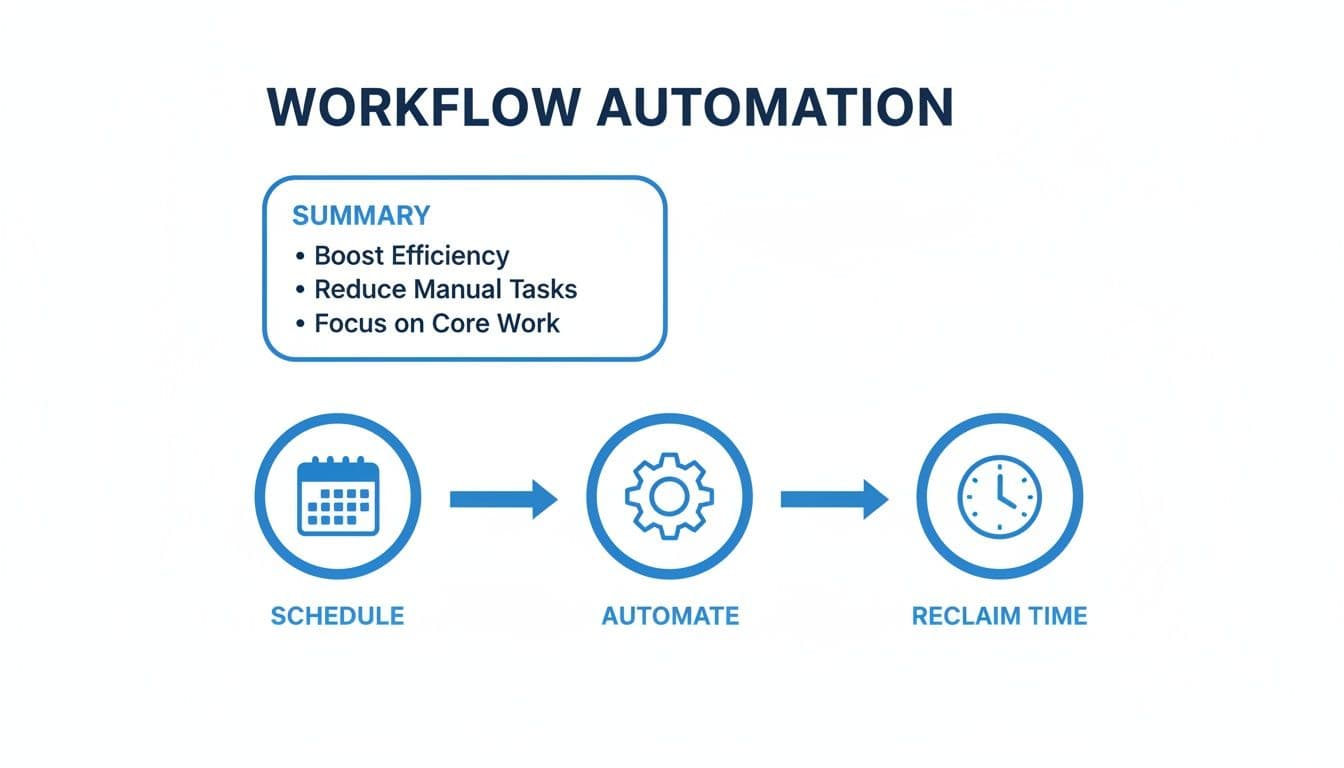
The big idea here? Efficiency is your direct path to effectiveness. By automating repetitive tasks, you free up the mental energy needed to actually refine your approach.
Choosing the Right Metrics to Track
Not all metrics are created equal. What's a game-changer on Instagram might be a vanity metric on LinkedIn. The first move is to pinpoint the Key Performance Indicators (KPIs) that actually connect back to the goals you set earlier. Are you trying to build brand awareness, generate leads, or foster a community? Your answer will tell you exactly what to measure.
If you want to go deeper on this, our guide on how to measure social media engagement is a great resource. For now, let's look at a few of the big ones.
- Engagement Rate: This is the holy grail. It’s the percentage of your audience that’s actually interacting with your content through likes, comments, and shares. A high engagement rate is the clearest sign that your message is hitting the mark.
- Reach and Impressions: Reach tells you how many unique people saw your post, while impressions count the total number of times it was displayed. A massive reach with dismal engagement is a red flag that your content isn't compelling enough to stop the scroll.
- Click-Through Rate (CTR): This one's simple: how many people clicked a link in your post? It’s a direct measure of how persuasive your call-to-action is and is absolutely critical for driving traffic anywhere off-platform.
- Conversion Rate: The ultimate bottom-line metric. It tracks the percentage of users who took a specific action after clicking, like buying a product or signing up for a webinar. This is how you tie your engagement efforts directly to business results.
Don't get lost in a sea of data. Pick three to five core metrics that directly reflect your primary goals and track them relentlessly. Clarity is far more powerful than volume.
To help you focus, it's crucial to understand which metrics carry the most weight on different platforms.
Key Engagement Metrics by Platform
| Platform | Primary Metric | Secondary Metric | Why It Matters |
|---|---|---|---|
| Saves & Shares | Comments & Likes | Saves indicate high-value content your audience wants to revisit. Shares expand your reach organically. | |
| Comments | Reactions & Shares | Meaningful comments show professional engagement and start valuable conversations within your industry. | |
| Shares & Comments | Reactions | Shares are the strongest signal of virality and resonance. Comments drive community and discussion. | |
| X (Twitter) | Retweets & Replies | Likes | Retweets amplify your message to new audiences, while replies build direct, real-time relationships. |
| TikTok | Shares & Saves | Watch Time & Comments | Shares drive trends, while saves show content utility. Watch Time is key to the algorithm. |
This table isn't exhaustive, but it's a solid starting point for focusing your measurement efforts where they'll have the most impact.
Leveraging Platform-Specific Analytics
Every social platform has its own built-in analytics suite, and honestly, they're incredibly powerful. Before you spend a dime on third-party software, make sure you've squeezed every drop of insight from the tools already at your fingertips.
For instance, Instagram Insights gives you a goldmine of demographic data about your followers and breaks down the performance of individual posts, Stories, and Reels. Likewise, LinkedIn Analytics offers priceless information on the professional makeup of your audience and which updates are driving real interaction.
The Power of A/B Testing Your Content
The fastest way to refine your strategy is to experiment with purpose. A/B testing (or split testing) is the practice of creating two slightly different versions of a post to see which one performs better. It’s a simple, data-driven way to take the guesswork out of your creative decisions.
You can test almost anything:
- Headlines: Does a question-based headline outperform a bold statement?
- Visuals: Test a candid photo of a person against a polished graphic design.
- Calls-to-Action: Is "Learn More" more effective than "Get Started Today"?
- Post Format: Pit a single image post against an interactive carousel.
The key is to run these tests systematically. Change only one variable at a time—otherwise, you'll never know for sure what caused the difference in performance. Over time, these small experiments will reveal powerful truths about what your audience really wants.
Establishing a Rhythm for Review and Iteration
Data is completely useless if you don't act on it. The final piece of the puzzle is creating a simple, repeatable process for reviewing your performance and tweaking your strategy accordingly. For most businesses, a monthly or quarterly review is a great cadence.
During each review, ask yourself these three critical questions:
- What was our top-performing content? Look for patterns in the topics, formats, and timing. How can we do more of what's working?
- Where did we see the biggest drop-offs? Pinpoint the content that fell flat. Was the topic off, or was the format wrong for the platform?
- What feedback are we getting? Dive into the comments and DMs. What questions are people asking? What are their biggest frustrations?
This continuous loop of measuring, analyzing, and refining is the engine of a truly successful engagement strategy. It transforms your social media from a series of random shots in the dark into an intelligent system that gets better with every single post.
A Few Common Questions About Boosting Customer Engagement
As you start putting your customer engagement strategy into action, you're bound to run into a few common hurdles. I've seen these questions pop up time and time again, so let's tackle them head-on with some practical, no-nonsense answers.
"How Often Should I Really Be Posting?"
This is the million-dollar question, isn't it? But the answer isn't some magic number—it's all about the platform's rhythm and your audience's behavior.
Think of it this way: a platform like X (formerly Twitter) moves at lightning speed, so posting multiple times a day often makes sense. For Instagram and Facebook, however, a good starting point is 3-5 really solid, high-quality posts per week.
The secret sauce here is consistency, not just volume. It’s much more powerful to show up with three great posts every single week than it is to dump ten posts one week and then disappear for the next. This is where planning your content with a scheduler like PostOnce can be a lifesaver. It helps you maintain that steady drumbeat without the constant last-minute scramble.
And remember, let your analytics be your compass. If engagement drops, your first thought shouldn't be "I need to post more." It's more likely a signal that the content itself needs a refresh.
Your goal is to become a reliable, welcome presence in your audience's feed, not just more noise. A consistent posting rhythm builds the kind of anticipation and trust that engagement is built on.
"My Post is a Flop. What Can I Do to Save It?"
It happens to the best of us. You pour your heart into a post, and... crickets. Don't just let it die a slow death in the algorithm. Here are a few things you can do to give it a second chance:
- Give it a Story Boost: Share your Instagram post to your Stories. But don't just share it—add an interactive sticker like a poll or a quiz. This is a super low-effort way for people to engage and it drives new traffic back to the original post.
- Kickstart the Conversation: Even if you only have a couple of comments, jump in and respond. Ask a follow-up question to get a real back-and-forth going. The algorithm loves to see that kind of conversation happening.
- Tag Someone Relevant: Think of another creator, brand, or expert who would genuinely find your content useful or interesting and give them a tag. The key here is authenticity—no spammy, random tagging. It's more of a friendly "hey, thought you'd like this!"
- Give It a Little Nudge: Sometimes a post just needs to find the right people. Putting a small promotional budget behind it, even just $5-$10, can get it in front of a targeted audience and give it the initial push it needs to start gaining organic steam.
"Help! How Do I Deal with Negative Comments?"
Handling negative feedback is a true test of a brand's character. Getting this right can actually build more trust than if you never got the complaint in the first place.
The golden rule? Respond publicly, quickly, and with grace. Addressing a complaint out in the open shows everyone watching that you're transparent and take feedback seriously. Always start by acknowledging their frustration—it immediately de-escalates the situation.
For issues that involve personal details, offer to move the conversation to a private channel like DMs or email to resolve it completely. Whatever you do, don't just delete negative comments (unless they're spam or truly abusive). When you handle a complaint well, you can turn a frustrated customer into one of your biggest fans. They'll remember that you cared enough to make it right.
Ready to build a consistent, engaging presence without the burnout? PostOnce automates the tedious work of cross-posting so you can focus on what matters most: creating great content and building real relationships. Learn more and start your journey at https://postonce.to.