
Automatically Post Your Facebook Reels To X
PostOnce automatically posts eligible Facebook Reels to X, without downloading, re-uploading, or rebuilding the same post by hand.
Get Started Free7-day free trial · Cancel anytime
Facebook-to-Twitter crossposting: the native option is gone
! Facebook removed its native Twitter integration years ago
+ ! Facebook posts are often too long for Twitter's 280-character limit
+ ! Facebook image ratios (1:1, 16:9) work fine on Twitter but may be cropped
+ ! Twitter/X does not natively pull in Facebook posts
+ ! Third-party tools are required; some are unreliable due to API restrictions on both sides
↓ There's an easier way
What You Need to Know
How to share Facebook content on Twitter
Manual: copy the key sentence or two from your Facebook post, open Twitter, write a new tweet with that condensed content, and add the image separately if needed.
For automation: tools like IFTTT, Pabbly, and Zapier all support Facebook Pages-to-Twitter workflows.
Set up a Zap that triggers on a new Facebook page post and creates a tweet.
IFTTT has a free tier that covers this use case.
The workflow typically posts the first 250 characters of the Facebook post as the tweet, which often gets cut off awkwardly — most automations need manual tuning.
What makes Facebook content land differently on Twitter
Twitter/X is faster, more opinionated, and more reactive than Facebook.
Long Facebook captions don't translate — a tweet needs one clear point.
If your Facebook post tells a story over several paragraphs, convert the core takeaway into one tweet and save the rest for a thread.
Images work the same across both platforms.
Videos need to be under 2:20 for native Twitter video.
Hashtags on Twitter still carry some weight for discovery; on Facebook, they're mostly irrelevant.
Rewrite rather than just truncate.
PostOnce keeps Facebook and Twitter in sync
When you post on Facebook, PostOnce adapts the content to fit Twitter's format — character limit respected, image attached, tone adjusted — and publishes automatically.
No truncated tweet disasters, no manual copy-paste between apps.
7-day free trial · Cancel anytime
Features
How PostOnce Handles It
Set up Facebook to Twitter crossposting once. PostOnce automates the rest, so one native Facebook post can trigger a matching Twitter upload automatically.
Connect Facebook
Choose the Facebook account PostOnce should monitor for new eligible posts.
Connect Twitter
Choose the Twitter account or Page that should receive the native upload.
Create the workflow
Set content filters, caption rules, and timing once. PostOnce handles future matching posts automatically.
Easy Facebook Crossposting Setup
Connect your Facebook and Twitter accounts, choose your crosspost rules, and you're done.
Setup takes under 60 seconds. After that, everything runs automatically in the background.
Start your free trial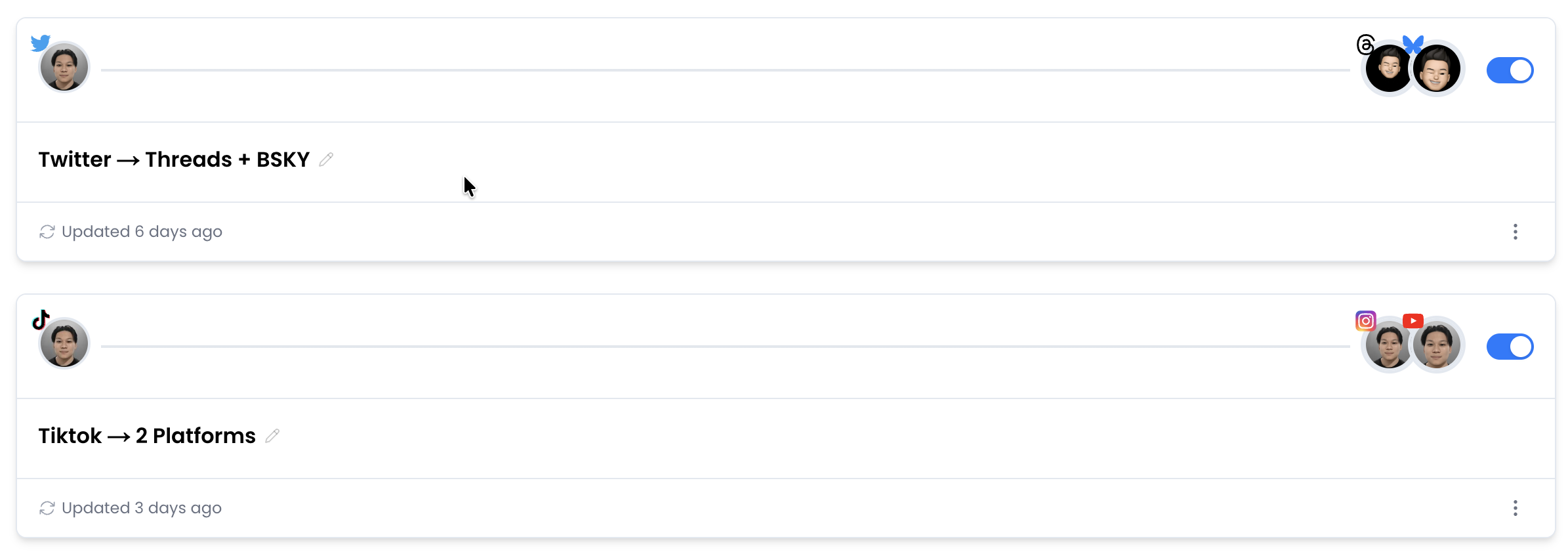
Native Video Upload to Twitter
When you crosspost Facebook to Twitter, PostOnce uploads the actual video file — not a link, not a preview.
Your Facebook content appears as a native Twitter post, indistinguishable from content uploaded directly.
Start your free trialCustom Crosspost Rules
Not every Facebook post belongs on Twitter. Set hashtag filters, content type rules, or account-level controls to choose what gets crossposted.
Only the content you want on Twitter ends up there.
Start your free trial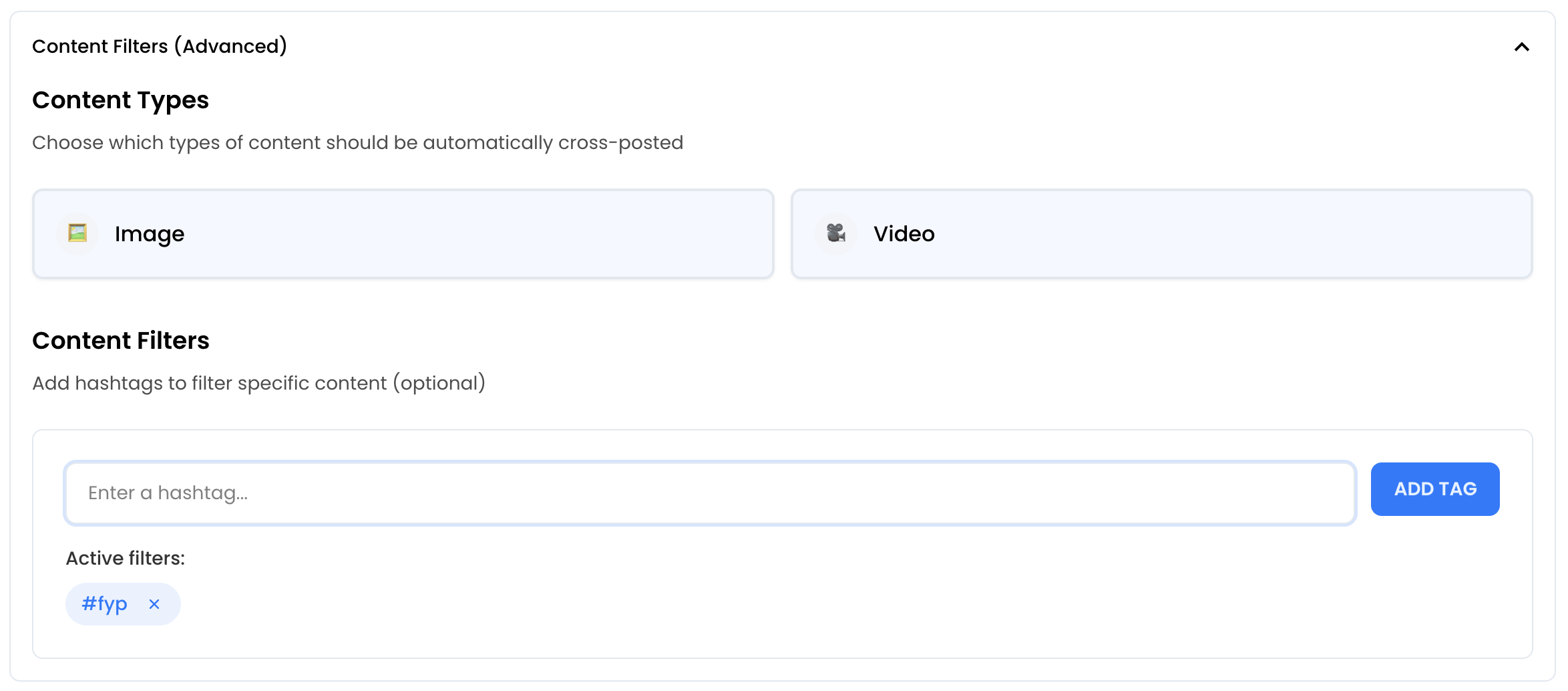
Automatically Post Your Content to Multiple Platforms
Don't stop at Facebook to Twitter crossposting. Automatically post your Facebook Reels to YouTube Shorts, Facebook, LinkedIn, Threads, and more — all at once.
One post, everywhere. Each platform gets a native upload with adapted formatting.
Start your free trial








Real-Time Automation
PostOnce monitors your Facebook account and automatically crossposts new content to Twitter.
No scheduling, no batching. Publish on Facebook and it appears on Twitter within minutes — fully automated Facebook to Twitter posting.
Start your free trial
Direct answer
Can PostOnce automatically post from Facebook to Twitter?
Yes, PostOnce can automatically post eligible Facebook Reels to X with a reusable crossposting workflow. This is crossposting automation: you publish on Facebook, PostOnce watches for eligible Facebook Reels, and Twitter receives its own native post instead of a copied link preview.
Content types
Primary wording plus related formats
Facebook source formats
This workflow leads with Facebook Reels, and also covers related Facebook formats:
Twitter destination formats
The destination focus is X, while also covering related Twitter surfaces:
Manual sharing
The manual route usually means sharing a link, sending to a Story, making a Feed post, or downloading the media and uploading it again.
- Link previews send traffic back to Facebook.
- Watermarks or source branding can hurt trust.
- Repeated downloads make daily posting hard to scale.
- Formats and captions often need cleanup.
Automatic workflow
PostOnce turns the same workflow into a repeatable rule: source account, destination account, filters, and automatic publishing.
- Connect Facebook as the source.
- Connect Twitter as the destination.
- Choose which posts should crosspost.
- Let PostOnce publish future matches automatically.
Alternatives and limits
IFTTT-style automations and native share buttons can be useful, but they often create status updates, links, or previews instead of native destination posts.
- Manual sharing is fine for one-off posts.
- Generic repurposing tools may require export first.
- Platform API limits still control what can publish.
- Music rights do not automatically transfer.
What gets adapted from Facebook to Twitter
Captions
Long captions may need shortening for Twitter.
Hashtags
Twitter: 1-2 hashtags per tweet; more reduces engagement.
Aspect ratio
Both prefer 16:9 video.
Destination format
Eligible media publishes as a native Twitter upload.
Watermark and metadata
PostOnce prepares media for the destination instead of reposting a link card.
Music and audio rights
Only reuse audio you have rights to publish on both platforms.
New posts and existing content
For new posts, PostOnce can watch your Facebook source and publish eligible Facebook Reels to X after the workflow is created.
For existing or backlog content, use PostOnce to refill a workflow deliberately instead of dumping months of posts at once. Scheduled batches keep the destination account active without overwhelming followers.
If a video is longer than Twitter's destination limit, it needs trimming or review before publishing. Twitter supports videos up to 2 minutes.
Proof before you turn it on
Confirm the connected source account
Select the destination account or Page
Review filters and caption rules
Check the queue and destination post after publish
Facebook vs Twitter at a Glance
| Spec | ||
|---|---|---|
| Caption Limit | 63,206 chars | 280 chars |
| Max Video Length | 4h | 2min |
| Preferred Aspect Ratio | 16:9 | 16:9 |
| Max Video File Size | 10GB | 512MB |
| Carousel Support | Up to 10 items | Up to 4 items |
| Hashtag Strategy | Unlimited | Unlimited |
| Link Support | Yes | Yes |
| Primary Audience | 25-54 | 18-44 |
Trusted by Creators & Brands
 mego71.4K followersBeauty & Lifestyle
 mishygirll588.8K followersOnlyFans
 hopewalz566.0K followersPolitics
 artzenmedia138.0K followersContent Creation
 caravature490.9K followersArt & Design
 getnaturaljackson441.5K followersSelf Improvement
 Revista Etcétera286K followersNews & Media
 soleretriever169.0K followersSneakers
 ismerlinglive38.9K followersStreaming & Gaming
 DolceDormire.ro42.2K followersRetail & E-commerce
 eddie115.7K followersBusinessmego71.4K followersBeauty & Lifestylemishygirll588.8K followersOnlyFanshopewalz566.0K followersPoliticsartzenmedia138.0K followersContent Creationcaravature490.9K followersArt & Designgetnaturaljackson441.5K followersSelf ImprovementRevista Etcétera286K followersNews & Mediasoleretriever169.0K followersSneakersismerlinglive38.9K followersStreaming & GamingDolceDormire.ro42.2K followersRetail & E-commerceeddie115.7K followersBusiness
Frequently Asked Questions
Yes. With PostOnce, you can connect Facebook as the source, choose Twitter as the destination, and create a workflow so new matching Facebook posts are crossposted to Twitter automatically.
Connect both accounts in PostOnce, create a Facebook to Twitter crossposting workflow, and choose your content filters. After setup, PostOnce can detect new eligible Facebook posts and publish them to Twitter without manual downloading or re-uploading.
Yes. PostOnce lets one eligible Facebook post trigger a matching Twitter post, so you can keep both platforms active without rebuilding the same content twice.
PostOnce preserves your media quality and adapts captions from Facebook's 63,206 character limit toward Twitter's 280 character limit. Media format, hashtags, and destination rules still depend on each platform's requirements.
Yes. Use hashtag filters to control which posts crosspost. For example, add #crosspost to Facebook captions and only those posts will go to Twitter. Or exclude specific hashtags to skip certain content.
Related Crossposting Workflows
How to automatically post your Facebook Reels to TikTok
Automatically post your Facebook Reels to TikTok without downloading and re-uploading.
How to automatically post your Facebook Reels to Instagram Reels
Set up automatic crossposting from Facebook Reels to Instagram Reels.
How to automatically post your Facebook Reels to YouTube Shorts
Set up automatic crossposting from Facebook Reels to YouTube Shorts.
Repurpose Facebook for Twitter
Adapt this workflow for clips, captions, and content reuse.
How to automatically post your X Posts to Facebook Reels
Go the other direction.
Facebook crossposting guides
More destinations from Facebook
All crosspost guides
Browse every platform workflow
Start Crossposting Facebook to Twitter
Connect your Facebook and Twitter accounts and start crossposting in minutes. No technical setup required.
Get Started FreeFree 7-day trial · Cancel anytime