

















Ever wonder what makes a post explode online? It’s not just luck. The secret to creating posts that people can't wait to share lies in understanding what makes us tick.
If you want your content to travel, you need to connect with the core human emotions and motivations that drive people to hit that share button. It's less about the algorithm and more about psychology. People share things that make them feel smart, entertained, or validated.
Let's break down the psychology behind it all.
The Psychology Behind Highly Shareable Content
Before you write a single word, ask yourself a simple question: why would anyone share this? The answer is rarely a complete mystery. The decision to share is deeply personal, driven by a desire to connect with others, define who we are, and offer something of value to our community.
Think about the last thing you shared. Was it a hilarious video that made you laugh out loud? Or maybe it was an insightful article that perfectly explained something you’ve been trying to articulate for ages. Those are the moments that spark shareability.
Tapping into Emotional Triggers
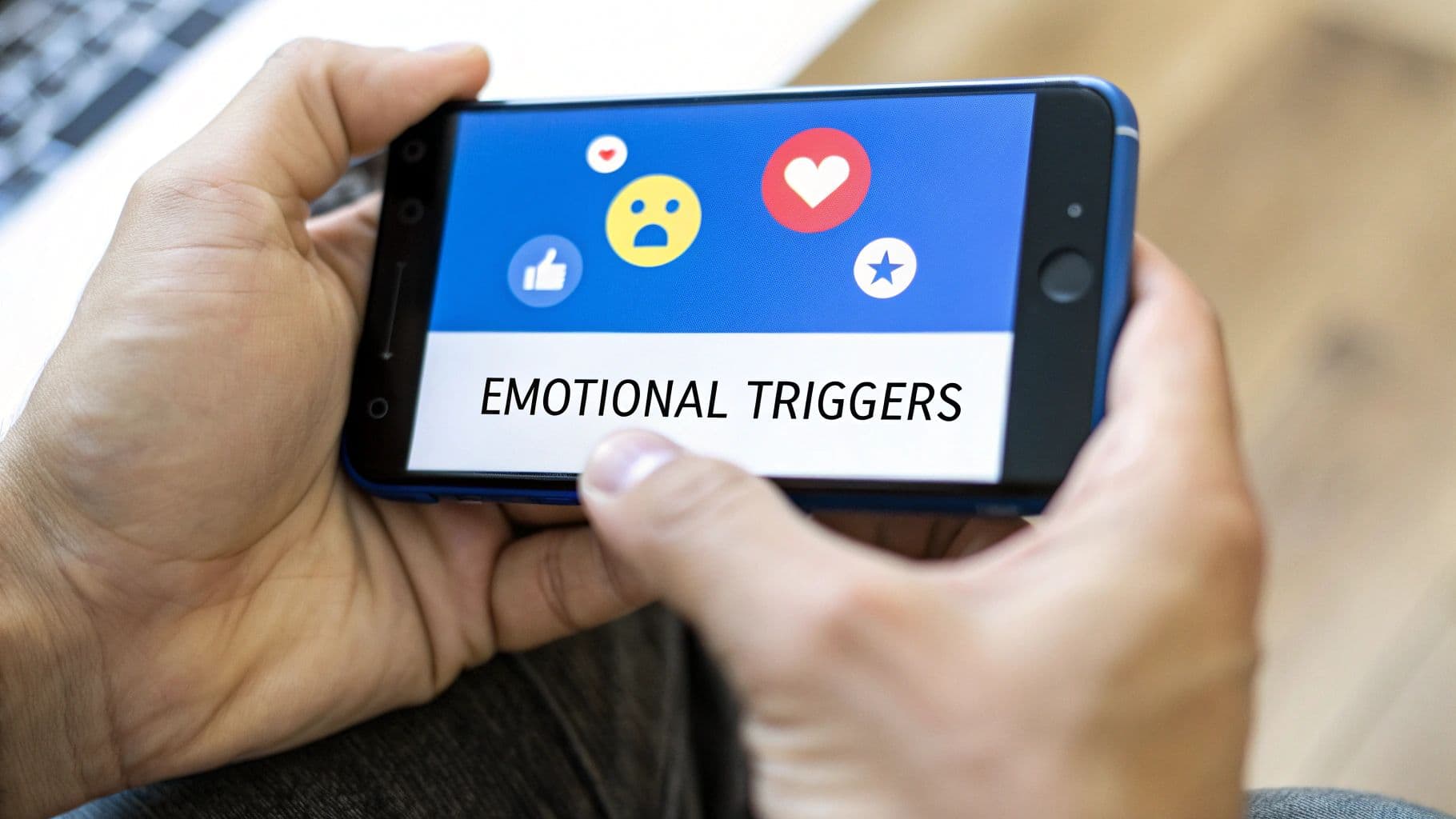
At the end of the day, emotion is what drives action online. Content that makes people feel something is always going to outperform dry, informational posts.
Some of the most powerful emotional drivers include:
- Awe and Wonder: Think of stunning nature videos or mind-blowing scientific discoveries. Content that inspires awe makes people feel connected to something bigger than themselves.
- Humor: Laughter is contagious. A clever meme or a funny story is easy to share because people instinctively want to pass that good feeling along to their friends.
- Validation and Agreement: When a post reflects your audience's own beliefs and values, it creates an instant connection. Sharing becomes a way of saying, "This is me. This is what I stand for."
- Urgency or Anger: Use this one with care, but tapping into a sense of injustice can be incredibly powerful. It rallies people around a common cause and ignites a desire to spread the word.
The most shareable content doesn’t just present information; it creates an experience. It serves as a vehicle for the user to express their own personality, values, or sense of humor to their network.
The Social Currency of Sharing
Beyond raw emotion, there's another key factor at play: social currency. We share things that make us look good. It's human nature.
When someone shares your content, they’re not just passing it along; they’re attaching their own reputation to it. They share things that make them look intelligent, helpful, or just plain in-the-know.
For instance, sharing a deep-dive analysis on a complex topic isn't just about the information. It’s a way of saying, “I’m smart enough to understand this.” Sharing a how-to guide for a new productivity app says, “I’m helpful and on top of the latest trends.”
Shareable posts resonate because they give people a clear reason to react, relate, or pass the idea along.
To help you get started, here's a quick breakdown of the core motivations that drive people to share.
Core Motivations for Sharing Content
| Motivation Driver | Psychological Basis | Example in Practice |
|---|---|---|
| Identity & Self-Expression | We are what we share. It signals our values, beliefs, and sense of humor. | Sharing a political cartoon, a cause-related post, or a meme that perfectly captures their personality. |
| Entertainment & Humor | Sharing joy and laughter is a fundamental way to connect with others. | Forwarding a funny animal video, a witty tweet, or a relatable comic strip. |
| Providing Value & Helpfulness | People want to be seen as a useful resource for their friends and followers. | Sharing a "life hack" article, a step-by-step tutorial, or an exclusive discount code. |
| Building Community | Sharing content reinforces a sense of belonging to a tribe or group. | Posting content from a favorite sports team, a niche hobby group, or a professional organization. |
Each of these drivers gives you a clear path to creating content that people won't just consume—they'll feel compelled to pass it on.
Creating Visuals and Videos People Can't Help But Share
In a sea of text-based updates, visuals are your secret weapon. They're what stop the endless scroll and give your message a fighting chance to actually connect with someone. Posts with a great image, a sharp graphic, or a compelling video aren't just seen—they're felt, remembered, and passed along far more often.
This is especially true for video. It's not just a trend anymore; short-form video has completely changed how people consume content online. If you're serious about creating posts that get shared, you simply can't ignore it.
Why Short-Form Video Is King
The explosive growth of platforms like TikTok and Instagram Reels tells us everything we need to know: audiences love short, dynamic, and digestible video content. These apps are built from the ground up for quick consumption and even quicker sharing, making them the perfect launchpad for your ideas.
The numbers don't lie. When we look at what makes a post truly shareable, it's clear that video is the preferred medium. Heading into 2025, a staggering 78% of people say they'd rather learn about a new product by watching a short video.
The engagement is just on another level. TikTok can hit organic engagement rates as high as 7.5% on smaller accounts, and YouTube Shorts isn't far behind at 5.91%. This isn't just vanity; high engagement directly leads to more shares. When people are hooked, they hit that share button. You can dig deeper into the numbers by checking out the latest social media statistics from OnlySocial.io.
Just look at the TikTok interface. It’s a masterclass in encouraging sharing.
Everything is designed for an immersive video experience, with big, obvious buttons for liking, commenting, and—most importantly—sharing. The whole system is engineered to help users send content they love to their friends, which is the fuel for anything going viral.
Designing Images and Carousels That Stick
While video gets a lot of the glory, don't sleep on static images. The right graphic or a well-thought-out photo carousel can still pack a massive punch. They can tell a story, break down a complicated idea, or just create an emotional connection that makes people want to share.
Here are a few proven ways to create images that get passed around:
- Build an Awesome Infographic: Got an interesting statistic or a simple "how-to" process? Turn it into a clean, visually appealing infographic. People love sharing content that makes them look smart and helpful to their own network.
- Use Real, High-Quality Photos: Ditch the generic, soulless stock photos. Instead, use authentic shots of your team, your product being used in the real world, or even content from your own customers (with permission, of course!). This builds trust and makes you more relatable.
- Tell a Story with a Carousel: Use a multi-image post to guide your audience through a narrative. Think "before and after" transformations, a step-by-step mini-tutorial, or a list of helpful tips. That swiping action keeps people engaged and invested in what you have to say.
Pro Tip: Don't let a simple technical mistake ruin your great work. Make sure your visuals are sized correctly for every single platform. Nothing kills a share faster than an awkwardly cropped image. To nail it every time, bookmark our guide on standard social media image sizes.
Crafting Content That Clicks on Each Platform
One of the biggest mistakes I see people make is broadcasting the exact same message across all their social media accounts. That’s a massive missed opportunity. If you really want to create posts that people can't help but share, you have to play by the unwritten rules and respect the unique culture of each platform.
Think about it this way: what works on LinkedIn feels completely out of place on TikTok. It’s like telling a story to different groups of friends—you’d naturally tweak the details and your tone for your work buddies versus your family. The same principle applies here. Each platform has a distinct audience with its own expectations.
LinkedIn: The Professional Value Exchange
On LinkedIn, everyone is there to get ahead in their career. They're scrolling for industry insights, solid career advice, and success stories they can learn from. Your goal is simple: provide tangible value that makes your audience feel smarter just for having seen your post.
Shareability on LinkedIn is all about utility. A post that teaches a new skill, breaks down a complicated trend, or offers a fresh take on a common business problem is pure gold.
- Format Focus: I've found that multi-image carousels walking through a process or data-heavy infographics get incredible traction. Don't underestimate long-form text posts, either—a compelling story or a hard-won lesson can really connect with people.
- Tone of Voice: Keep it professional, but don't be a robot. Share your expertise with confidence, but let a bit of your personality shine through. Real talk builds trust.
Facebook: Building Connections and Community
Facebook is all about community. It's where people connect with friends, family, and groups that share their passions. Content that gets shared here usually taps into relatable human experiences and emotions.
The best-performing posts are the ones that start conversations. Ask for opinions, celebrate shared moments, and get people talking. Instead of just broadcasting your message, think about how you can start a genuine dialogue. Showing some behind-the-scenes content or customer stories can make your brand feel much more human, encouraging people to share your posts with their inner circles.
Short-form video is huge on community-driven platforms, but engagement can vary wildly depending on the format.
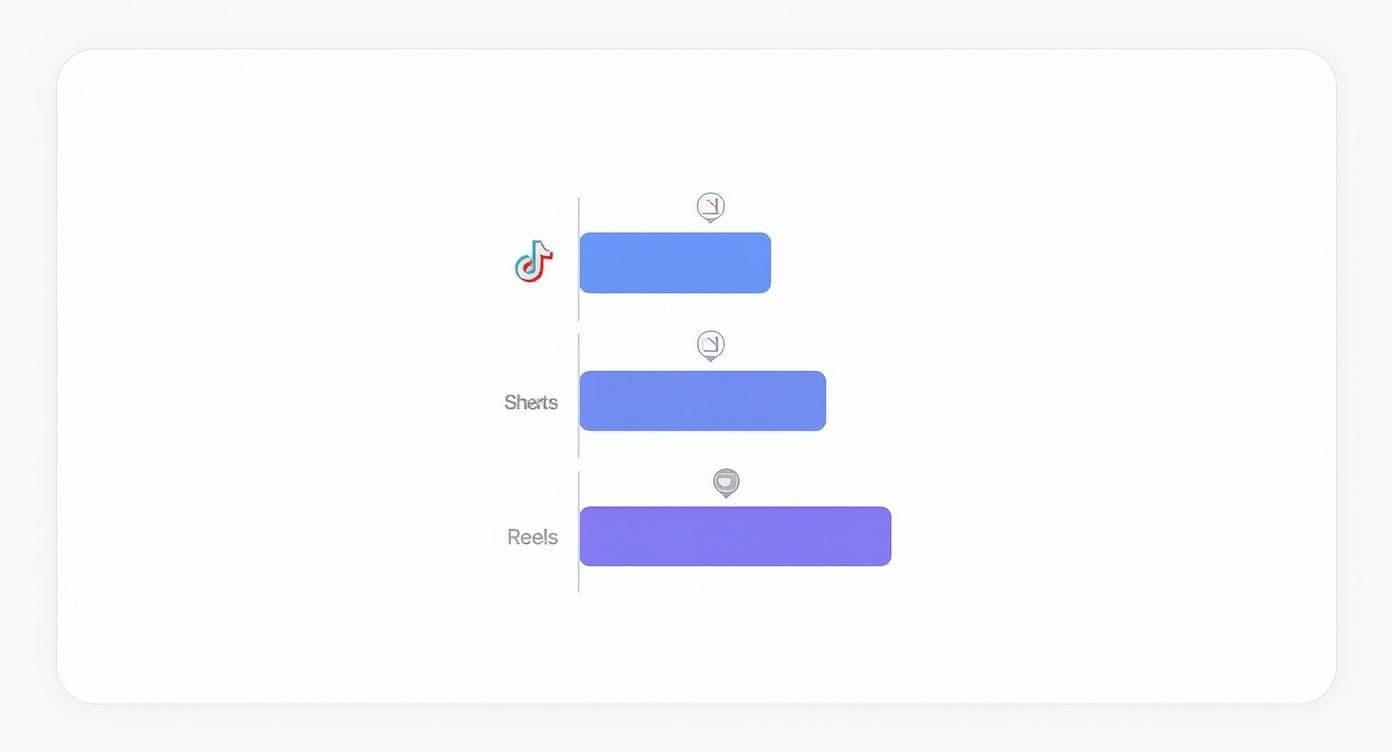
This chart is a great reminder that even within a single content type like video, the specific platform and its audience dramatically affect performance.
X (Twitter): Sparking Real-Time Conversations
X (formerly Twitter) moves fast. It’s all about brevity, wit, and what’s happening right now. To get your posts shared here, you need to be quick, relevant, and ready to jump into the conversations already taking place.
The numbers really tell the story here. TikTok's algorithm, which pushes highly interactive video, helps it achieve an impressive 5.4% average engagement rate. But on a professional network like LinkedIn, a well-crafted multi-image post can hit a 6.6% engagement rate. It just goes to show that matching the right content format to the right audience is everything. If you want to dig deeper, you can find more of these platform-specific engagement statistics on SQ Magazine.
A winning strategy on X isn't just dropping links and running. It’s about adding your unique voice to a trending topic, asking a question that makes people think, or sharing a hot take that stops the scroll and earns that retweet.
When you take the time to master these platform differences, you stop shouting into the void. Your content becomes a tailored message that truly connects, giving people a real reason to hit that share button and spread the word for you.
Writing Headlines and Captions That Beg to Be Shared
Even the most incredible visual can get lost in the feed without the right words to back it up. Your headline and caption are the one-two punch that stops the scroll and earns the share. This is your chance to add context, show some personality, and convince someone that your post is worth their network’s attention.
Forget about writing generic, one-size-fits-all copy. The real secret is to write something that sparks a reaction. Think of your caption as the start of a conversation, not just a label for the image it’s attached to.
Pose a Question That Makes People Think
One of the fastest ways to pull someone in is to ask a question they can’t help but answer. Instead of just stating a fact, try framing it as a genuine query.
For example, a simple switch from a statement like, "Productivity is about managing your energy, not your time," to a question like, "Is productivity really about managing your time, or is it about managing your energy?" immediately invites engagement. It practically begs for a comment.
This works because you’re no longer just talking at your audience; you're inviting them into a discussion. When people feel like their opinion matters, they’re far more likely to weigh in and, just as importantly, share the post to see what their own friends have to say.
Master the Art of the Curiosity Gap
We’re all naturally curious. A "curiosity gap" headline teases just enough information to make someone need to know more. It creates an itch that can only be scratched by clicking, reading, or watching.
It’s the difference between a pretty standard headline like "How to Improve Your Morning Routine" and a much more compelling one like "This One Mistake Is Secretly Ruining Your Entire Morning." See the difference? One is easily ignored; the other is almost impossible to scroll past.
The Big Idea: Your goal is to frame your content as a gift. Make the value so clear and intriguing that sharing it feels like your follower is doing their followers a favor.
Coming up with these hooks on the fly can be tough, which is where a little help comes in handy. If you're feeling stuck, PostOnce has a powerful caption generator to help you write better social media posts in a matter of seconds.
Ask for the Share with Confidence
Finally, don't forget the most direct approach: just ask. A confident and clear call-to-action (CTA) can make all the difference. You've provided value, so there's no need to be shy about asking people to pass it on.
Here are a few ways to frame that final ask:
- For helpful tips: "Know a colleague who needs to see this? Tag them below!"
- For inspiring content: "If this resonated with you, share it to your story to spread the message."
- For how-to guides: "Found this useful? Save it for later and share it with a friend who's learning."
This last part is crucial. It gives your audience a simple, direct action to take. By removing any guesswork, you make the decision to share an easy one, kicking off your content's journey across the internet.
Smart Timing and Distribution for Maximum Reach

You can craft the most brilliant post in the world, but if you publish it when your audience is asleep or at work, you're just talking to an empty room. The secret to making something truly shareable is getting it in front of people at the exact moment they’re most likely to see it, react, and hit that share button.
This is where most people get it wrong. They follow generic advice like "post at 9 AM on Tuesdays." But your audience is unique. Real success comes from pinpointing your golden hours—those specific windows of time when your followers are scrolling, commenting, and ready to engage. This requires a bit of detective work, but it’s absolutely critical for getting results.
Uncovering Your Unique Posting Times
It's time to stop guessing and start looking at the data. Your own platform analytics are a goldmine. Head over to Instagram Insights, or check out the analytics tabs on Facebook and LinkedIn. They have everything you need.
Start by digging into the "Audience" or "Followers" sections. You're looking for patterns. Most platforms will clearly show you:
- Peak Days: The days of the week when you have the most followers online.
- Peak Hours: The specific times on those days when activity spikes.
Keep an eye on this data for a couple of weeks. You might be surprised by what you find. Maybe your audience is super active during their Thursday lunch break, or perhaps Sunday evening is your prime time. Those insights are your roadmap. Scheduling your posts for these peak moments gives them the initial burst of visibility needed to start racking up shares.
If you want to go deeper on this, our guide on the best times to post on social media walks you through the entire process. You can find it right here: https://postonce.to/blog/best-times-to-post-on-social-media
Proactive Distribution Beyond Your Feed
Okay, so you've nailed the timing. What's next? Don't just post and pray. You need to give your content an extra nudge. Proactively sharing your post in the right places can be the difference between a post that fizzles out and one that catches fire.
Think of it this way: posting to your feed is like opening your shop for the day. Proactive distribution is like going to the busiest parts of town where your ideal customers are already hanging out and handing them a flyer.
This means finding relevant niche communities. Let's say you just wrote a great post about a productivity hack. Don't just leave it on your feed. Share it in a relevant LinkedIn group, a focused Subreddit like r/productivity, or a niche Facebook group for entrepreneurs. The key is to frame it as a genuinely helpful resource, not a hard sell.
Ultimately, smart distribution is a core part of bigger strategies for building an online presence. When you pair perfect timing with strategic outreach, you create the ideal conditions for your content to be discovered, loved, and passed around.
Got Questions About Making Your Posts More Shareable?
Even with a great plan, you're going to hit some snags. It happens to everyone. Let's walk through a few of the most common questions I hear from creators so you can sidestep these issues and keep your content moving.
"How Can I Ask for Shares Without Sounding Pushy?"
This is a big one. Nobody wants to come off as desperate or spammy. The secret is to stop thinking about it as asking for a favor and start framing it as offering a resource.
You want to shift the focus from your brand's vanity metrics to the value your follower can provide to their network. Instead of a generic "Please share this!", which feels like a chore, try something more empowering.
Something like, "Know a colleague who's struggling with this? Tag them below or share this post to help them out!" See the difference? You're not asking them to help you; you're giving them an opportunity to be the smart, helpful person in their circle. This approach builds their social currency, making the share a win for them, not just for you.
You can also build the shareability right into the content itself. Think interactive posts:
- Polls
- Quizzes
- "Tag a friend who..." prompts
These formats make sharing a natural, fun part of the experience rather than a direct ask.
"What Matters More: The Visual or the Caption?"
Ah, the classic debate. The honest answer? It's not a competition; it's a partnership. A killer visual stops the scroll, but a great caption is what actually triggers the share. One without the other is a huge missed opportunity.
Think of it this way: the visual is the handshake, but the caption is the conversation.
- The visual is your hook. It's what makes someone slam on the brakes in a fast-moving, noisy feed.
- The caption is your story. It provides the context, the "aha!" moment, or the emotional connection that makes someone think, "My friends need to see this."
On a platform like Instagram, the visual might do 80% of the heavy lifting. But on a more text-focused network like LinkedIn or X, a powerful, thought-provoking caption can easily be the main reason for a share, even with a basic image. They work together to make your post undeniable.
"How Long Should I Wait Before Giving Up on a Post?"
Patience is key here. You need to give a new post at least 24-48 hours to find its footing. The first day is when the platform's algorithm is doing its most important work, testing your content with different audience segments.
During this window, look for more than just the share count. Early signals like saves and comments are gold. These are often leading indicators that a post is genuinely resonating, even if the shares haven't caught up yet.
Don't ever write off your entire strategy because of one post that didn't take off. The real magic is in spotting trends over weeks and months, not hours.
If a post doesn't perform as you'd hoped, don't just delete it and forget it. Treat it like a valuable piece of data. Was the timing off? Was the headline a bit flat? Maybe the format just wasn't right for that specific platform. Every "dud" is a lesson that sharpens your instincts for the next one.
Tired of the endless copy-paste-tweak cycle for every social media platform? With PostOnce, you write your content just once, and our smart automation takes it from there, formatting it perfectly for every network. Sign up today and start reaching more people with less work.